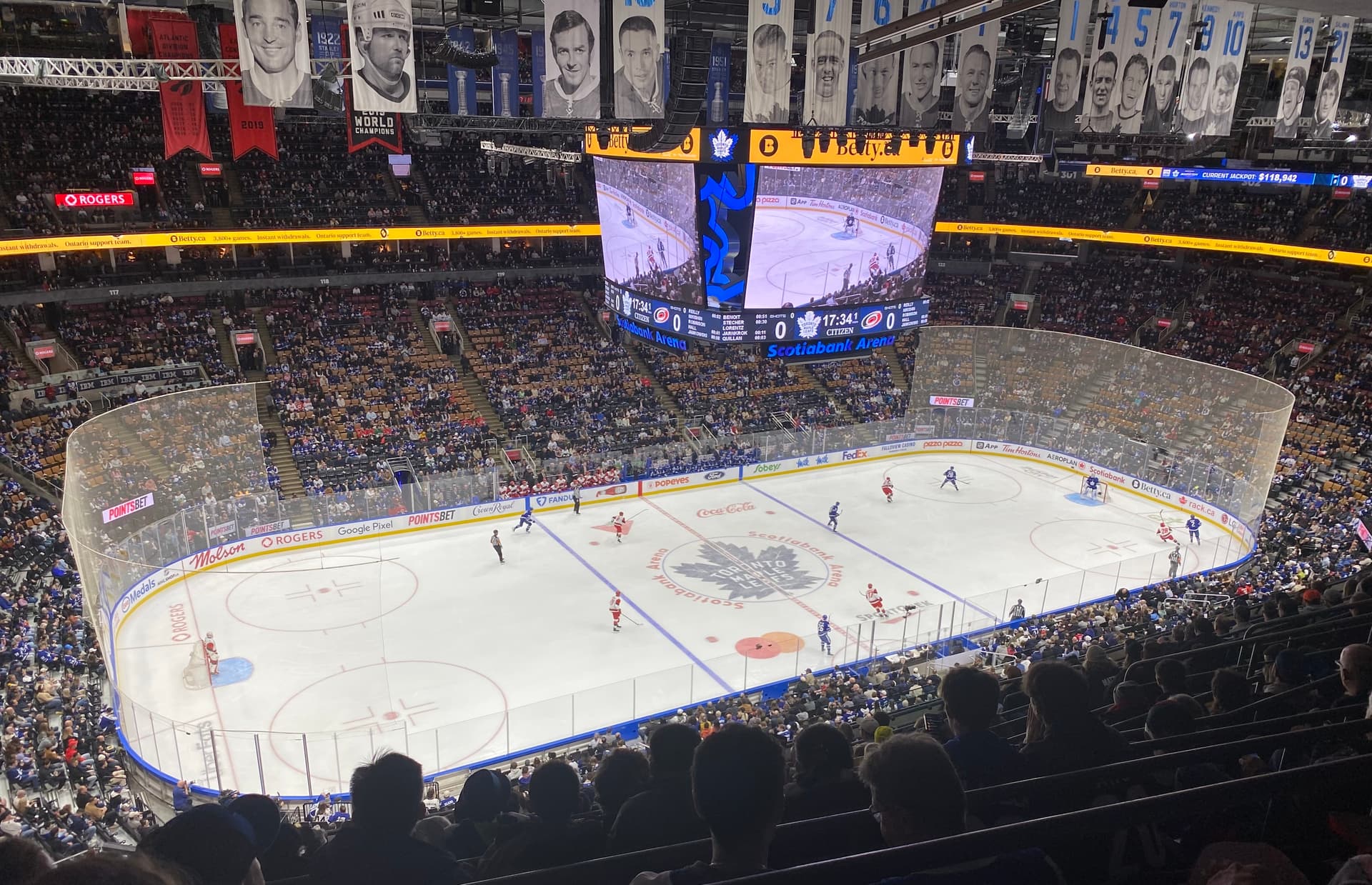
Photo: Adam Bishop, Wikimedia Commons (BY-SA-4.0)
Maple Leafs Waivers: Mermis and McWard Hit the Wire as 34 Names Flood the League
Table of Contents
The Maple Leafs waivers column finally has names on it
Toronto placed defencemen Dakota Mermis and Cole McWard on the wire Wednesday, the club's first Maple Leafs waivers transactions of the pre-season, on a day when 34 NHL players league-wide were exposed. Neither player appeared in either half of that night's split-squad finale against Ottawa, which told you the decision was made before the lineup cards went up.
A day earlier, Toronto had watched a 15-player wire day go by without putting anyone on and without claiming anybody. That restraint was itself the story on Tuesday. Wednesday's activity is the other half of it: the roster math finally forced a move.
Who Mermis and McWard are, and why now
Both are depth defencemen on the wrong side of a numbers crunch. Toronto opened camp with 25 defencemen in the building, an absurd figure driven by professional tryouts, organizational depth and a deliberate decision by John Chayka to make the sixth and seventh spots genuinely competitive rather than assigned.
Mermis and McWard had been skating primarily with Group B through the back half of camp and each appeared in only one exhibition game, Saturday's split-squad against Montreal. When Wednesday's rosters were released and neither name was on either sheet, the waiver placement was the only remaining step.
Both require waivers to be assigned to the Toronto Marlies. That is the entire mechanism at work here: a player who has exceeded his exemption threshold — based on games played and years since signing — cannot simply be sent to the American Hockey League. He has to be offered to the other 31 clubs first.
The odds either gets claimed
Low, but not zero. Depth defencemen on league-minimum or near-minimum deals do get picked up in the last week of September by teams that lost somebody in camp, and a club carrying an injury in its bottom pair is exactly the profile of a claiming team right now.
If Toronto loses one, it is not a meaningful blow. That is the point of exposing them. If the club thought either was going to be a regular, he would not be on the wire.
Why 34 players went on waivers in one day
The number is not random. All 32 NHL clubs must submit a salary-cap-compliant 23-man opening-night roster to the league by 5 p.m. ET on Sept. 28, and the regular season begins Sept. 29. Waivers take a full 24 hours to clear.
Work backwards from that and the calendar becomes rigid. Any player who needs waivers to be assigned to the AHL has to be placed on the wire at least a day before the submission deadline. That compresses the entire league's difficult decisions into a 72-hour window, which is exactly what is happening.
Cole Sillinger and Ocean Wiesblatt were among the more notable names on the same-day's 34-player list. Vancouver alone put three players on — forward Trey Fix-Wolansky and defencemen Cole Clayton and Jimmy Schuldt — for assignment to Abbotsford. Expect Thursday and Friday to be heavier still, and expect the claim rate to climb as clubs finalize their own cuts and discover the hole they need to fill.
Why the claim rate is about to spike
Through the first two wire days of this pre-season, almost nothing moved. That is normal and it is about to stop being normal.
Early in the cut season, clubs expose players they are confident nobody wants, and every other club is still carrying its own surplus and has no roster room to absorb a claim. The incentives are all pointed at inaction. Then the deadline arrives, every team simultaneously finishes its own trimming, and suddenly 31 general managers are looking at the same list with an open spot and a specific hole to fill.
The other accelerant is injury. A club that loses a bottom-pair defenceman in the last week of camp cannot sign a replacement out of thin air with the cap where it is. The wire is the cheapest emergency room in hockey, and the last 48 hours before the roster deadline is when it gets used.
For Toronto, that cuts both ways. The club is exposed on anyone it has to put through, and it is also the beneficiary if a genuinely useful player surfaces. Given that the defence group has been the most crowded part of this camp and the forward depth is thinner than it looks once you account for Joshua, a forward claim is more plausible than a defence claim.
What Toronto's own exposure looks like from here
The club has already made the bulk of its trims. Twenty-five players were reassigned to the Marlies or returned to junior alongside the Mermis and McWard placements, with Harry Nansi, Tyler Hopkins and Alexander Belicki among those headed back to their junior clubs. That followed the earlier round of cuts that brought the camp roster to 32.
The remaining question is whether anyone who needs waivers is still in the building and still on the bubble. Bo Groulx is the name that matters most here. He would require waivers to be sent down and, on the strength of what he showed for both the Marlies and the Leafs last season, would carry real claim risk. If Toronto decides he is not the 13th forward, it has to accept that it is probably losing him.
That calculation gets complicated by Dakota Joshua's core muscle injury. Joshua is day-to-day and his availability for the opener is genuinely uncertain. If he cannot go, Groulx likely stays on the roster by default and the waiver question is deferred. If Joshua is cleared, somebody gets exposed.
Easton Cowan is the escape valve
Cowan remains waiver exempt, which makes him the single most flexible asset in this entire exercise. Toronto can send him to the Marlies for top-line minutes without risk, then recall him whenever the roster opens up, and can do it more than once.
That is an argument for sending him down and an argument against it, depending on what you think the club owes a 21-year-old who has been one of the genuine standouts of this camp. The cap-efficient move and the developmentally correct move are not obviously the same move, and reasonable people inside the organization will disagree.
The cap layer underneath all of it
None of these decisions are purely about hockey. Toronto has been carrying commitments above the $104 million ceiling and needs to be compliant by Sept. 28. The offseason rules let clubs exceed the upper limit by up to ten per cent through the summer, which is how the club got here; that grace ends when the roster is submitted.
The path to compliance runs through Max Domi's long-term injured reserve placement combined with one or two Marlies assignments. We laid out the full mechanism in a separate piece, and the short version is that Chayka can get under the number without touching a core player. But it means every marginal contract on the roster is being evaluated for its cap hit as much as its hockey value, and a $775,000 player and an $850,000 player are not interchangeable when the margin is a few hundred thousand dollars.
That is why a waiver decision that looks like a hockey judgment can turn on accounting. It is also why the last roster spots frequently go to whoever is cheapest among players the coaching staff considers roughly equivalent.
What's next
Mermis and McWard clear or get claimed within 24 hours of placement. Toronto's remaining waiver-required decisions have to be made by Sunday at the latest to clear in time for the Sept. 28 submission. Expect the busiest wire days of the year between now and Monday morning.
Then Montreal at Scotiabank Arena on Sept. 29. You can follow the roster as it settles on our players page, and the cap accounting on contracts.
Frequently Asked Questions
Which Maple Leafs players were placed on waivers in September 2026?
Toronto placed defencemen Dakota Mermis and Cole McWard on waivers on Sept. 23, 2026, part of a 34-player league-wide wire day. Both had been skating primarily with Group B and appeared in only one exhibition game, and neither dressed for that night's split-squad finale against Ottawa.
When is the NHL opening-night roster deadline for the 2026-27 season?
Clubs must submit a salary-cap-compliant 23-man roster to the league by 5 p.m. ET on Sept. 28, 2026. The regular season opens the following day, Sept. 29.
How long do NHL waivers take to clear?
A full 24 hours from placement. That is why any player who requires waivers to be assigned to the AHL must be exposed at least a day before a club's roster submission deadline, which compresses league-wide cuts into a narrow window.
Is Easton Cowan waiver exempt?
Yes. Cowan can be assigned to the Toronto Marlies and recalled without being exposed to the other 31 clubs, which makes him the most flexible piece in Toronto's roster math. That flexibility is an argument both for and against sending him down.
Would Bo Groulx have to clear waivers to go to the Marlies?
Yes, and he would carry real claim risk given what he showed for both the Marlies and the Leafs last season. Whether Toronto has to expose him depends partly on whether Dakota Joshua is healthy enough to play on opening night.
How many players were placed on NHL waivers on September 23, 2026?
Thirty-four players league-wide, including Cole Sillinger and Ocean Wiesblatt. Vancouver alone exposed three — Trey Fix-Wolansky, Cole Clayton and Jimmy Schuldt — for assignment to Abbotsford.
How do the Maple Leafs get salary cap compliant for 2026-27?
Through a combination of Max Domi's long-term injured reserve placement and one or two Marlies assignments. The NHL ceiling is $104 million, clubs may exceed it by up to ten per cent during the offseason, and that grace expires when the opening-night roster is submitted.
What happens to a player who clears waivers?
He becomes eligible to be assigned to his club's American Hockey League affiliate. If another club claims him during the 24-hour window, that club assumes his contract outright.