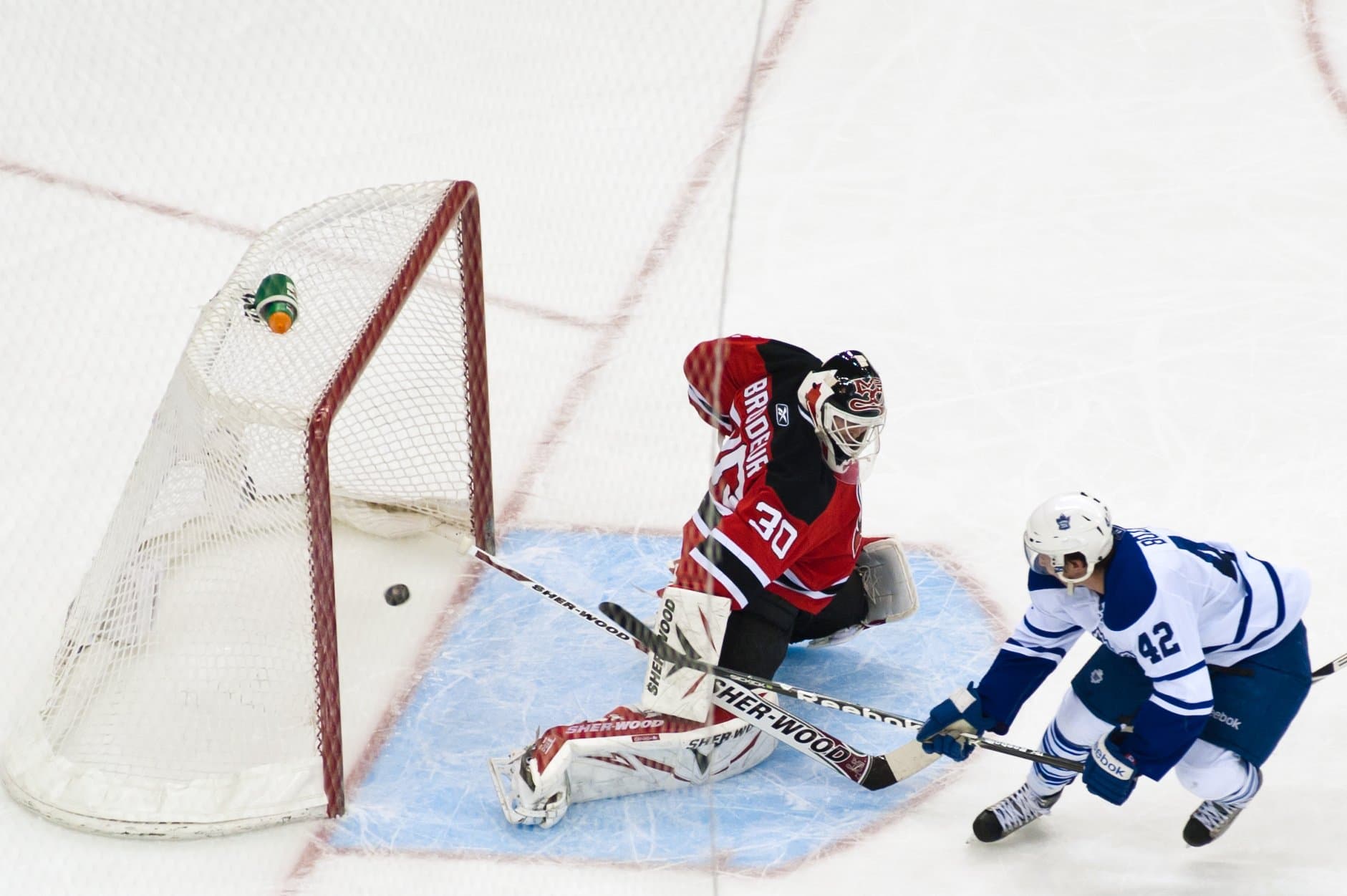
Photo: James DiBianco, Wikimedia Commons (BY-SA-2.0)
Gavin McKenna Power Play Role Just Shrank. Hiller Is Right Anyway
Table of Contents
The Gavin McKenna power play plan changed between July and September
The Gavin McKenna power play assignment in Toronto's pre-season opener was the second unit, not the first. That is a small line in a box score and a meaningful change in direction. In July, reporting out of Sportsnet had the Leafs envisioning their No. 1 overall pick on PP1 from the opening night of the season. On Saturday against Montreal, the first unit was Darren Raddysh, Auston Matthews, John Tavares, William Nylander and Jack Roslovic. McKenna was on the second group with Emil Andrae, Matthew Knies, Bo Groulx and Tinus Luc Koblar.
Jim Hiller did not dress it up. Asked about leaving the 18-year-old off the top unit, the coach said the Leafs do not want to put extra pressure on him, that the goal is to get him started in the NHL and let him feel what it is like, and that there will be a chance over time. Elsewhere he put it more plainly: for him and for us, just get out there and play.
That is a defensible answer. It is also a retreat from the plan Toronto floated in July, and the reasons for the retreat are worth naming honestly, because they are not really about McKenna.
Why holding him back is the correct call right now
Start with the part Hiller has right. An NHL power play is the most structured five-on-five-adjacent environment in the sport, and the learning curve for an 18-year-old is not about skill — it is about timing. Where the seam opens. When the penalty killers commit. How long you can hold the puck on the half wall before the pressure arrives. McKenna has the vision. He has never run that read against NHL killers.
The second unit is where you learn it without the whole city watching. Second-unit power-play time in the NHL is roughly 40 to 60 seconds a night on a good night. It is low-stakes repetition. It is also, crucially, where he is the most talented player on the ice rather than the fourth-most, which means he touches the puck more, not less.
And there is the workload argument. McKenna played 19-plus minutes at even strength on Saturday on a line with Tavares and Nylander. He is not short of NHL ice. Adding 2:30 of first-unit power play would push an 18-year-old into a top-of-the-roster usage pattern in his first professional week.
The problem is what PP1 looks like without him
Here is the uncomfortable part. Toronto's first unit as deployed Saturday — Raddysh at the point, Matthews, Tavares, Nylander, Roslovic — is a group with one genuinely new element. Raddysh is the change. Everything else is the same core that ran the same looks last season, minus Mitch Marner, plus Roslovic filling the bumper or flank.
Marner was the distributor. He was the player who made the entry work and found the cross-ice seam. Toronto has not replaced that function; it has redistributed it. Nylander takes on more. Tavares works the net front. Raddysh shoots from the line, which is precisely why Chayka signed him. It is a reasonable unit. It is not an inventive one.
McKenna is the most natural Marner-style distributor the organization has acquired since Marner left. Putting him on the unit that does not need a distributor, while the unit that does runs the same shape it ran last year, is the sort of decision that is defensible in September and indefensible in December.
Daniel Alfredsson has the harder job
Associate coach Daniel Alfredsson owns the power play, and his mandate is the clearest of anyone on Hiller's staff. He was hired to change the shape of it, not to run the same 1-3-1 with different personnel. If the first unit in late October is still Matthews on the left circle waiting for a one-timer that everybody in the league has scouted, the personnel question becomes secondary.
The counterargument to all of this is that McKenna's development is not a power-play problem to be solved — it is a season-long process, and Hiller knows more about where the kid actually is than anyone reading a box score. Fair. But Toronto did not draft first overall to be patient. It drafted first overall because it missed the playoffs and had to rebuild its top six around younger, cheaper talent.
The rest of the roster reflects that urgency. The bottom six was rebuilt in July. The blue line was reshuffled. The crease was handed to a 37-year-old on a three-year deal specifically so the window would not be wasted. Everything about this summer said now. The power-play decision says later.
The zone entry is the real argument
Strip the debate down to one skill and it becomes simpler. The single most predictive part of a power play is not the shot at the end. It is whether you can carry the puck across the blue line with possession. Units that gain the zone cleanly get set up; units that dump and chase spend 40 seconds retrieving and get one look. Every serious public analytics model on special teams has landed in the same place on this for a decade.
Marner was Toronto's entry engine for years — the player who took the puck up the wall, drew the first killer and made the pass that beat the box before it formed. Since the sign-and-trade that sent him to Vegas in July 2025, the Leafs have not had a designated one, which is the through-line in everything that has gone wrong with Toronto's man advantage. Nylander can do it. Matthews can do it. Neither is built for it the way Marner was, and neither wants the puck 200 feet from the net.
McKenna is. His junior tape is full of controlled entries where he changes speed at the line and waits for the killer to commit. That is the exact skill the first unit is missing and the exact skill a second unit cannot teach him, because the second unit faces the tired penalty killers who are already backing off. Practising a hard read against a soft look is not practice.
The bet we would make
McKenna should be on the first unit by American Thanksgiving, and if he is not, it will mean one of two things: either he has not adjusted as quickly as camp suggested, or the coaching staff has decided the safer structure is worth the ceiling it costs. The second one would be the worse outcome.
The honest version of this take: Hiller's September call is right and his November call needs to be different. Protecting a rookie for three weeks is coaching. Protecting him for three months is a way of admitting the top unit cannot be changed, and that is the exact failure mode that got the last staff fired.
McKenna's own numbers from the opener support the aggressive read. Three shots on goal, 19 minutes of even-strength work against Montreal's best pair and no meaningful sheltering in his debut. Hiller is not hiding him. He is hiding him from one specific situation, which is a strange place to draw the line.
What to watch on Sept. 23
Toronto plays its last two pre-season games on Sept. 23, a split-squad night against Ottawa with games at Canadian Tire Centre and Scotiabank Arena. If McKenna gets first-unit reps in either of them, the July plan is back on. If he does not, the second unit is the opening-night assignment and the question moves to how long it lasts.
Watch the shape more than the names. If the first unit runs the same entry and the same half-wall read it ran last year, the identity of the fifth man is the least of it. If Alfredsson has built something new and McKenna is not in it, that is the actual story.
Toronto's 23-man roster is due to the league by 5 p.m. ET on Sept. 28, and the season opens the following night against Montreal. Check the roster page for how the forward group is shaping up, and the contracts breakdown for what Toronto is paying the players currently ahead of its best young forward on the man advantage.
Frequently Asked Questions
Is Gavin McKenna on the Maple Leafs first power play unit?
No. In Toronto's pre-season opener on Sept. 19, 2026, McKenna skated on the second unit. The first unit was Darren Raddysh, Auston Matthews, John Tavares, William Nylander and Jack Roslovic. McKenna's second unit included Emil Andrae, Matthew Knies, Bo Groulx and Tinus Luc Koblar.
Why is Gavin McKenna not on PP1?
Jim Hiller said the Leafs do not want to put extra pressure on the 18-year-old, that the priority is getting him started in the NHL and letting him feel what it is like, and that a first-unit chance will come over time. Toronto has enough established scorers that McKenna does not need to carry a unit in September.
Who runs the Maple Leafs power play in 2026-27?
Associate coach Daniel Alfredsson has the power play under new head coach Jim Hiller, who was hired on June 17, 2026. Changing the structure of Toronto's man advantage is one of the clearest mandates on the new staff.
What does the Maple Leafs first power play unit look like without Mitch Marner?
As deployed in the pre-season opener: Darren Raddysh at the point, with Auston Matthews, John Tavares, William Nylander and Jack Roslovic. Raddysh is the only genuinely new piece, added this summer in part for his right-handed shot volume from the blue line.
How much ice time does a second power play unit get in the NHL?
Typically 40 to 60 seconds per power play, and often less on nights when the first unit is scoring. Over a full season that usually works out to under a minute of power-play time per game for a second-unit forward.
When will Gavin McKenna get first-unit power play time?
Hiller has not set a date, saying only that a chance will come over time. Toronto's last two pre-season games are both on Sept. 23 against Ottawa, and first-unit reps in either would signal the plan has changed back.


