Photo: NHL.com
Maple Leafs Power Play Ranked 25th. Fixing It Is the Season.
Table of Contents
The Maple Leafs power play converted at 16.8 per cent last season, 25th in the NHL. The penalty kill finished at 83.5 per cent, fifth. That split is the most underrated fact about Toronto's 2026-27 season, because it means the club's single largest performance gap is also its cheapest one to close — no trade required, no cap space needed, no rookie exceeding expectations. Just a unit that was among the league's best two years ago getting back to something near average.
How the Maple Leafs power play fell apart
This was not a slow decline. In 2024-25 Toronto ran at 24.8 per cent with the man advantage, among the best units in hockey. A season later it was 16.8 per cent and 25th. Teams do not usually lose eight percentage points in a year without something structural breaking.
The early months were worse than the final number. Through the first stretch of the season Toronto's conversion rate sat near the bottom of the league — in the 12 to 13 per cent range, at points dead last — and the club fired assistant coach Marc Savard in-season after a 5-1 loss to Dallas. In-season analysis pointed at two things at once: a shooting percentage that had collapsed from around 17 per cent to roughly 11, and a unit that ranked in the bottom third of the league in shot attempts at five-on-four. The first is variance. The second is design.
That distinction matters for what happens next. If the entire problem were finishing luck, you would expect a natural rebound with no intervention. But a power play that does not shoot enough does not get to wait for luck. It has to be rebuilt, and that is what Toronto spent the summer doing — mostly through the coaching staff rather than the roster.
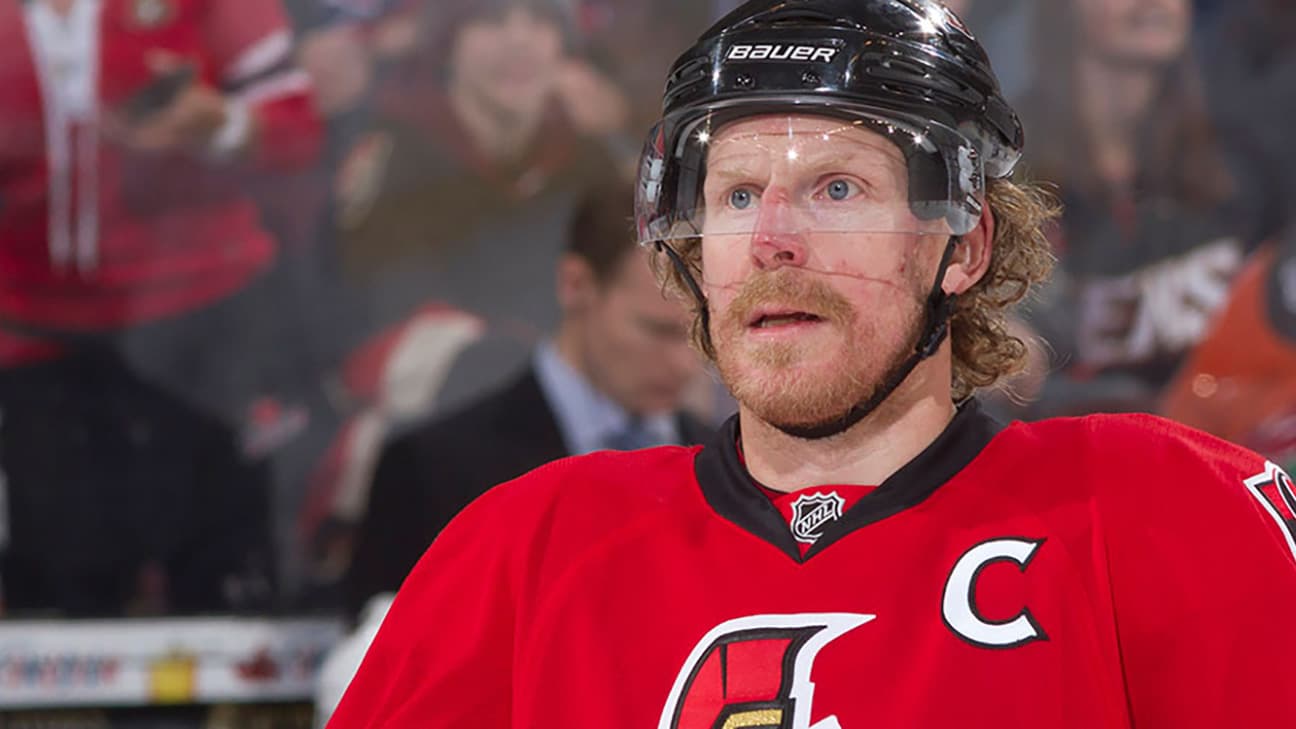
Daniel Alfredsson is the actual power-play move
Jim Hiller's staff came together in early July, and the name that mattered most for special teams was Daniel Alfredsson as associate coach. Alfredsson ran Ottawa's power play last season, a consistent top-10 unit that operated around 24 per cent and finished eighth overall. John Gruden joined as an assistant after three seasons behind the Marlies bench, culminating in a Calder Cup, with Brad Werenka also on staff and Curtis Sanford handling goaltending.
There is a second layer here that is easy to miss. Hiller himself ran Toronto's power play during his previous stint as an assistant with the club in the Mike Babcock years. This is a head coach who has done the job, hiring an associate who just did it well somewhere else. Whatever else is uncertain about the Hiller hire — and plenty is, given how far outside the rumour mill it came — the special-teams credentials are not the questionable part.
We covered the coaching hires when they were announced. Two months later, with the roster essentially set, that hire looks like the most consequential thing Toronto did to its offence outside of drafting first overall.
The personnel is better than the results suggested
Toronto did not need to import power-play talent, which is fortunate, because it could not have afforded to. What it needed was the right pieces arranged properly.
Darren Raddysh is the most obvious addition. Signed to an eight-year deal after arriving from Tampa Bay, he led the entire NHL in shot attempts of 90 miles per hour or faster with 97 — nearly double the next-closest player. A power play that ranked in the bottom third in shot volume just added the league's hardest-shooting point man. That is not a subtle fit.
Then there is Gavin McKenna. The first overall pick is a distributor by profile, and the half-wall on a first unit is the single best place on an NHL rink for an 18-year-old playmaker to be useful immediately — puck on his stick, time to survey, no requirement to win a defensive-zone battle first. We have argued for McKenna on PP1 from opening night, and the coaching change makes it likelier, not less.
The rest is familiar. Auston Matthews in his office at the top of the circle. William Nylander on the opposite flank. Matthew Knies, coming off 23 goals and 66 points in 79 games, as the net-front presence who is genuinely willing to stand there. On paper that is a top-10 unit. On the ice last season it was 25th, which is the entire point.
What five percentage points is actually worth
Here is the arithmetic, with the assumption stated openly so you can adjust it. A typical NHL team draws somewhere in the range of 230 to 250 power-play opportunities over a full season. At that volume, one percentage point of conversion is worth roughly two and a half goals. Move from 16.8 per cent to a merely league-average 20 or 21 per cent and Toronto gains something in the neighbourhood of eight to 10 goals. Get back to the 24.8 per cent of two seasons ago and it is closer to 20.
An 84-game schedule adds opportunities to that base, which nudges the number up further. Twenty goals is not a rounding error for a team that finished 32-36-14 with 78 points. Using the rough conventional exchange rate of goals to standings points, that is a difference measured in multiple wins — and it costs nothing but coaching and deployment.
Compare that to the alternatives. Adding a scoring forward capable of producing 20 additional goals would cost a first-round pick Toronto does not have and cap space it is already over. The contracts page shows a club sitting roughly $2.75 million above the $104 million upper limit before it has iced a lineup. The power play is the only meaningful upgrade available for free.
The penalty kill is the part not to break
The other half of the special-teams ledger deserves its own attention, mostly as a warning. Toronto's penalty kill finished fifth in the league at 83.5 per cent. That was, quietly, one of the few genuinely good things about a 78-point season, and it happened on a roster that has since turned over substantially through the bottom six.
Colton Sissons, Teddy Blueger, Nick Paul and Brandon Duhaime all arrived with penalty-killing on the job description, so the raw materials are there. The risk is structural: new coach, new system, new personnel, all installed in a compressed camp with only four preseason games under the new collective bargaining agreement. Special teams take repetitions, and the schedule has fewer of them available than in any recent September.
There is one deployment question worth resolving early. Matthews has historically taken short-handed minutes, and there is a strong argument he should take none at all this season — protecting a player coming off March knee surgery on a unit that already ranked fifth without needing him. We laid that case out in our look at his penalty-kill usage, and the bottom-six additions make it easier to execute than it would have been a year ago.
Special teams versus the five-on-five problem
None of this means the power play is Toronto's only issue. The club allowed 299 goals last season, and the five-on-five defensive structure Hiller is installing is the larger project. But it is also the slower one — systems take months to take hold, and the personnel changes on the blue line come with real uncertainty given Chris Tanev's clearance is still pending.
Special teams move faster. A power play can be fixed in six weeks with better entries, more shot volume and a distributor who forces penalty killers to respect the pass. That makes it the most likely source of early-season improvement, which matters enormously for a team whose fan base and, frankly, whose coach cannot afford a 4-8-2 October. We wrote about the five-on-five repair job separately — the two projects are complementary, not competing.
What's next
Watch the first unit at camp. The composition of PP1 in the opening week of practice will tell you more about Toronto's offensive plan than any line rush. Specifically: whether McKenna is on it from day one, whether Raddysh or Morgan Rielly quarterbacks, and whether Knies is genuinely committed to the net front rather than rotated through it.
Then watch the four preseason games — two against Montreal starting Sept. 19, two against Ottawa including a home date Sept. 23 — for shot volume rather than conversion. Small samples of goals mean nothing. Attempts per two minutes of power-play time mean quite a lot, and it is the number that separates a unit that got unlucky from one that was actually broken.
Our expectation: Toronto's power play finishes 2026-27 between 21 and 23 per cent. That would be a top-12 unit, roughly 12 to 15 goals better than last season, and the largest single reason the club is in the playoff race in March. If it does not happen, no amount of five-on-five structure saves this season, and the questions land on a coaching staff that was hired specifically to fix it.
Frequently Asked Questions
Where did the Maple Leafs power play rank in 2025-26?
Toronto finished 25th in the NHL at 16.8 per cent on the man advantage. That was a steep drop from 24.8 per cent the previous season, when the unit was among the league's best. The early months were worse still, with the conversion rate sitting near the bottom of the league in the 12 to 13 per cent range.
How good was the Maple Leafs penalty kill last season?
The penalty kill was one of the few things that worked. Toronto finished fifth in the NHL at 83.5 per cent in 2025-26, a season in which the club went 32-36-14 for 78 points and missed the playoffs. Keeping that unit intact through a coaching and personnel change is a real risk this fall.
Who runs the Maple Leafs power play in 2026-27?
Daniel Alfredsson, hired as associate coach in July 2026, is the staff's power-play specialist. He ran Ottawa's unit last season, which converted at around 24 per cent and finished eighth in the league. Head coach Jim Hiller also ran Toronto's power play during his earlier stint as a Maple Leafs assistant.
Why did the Maple Leafs fire Marc Savard?
Savard was dismissed as an assistant coach during the 2025-26 season with the power play converting near the bottom of the NHL, a decision that followed a 5-1 loss to Dallas. The unit finished the year at 16.8 per cent, 25th overall, after ranking among the league's best a season earlier.
How much is a better power play worth in the standings?
A typical NHL team draws roughly 230 to 250 power-play opportunities in a season, so one percentage point of conversion is worth about two and a half goals. Moving Toronto from 16.8 per cent to a league-average 20 or 21 per cent is worth roughly eight to 10 goals, and returning to 24.8 per cent is worth closer to 20.
Will Darren Raddysh help the Maple Leafs power play?
That is a large part of why Toronto signed him to an eight-year deal. Raddysh led the entire NHL in shot attempts of 90 miles per hour or faster with 97, nearly double the next-closest player, and Toronto's power play ranked in the bottom third of the league in shot volume at five-on-four last season.
Will Gavin McKenna play on the Maple Leafs first power-play unit?
He is the leading candidate. The first overall pick is a distributor by profile, and the half-wall on PP1 is the fastest way to get an 18-year-old productive minutes without exposing him to shutdown matchups at five-on-five. Watch the opening week of camp practices for confirmation.
How many special teams reps do the Leafs get in preseason?
Fewer than usual. The new collective bargaining agreement caps the preseason at four games per club, and Toronto plays two against Montreal beginning Sept. 19 and two against Ottawa, including a Sept. 23 home date. That compressed schedule leaves limited live repetitions to install new special-teams structures.


