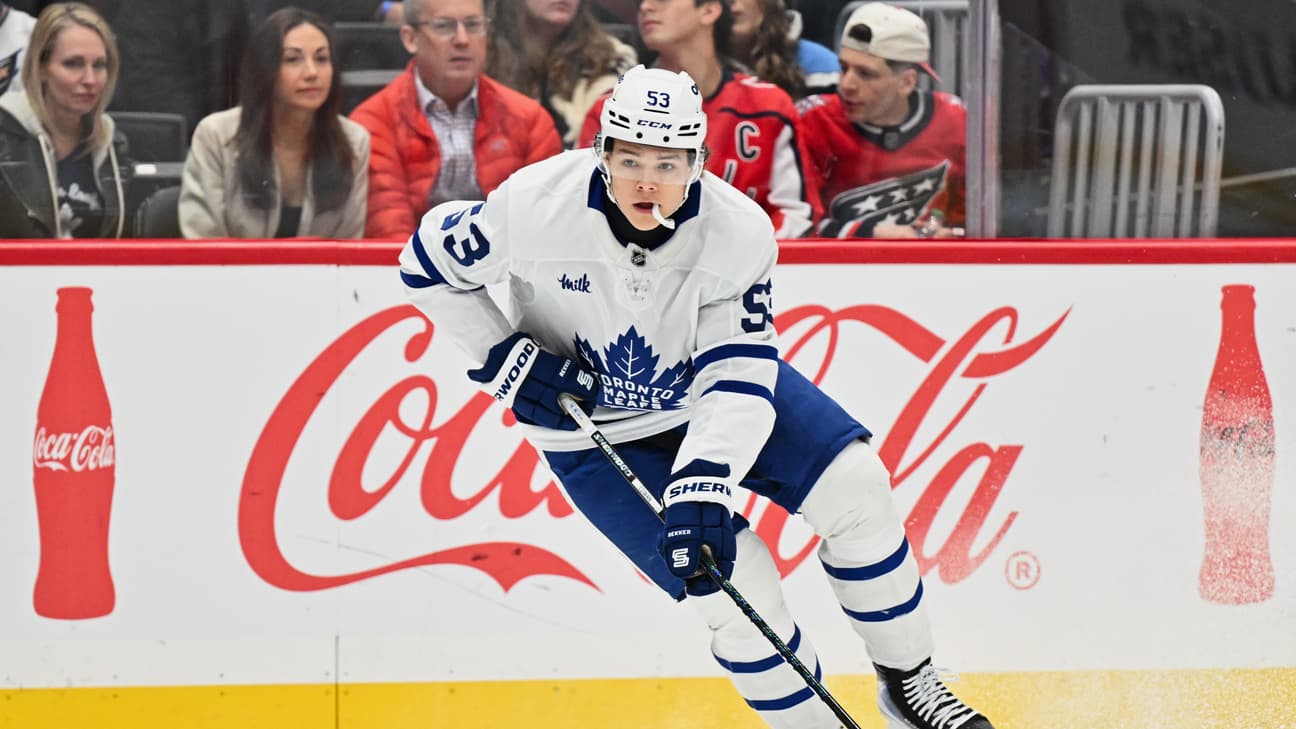
Photo: NHL.com
Maple Leafs Training Camp 2026: The Roster Battles That Will Define Toronto's Fall
Table of Contents
Maple Leafs training camp 2026 arrives with more open jobs than Toronto has had in years
Maple Leafs training camp 2026 is still weeks away — NHL camps open in September ahead of the league's first 84-game season — but the shape of it is already clear. John Chayka spent the summer swapping familiar faces for younger, cheaper term, and the result is a roster with real competition rather than a set depth chart with a couple of tryout invites at the bottom. For the first time in a long while, several genuine NHL jobs in Toronto are up for grabs, and the way they get settled will define the team's fall.
This is what a retool looks like when it hits the ice. A rebuilt bottom six, a headline prospect knocking on the door, a blue line in flux and a cap crunch that guarantees someone gets squeezed out. Here are the battles worth watching when the Maple Leafs report to camp.
The top-six winger next to Matthews
The most important audition in camp is on Auston Matthews' flank. With the forward group reshaped, the question of who rides shotgun alongside the captain — assuming he is healthy and locked in after his reported mid-July commitment checkpoint passed — is genuinely open. Matthew Knies is the obvious candidate to anchor one wing on the strength of his six-year, $7.75-million extension and his ascending two-way game. The other spot is the prize everyone will be chasing.
William Nylander will drive his own line, which frees up a premium slot in the top six. Whether it goes to a veteran or to a kid who forces the issue is the sort of decision Jim Hiller and his staff will let camp answer. That uncertainty is healthy. It is also the direct product of a summer spent adding options rather than locking everything in.
Gavin McKenna and the nine-game question
No storyline will dominate camp like Gavin McKenna. The No. 1 overall pick has an entry-level contract in hand and a development camp behind him where he was, by every account, the best skater on the ice. The question is not whether he belongs eventually. It is whether he opens the season in Toronto or heads back for another year of junior development.
The mechanism to watch is the nine-game window. A player on an entry-level deal can play up to nine NHL games before the first year of his contract officially burns, giving Toronto a low-risk runway to see what McKenna looks like against NHL competition before committing to keep him. If he plays like a franchise cornerstone in September, the calculus tilts toward keeping him. If the pro game overwhelms him early, the org has a clean off-ramp. Either way, McKenna's camp is the most-watched audition on the roster.
Easton Cowan's push for a full-time job
Easton Cowan arrives at camp with the clearest runway of his career. We laid out his path to a full-time NHL job and a top-six audition earlier this summer, and nothing since has narrowed it. The reshaped forward group opened lineup space, and Cowan's skating and hockey sense have him positioned to seize a middle-six role if he takes it.
The competition is real, though. Cowan is not being handed a spot — he is being handed a chance to win one, and the depth Chayka added means a slow start could push him back to the Marlies. That pressure is the point. A prospect who earns his job in a competitive camp is more valuable than one gifted a role by default.
The bottom-six centre logjam
Toronto's middle grew crowded fast. Nick Paul arrived via trade to solve the third-line centre hole, Colton Sissons signed a two-year, $4.25-million deal as a versatile pivot, and Teddy Blueger was added to the free-agent haul as well. That is a lot of capable, defensively responsible centres for a finite number of spots behind Matthews and John Tavares.
Camp will sort out the pecking order — who centres the third line, who slides to the wing, who anchors the fourth and takes the defensive-zone draws. It is a good problem, the kind of depth a contender needs over an 84-game grind. But it also feeds directly into the roster's biggest subplot: not everyone fits under the cap.
The right-shot battle on the bottom pair
The blue line is the most unsettled group on the roster. Chris Tanev is healthy again and back to anchoring a shutdown pair, and Morgan Rielly's status hangs over everything while the front office weighs a trade that may not come. Below the top pairings, there is a live competition for minutes — particularly on the right side, where Toronto has spent the summer trying to solve a right-shot shortage.
Prospect Ben Danford, veteran Troy Stecher and the depth additions will fight for bottom-pair time and the seventh-defenceman role. Whether Rielly stays or goes changes the whole board — a trade opens a top-four spot and shifts everyone up a rung. Few groups on the roster will be reshaped more by how camp and the trade market unfold.
The crease behind the tandem
The top of the goaltending depth chart is settled: Sergei Bobrovsky and Anthony Stolarz form the NHL tandem. The competition is underneath. With Joseph Woll dealt away earlier in the summer, the organizational depth behind the starters — Dennis Hildeby, Artur Akhtyamov and the newly signed Samuel Hlavaj — will battle for the Marlies' crease and the emergency-recall pecking order.
That may sound like minor-league bookkeeping, but over an 84-game season with two goalies on the wrong side of their prime years, the third and fourth options matter more than usual. Bobrovsky turns 38 before the season and Stolarz has his own injury history, so the odds Toronto needs a fourth or fifth starter at some point are high. Camp is where the org gets its first real look at who is ready to be a call-up and who needs another year of AHL reps.
The cap crunch hanging over everything
Every one of these battles plays out under a hard constraint: Toronto is over the $104-million salary cap and has to shed money before the season. Dakota Joshua has surfaced as the likeliest cap-clearing chip, and a Rielly trade would reshape the math entirely. That means at least one of these camp competitions will be settled not by performance but by accounting — a capable NHL player moved to make the numbers work.
It sharpens the stakes. A strong camp is not just an audition for a role; for some players it is an audition to survive the roster crunch at all. A fringe forward who lights up the preseason gives Chayka a reason to keep him and move someone else, while a quiet camp makes a player easy to cut loose. The full compliance picture is in our breakdown of how Toronto gets cap compliant. When the Maple Leafs open camp in September, the on-ice competition and the cap sheet will be fighting for the same handful of jobs — and that tension is exactly what makes this the most interesting Toronto camp in years. For a wider view of where the team stands, see our Atlantic Division outlook and the standings page once the games begin.
Frequently Asked Questions
When does Maple Leafs training camp start in 2026?
NHL training camps open in September 2026, ahead of the league's first 84-game regular season. Exact reporting dates are set by the club closer to camp, but the Maple Leafs will convene in September as usual before the preseason schedule.
Will Gavin McKenna make the Maple Leafs roster out of camp?
It is undecided and will be one of camp's biggest storylines. McKenna can play up to nine NHL games before the first year of his entry-level contract burns, giving Toronto a low-risk look before deciding whether to keep him or return him to junior development.
What is the nine-game rule for NHL entry-level contracts?
A player on an entry-level deal can appear in up to nine NHL games before the first year of the contract officially counts against its term. It lets teams evaluate a young prospect against NHL competition without committing to keep him for the full season.
Who will play alongside Auston Matthews in 2026-27?
It is an open competition heading into camp. Matthew Knies is a strong candidate to anchor one wing on his six-year, $7.75-million deal, while the other top-six spot is one of the most contested jobs on the roster.
Are the Maple Leafs going to trade a player before the season?
Almost certainly. Toronto is over the $104-million salary cap and needs to shed money to become compliant. Dakota Joshua and his $3.25-million cap hit have been floated as the likeliest cap-clearing trade, and a Morgan Rielly move remains possible.
Who are the Maple Leafs' goalies for 2026-27?
Sergei Bobrovsky and Anthony Stolarz form the NHL tandem. Behind them, Dennis Hildeby, Artur Akhtyamov and Samuel Hlavaj will compete for the Marlies' crease and the recall depth chart after Joseph Woll was traded earlier in the summer.
Is Easton Cowan going to make the Maple Leafs?
Cowan has a clear runway to win a full-time NHL role after the forward group was reshaped, but he is not guaranteed a spot. He will have to earn a middle-six job in a competitive camp, and a slow start could send him back to the Marlies.


