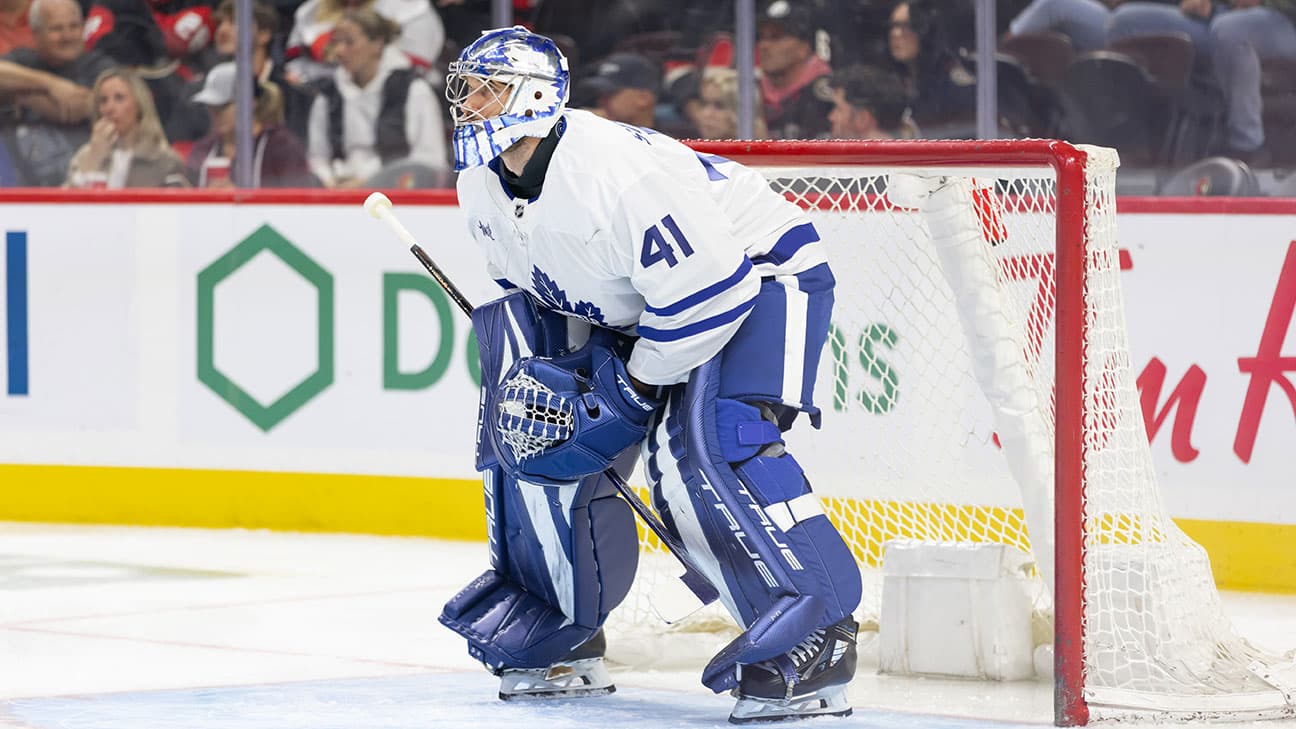
Photo: NHL.com
Sergei Bobrovsky Signs With Maple Leafs: Three Years, $21 Million to Reset the Crease
Table of Contents
Sergei Bobrovsky is a Maple Leaf
The Sergei Bobrovsky Maple Leafs marriage is official. On the opening day of free agency, John Chayka handed the 37-year-old goaltender a three-year, $21-million contract — a $7-million average annual value — and in doing so reset the most scrutinized position in Toronto hockey. The two-time Vezina Trophy winner and back-to-back Stanley Cup champion becomes the headline of a July 1 that saw the Leafs make five signings and two trades. This one was the statement.
Bobrovsky will be 38 when the 2026-27 season opens in October, and the contract runs through his 40th birthday. That is the bet Chayka made: that recent playoff pedigree and a proven big-game temperament outweigh the actuarial risk of paying a goaltender into his late 30s. It is an unmistakably win-now signal from a front office that spent June selling the idea of a patient reshape.
What Toronto is actually buying
The résumé is not in question. Bobrovsky owns 456 career regular-season wins, seventh all-time among NHL goaltenders. He won the Vezina in 2013 and 2017 with Columbus and earned First Team All-Star honours in both of those seasons. The back half of his career, in Florida, delivered what Columbus never could: Stanley Cups in 2024 and 2025, with Bobrovsky the last line of defence on both runs.
The most recent regular season was a more sober picture. Bobrovsky skated in 52 games for the Panthers and went 27-23-1 with an .877 save percentage — pedestrian by the standards of his prime. Toronto is not paying $7 million for that number. It is paying for the goaltender who has repeatedly found another level in April, May and June, and for the reality that Florida managed his workload precisely so he would be sharp when it mattered.
The Stolarz reunion
The signing does not exist in a vacuum. Bobrovsky reunites with Anthony Stolarz, his former Florida partner, giving Toronto a tandem that already has chemistry and a shared Cup-winning résumé. In the Panthers' championship years, Stolarz carried a heavy regular-season share while Bobrovsky closed in the playoffs. The blueprint travels well. If Stolarz handles 45-plus starts and Bobrovsky is deployed as a rested, high-leverage complement, the age concern shrinks considerably.
How the crease got cleared
None of this happens without the earlier demolition. Chayka spent the spring dismantling the old goaltending group. Joseph Woll was traded to the Philadelphia Flyers in the general manager's first significant move, and on July 1 Dennis Hildeby was shipped to Tampa Bay as the centrepiece of the Nick Paul trade. What had been a crowded, uncertain crease is now a clean two-man arrangement with a clear pecking order.
Behind the tandem, the organization still has Artur Akhtyamov, the AHL playoff MVP with the Marlies, as a genuine prospect and insurance policy. That depth mattered in the calculus — Toronto did not need Bobrovsky to be an 60-game workhorse, which is exactly why a 38-year-old on a three-year term is a more defensible gamble here than it would be elsewhere. For a fuller look at the pipeline, see our breakdown of the Leafs' goaltending depth.
The cap gymnastics that made it possible
A $7-million goaltender does not fit onto a Toronto roster by accident. Chayka created the room deliberately. Moving Brandon Carlo to St. Louis, dealing Woll, and declining to qualify Matias Maccelli all opened space, and the sum of those subtractions is what let Toronto operate aggressively on July 1 without mortgaging the future. You can track the full picture on our contracts page, but the short version is that the Leafs entered the day with real flexibility and spent it on the position they judged most fragile.
It is worth remembering how thin the confidence in the crease had become. Toronto missed the 2026 playoffs, and goaltending was one of the reasons why. Chayka's read is that no amount of forward depth matters if the team cannot get consistent saves in a seven-game series. Bobrovsky is the answer to a question the front office clearly considered existential.
The alternative Chayka passed on
Toronto's goaltending search was not a one-name pursuit. For weeks the market chatter paired the Leafs with several veteran options, and the front office weighed a younger, cheaper netminder against a proven playoff commodity. Chayka chose pedigree over projection. The logic is that a rebuilding contender cannot afford to gamble the crease on an unproven starter, and that Bobrovsky's postseason track record — 33 wins across the 2024 and 2025 championship runs — is the closest thing to a sure thing the position offers.
That decision fits a pattern. Across June and into July 1, Chayka repeatedly favoured players with a demonstrated ceiling and a clear role over cheaper unknowns. In the crease, where variance is highest and the cost of being wrong is a lost season, that instinct is easiest to defend. A team that has watched shaky goaltending end recent springs was never going to bet on hope.
What a managed workload looks like
The key to making a 38-year-old goaltender work is deployment, and Toronto has the pieces to do it right. If Stolarz handles the bulk of the regular-season starts and Bobrovsky is spotted against quality opponents and kept fresh for the stretch run, the age risk is materially reduced. Florida wrote that exact playbook during its Cup years, resting Bobrovsky through the winter so he arrived in April with legs. Replicating it in Toronto is less about hope than about discipline from Jim Hiller's staff.
The presence of Akhtyamov behind the tandem matters here too. If either veteran needs a stretch off, Toronto is not forced to overplay the other. That flexibility — a genuine three-deep goaltending group — is what turns a risky term into a manageable one. The whole structure is built to keep Bobrovsky's starts meaningful and his mileage low.
The risk nobody should pretend away
Let us be honest about the downside. Goaltenders age unpredictably, and a three-year term that ends at 40 could sour quickly if Bobrovsky's game slips before the contract does. The .877 save percentage from last season is not nothing, and a bad first two months in a market this unforgiving would turn the signing into a talk-radio grenade. Chayka has essentially wagered that the playoff version of Bobrovsky is the real one and the regular-season dip was Florida coasting.
There is also the matter of expectations. Adding a two-time Cup winner to a roster that just missed the postseason raises the stakes on everything else. The message, as Chayka framed it, is that Toronto intends to compete now — not in three years. That is a bold place to plant a flag for a general manager who was hired in May and inherited a team in transition.
What's next
The signing slots cleanly into a broader, faster, heavier roster that Chayka assembled across a hectic July 1. With the crease settled, attention turns to how the new-look forward group and Jim Hiller's system come together in training camp. For now, the headline is simple: Toronto has a goaltender with two rings and a résumé, and the franchise has decided the time to win is now. Whether the bet pays off will be written in the spring, not the summer — and you can follow the fallout across our free agency coverage and the standings once the season begins.
Frequently Asked Questions
How much is Sergei Bobrovsky's Maple Leafs contract?
Bobrovsky signed a three-year contract worth $21 million, an average annual value of $7 million. The deal was agreed on July 1, 2026, the opening day of NHL free agency.
How old is Sergei Bobrovsky?
Bobrovsky is 37 and will turn 38 before the 2026-27 season opens. His three-year contract runs through his 40th birthday, making it an aggressive term for a goaltender.
Why did the Maple Leafs sign Bobrovsky?
Toronto missed the 2026 playoffs and identified goaltending as a weakness. GM John Chayka wanted a proven playoff goaltender, and Bobrovsky won back-to-back Stanley Cups with Florida in 2024 and 2025 while posting elite postseason numbers.
Who will be the Maple Leafs' goalies in 2026-27?
Toronto's tandem is Bobrovsky and Anthony Stolarz, who were teammates on Florida's Cup-winning teams. Marlies playoff MVP Artur Akhtyamov provides organizational depth after Joseph Woll and Dennis Hildeby were traded.
What were Bobrovsky's stats last season?
Bobrovsky played 52 games for the Panthers in 2025-26, going 27-23-1 with an .877 save percentage. His regular-season numbers dipped, but he remained a strong playoff performer during Florida's back-to-back title runs.
How many career wins does Sergei Bobrovsky have?
Bobrovsky has 456 career regular-season wins, seventh all-time among NHL goaltenders. He also won the Vezina Trophy in 2013 and 2017 and was a First Team All-Star in both seasons with Columbus.


