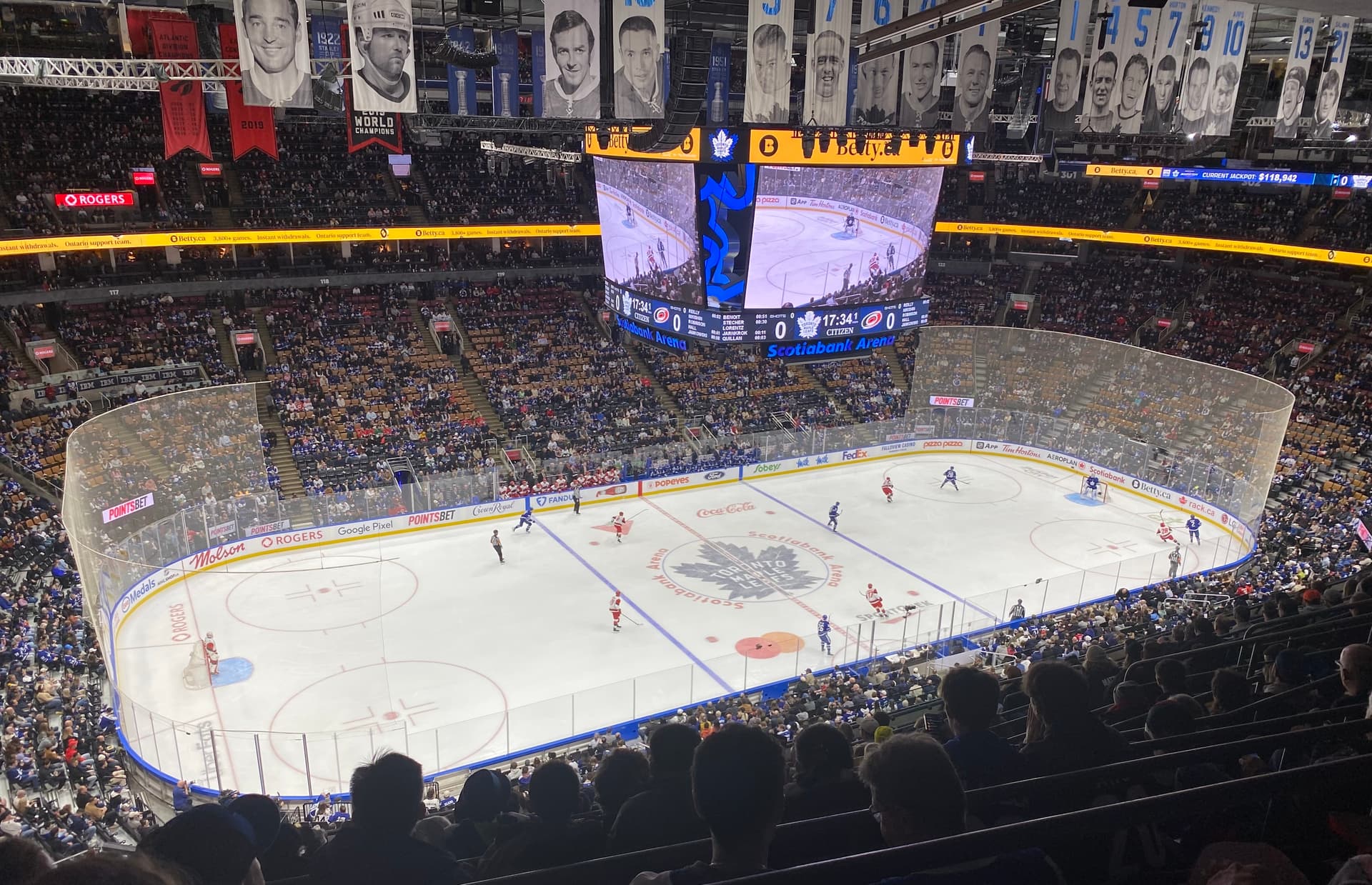
Photo: Adam Bishop, Wikimedia Commons (BY-SA-4.0)
Maple Leafs Trade Joseph Woll to the Flyers: Chayka's First Big Swing
Table of Contents
The Maple Leafs Trade Joseph Woll in Chayka's First Real Move
The Maple Leafs trade Joseph Woll era of John Chayka's tenure is officially under way. On June 16, Toronto sent goaltender Joseph Woll and defenceman Simon Benoit to the Philadelphia Flyers for goaltender Samuel Ersson, defenceman Emil Andrae and a third-round pick in the 2026 NHL Draft. It is the first significant transaction of Chayka's time as general manager, and it tells you a great deal about how he intends to run this team.
This was not a salary dump or a quiet depth shuffle. Woll, 27, was supposed to be one half of Toronto's crease for years. Trading him this early in an offseason — before the draft, before free agency, before a head coach is even hired — is a statement that nothing on this roster is untouchable.
The Full Terms of the Deal
Here is exactly what changed hands. Toronto gives up Woll, on a three-year, $11-million extension that carries a $3.67-million cap hit through 2027-28, and Benoit, a 6-foot-4 left-shot defenceman entering the final season of a three-year contract at a $1.35-million cap hit. In return, the Leafs receive Ersson, a 26-year-old Swedish goaltender, Andrae, a 24-year-old puck-moving defenceman, and a third-round selection that pads Toronto's draft haul to roughly eight picks for 2026.
Both incoming players are pending restricted free agents, which means Chayka still has to sign them — but it also means he controls their rights and can set the terms. For a manager who arrived preaching cost certainty and roster flexibility, acquiring two controllable RFAs while shedding a $3.67-million goaltender is the kind of math he was hired to do.
Why Trade Woll Now?
The honest answer is that Woll's 2025-26 season raised real questions. He went 15-16-7 with a .899 save percentage and a 3.31 goals-against average — a clear step back from the year before, when he posted a 27-14-1 record with a .909 save percentage and a 2.73 GAA. Some of that is variance behind a flawed defensive group. Some of it is the injury history that has shadowed Woll's entire career.
Toronto's crease had also become crowded. Anthony Stolarz, Woll and Dennis Hildeby all saw NHL time last season, and prospect Artur Akhtyamov has forced his way into the conversation with a strong year. When you have more goaltenders than you can dress, the smart move is to sell one while his value still exists. Chayka clearly decided Woll was that goaltender. We broke down the case for moving a netminder in our look at the Leafs' goalie trade question earlier this offseason, and this is essentially the scenario that piece anticipated.
The Crease Now Belongs to Stolarz
With Woll gone, Toronto is committing to Anthony Stolarz as its starter. Stolarz is entering the first season of a four-year, $15-million extension that begins in 2026-27 with a $3.75-million cap hit. He was excellent when healthy last season but missed a significant stretch with a nerve injury, and that is the obvious risk in this plan: the Leafs are now leaning heavily on a goaltender with his own durability questions.
Ersson becomes the insurance and the 1B. He is a bigger body at 6-foot-3 and a more conventional positional goaltender than Woll, and across 142 career NHL games he carries a .884 save percentage. His 2025-26 numbers in Philadelphia were modest, but he was playing behind a rebuilding team. Behind a deeper Toronto group, the bet is that he stabilizes. If Stolarz misses time again, Ersson — backed by Hildeby and Akhtyamov in the system — has to hold the fort.
Benoit Out, Andrae In: A Blueline Philosophy Shift
The defenceman swap is just as revealing as the goalie swap. Benoit is a big, physical, stay-at-home defender. Andrae is the opposite — a 5-foot-9, mobile, puck-moving defenceman drafted 54th overall in 2020, with 13 points in 61 games for the Flyers last season and a reputation for vision and zone exits. Chayka has been blunt about wanting more mobility and puck movement on the back end, a theme we explored in the Leafs blueline rebuild.
Trading a 6-foot-4 shutdown body for an undersized skater who moves the puck is exactly that philosophy in action. It will not please everyone — Toronto has been pushed around in past playoff runs, and Benoit was one of the few defenders who pushed back. But the modern game rewards transition, and Chayka is betting on the skill side of that trade-off.
Grading Chayka's First Trade
The early industry read is that this is a sensible swap of depth pieces rather than a lopsided heist in either direction. Toronto sheds a goaltender it had a surplus of, adds a controllable backup, brings in a defenceman who fits its stated identity, and collects another mid-round pick. Philadelphia gets a goaltender with starter upside if healthy and a steady defenceman for its bottom pair.
For Chayka specifically, the deal does three things at once: it clears a logjam, it adds draft capital, and it nudges the roster toward the style he wants to play. None of those individually is franchise-altering. Together, they are a clean opening move from a manager who promised to be aggressive and methodical at the same time. The cap context matters too — with the ceiling jumping to $104 million, every controllable contract is more valuable, a dynamic we unpacked in our piece on the $104M cap and Toronto's core.
The Fan Reaction and the Real Risk
The response in Toronto was predictably split. Woll was popular, he was homegrown in the sense that the organization developed him into an NHL goaltender, and he had delivered some of the franchise's better playoff goaltending in recent memory. Trading a 27-year-old netminder on a reasonable contract will always draw pushback, and it did. Supporters of the move countered with the injury history and the down year, and both sides have a point.
The honest risk is health. Toronto has now tied its crease to two goaltenders — Stolarz and Ersson — who each come with durability questions, and pushed its safety net down to prospects who have never carried an NHL season. If Stolarz misses significant time again and Ersson does not stabilize, this trade ages badly in a hurry. Chayka is betting that the depth chart, top to bottom, is good enough to absorb that risk. It is the single biggest variable in the deal.
What It Means for the Rest of the Roster
Beyond the crease, the message lands in the dressing room. Woll was well-liked and entrenched, and moving him signals to the core that comfort is not the same as security. For a group that has been criticized for a lack of urgency after repeated postseason disappointments, that is arguably the point. Chayka is reshaping not just the roster but the expectations inside it.
It also frees a roster spot and a sliver of cap flexibility heading into a summer where Toronto wants to add to its forward group and reshape its defence. Small moves compound. This one, on its own, does not transform the Leafs — but it establishes the tempo for everything Chayka does next.
What's Next for Toronto
This is almost certainly not the last move. Chayka still has a head coach to hire — the search has reached its final stretch — a No. 1 overall pick to spend at the 2026 draft in Buffalo on June 26, and a defence corps that remains a work in progress, with Morgan Rielly's trade situation still unresolved. The Woll trade reads like the first domino, not the last.
If you want to track how the pieces fit against the cap, our contracts page lays out the commitments. For now, the headline is simple: Chayka inherited a roster everyone said needed change, and within weeks he traded a goaltender almost no one expected him to move. The message to the rest of the room could not be clearer.
Frequently Asked Questions
Why did the Maple Leafs trade Joseph Woll?
Toronto traded Woll on June 16, 2026 because its crease had become crowded and Woll's play had slipped to a .899 save percentage and 3.31 GAA in 2025-26, down from .909 the prior year. With Anthony Stolarz signed as the starter and prospects pushing up, GM John Chayka sold Woll while his value held to add a controllable goaltender, a puck-moving defenceman and a draft pick.
What did the Maple Leafs get for Joseph Woll?
Toronto received goaltender Samuel Ersson, defenceman Emil Andrae and a 2026 third-round pick from the Philadelphia Flyers in exchange for Woll and defenceman Simon Benoit. Both Ersson and Andrae are pending restricted free agents whose rights now belong to the Leafs.
Who is the Maple Leafs starting goalie now?
Anthony Stolarz is the projected starter. He is entering the first year of a four-year, $15-million extension that carries a $3.75-million cap hit beginning in 2026-27. Sam Ersson, acquired in the Woll trade, slots in as the backup and insurance option.
What was Joseph Woll's contract?
Woll was on a three-year, $11-million extension with a $3.67-million annual cap hit that runs through the 2027-28 season. That contract now belongs to the Philadelphia Flyers after the June 16, 2026 trade.
Is this John Chayka's first trade as Leafs GM?
Yes. The Woll deal is the first significant transaction of Chayka's tenure since he was hired as Toronto's GM in May 2026. It came before the draft, free agency and the hiring of a new head coach.
How does the Woll trade affect the Maple Leafs salary cap?
Toronto moves off Woll's $3.67-million cap hit and Benoit's $1.35-million hit, while taking on two pending RFAs in Ersson and Andrae who still need new contracts. With the NHL salary cap rising to $104 million for 2026-27, the deal adds flexibility heading into free agency on July 1.


