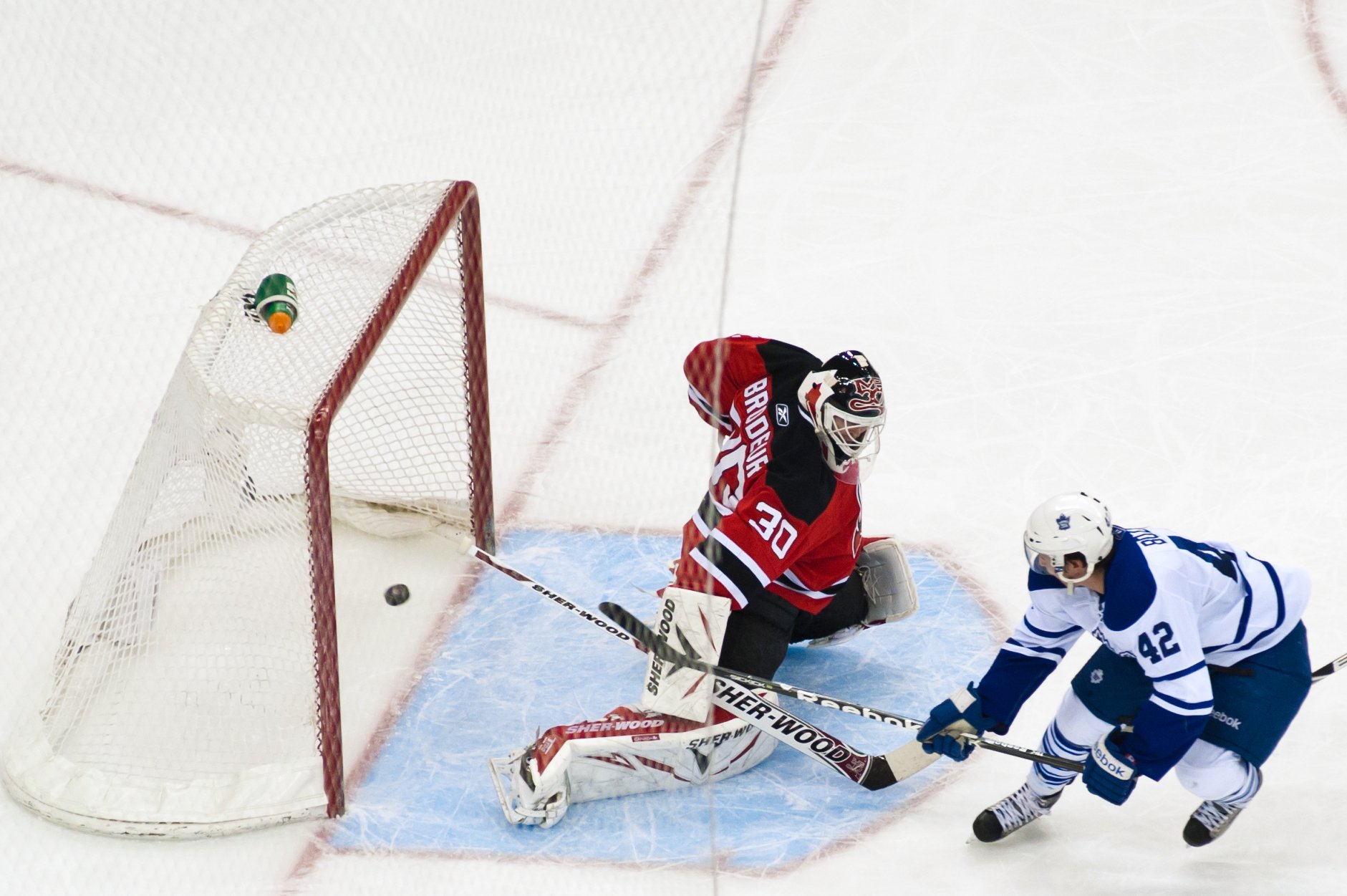
Photo: Allie_Caulfield, Flickr (BY-2.0)
Morgan Rielly to the Sharks Gains Steam as the Oilers Option Fades
Table of Contents
A Morgan Rielly trade is starting to look less like a rumour and more like a destination. The latest reporting has the San Jose Sharks emerging as the clear front-runner for the Maple Leafs' longest-tenured player, with a possible Edmonton fit fading into the background. Rielly controls the entire process through his no-move clause, and the signal coming out of his camp is that if he is going anywhere, he would prefer the West Coast — which is exactly where San Jose sits.
Why the Sharks have moved to the front
San Jose makes sense on almost every axis. The Sharks are a young team on the rise, built around Macklin Celebrini and Will Smith, and they are desperate for an experienced, puck-moving defenceman to anchor a blueline that currently has only a couple of NHL bodies signed for next season. They are sitting below the cap floor, which means they not only have room to absorb Rielly's contract — they actually need to add salary to reach the league minimum.
That combination is rare. Most contenders would balk at Rielly's term and price; a rebuilding team flush with cap space and short on veteran leadership is the ideal landing spot. We flagged San Jose as the likeliest destination when we mapped out Rielly's trade list, and the picture has only sharpened since.
The Oilers option fades
Edmonton had been floated as a possibility — a contender that could use Rielly's offensive instincts on the back end. But that fit has cooled in recent reporting, in part because the Oilers' cap situation makes absorbing a $7.5-million defenceman far more complicated than it is for a team like San Jose. A contender would need Toronto to retain salary or take money back; a cap-floor team does not.
The practical effect is that Rielly's market is narrowing toward the teams that can comfortably fit his deal, and those teams skew young and Western. That plays directly into his stated preference and into San Jose's specific need.
The no-move clause runs the whole show
None of this happens without Rielly's signature. He carries a full no-move clause, which gives him complete control over whether he is traded and where. That is the dynamic we walked through when a Rielly trade first became realistic: Chayka cannot simply move him for the best return, the way a team would with a player lacking that protection. He has to find a deal Rielly will actually approve.
The encouraging part for Toronto is that Rielly appears willing to engage rather than dig in. Reports suggest he is open to a fresh start, with the West Coast as his preference. That cooperation is what turns a theoretical trade into a workable one — and it is why San Jose, a West Coast team that wants him, keeps surfacing as the answer.
What Rielly's contract actually means
Rielly has four years remaining at a $7.5-million average annual value. For a 31-year-old defenceman whose game leans more on offence and puck movement than on shutting down top lines, that is a contract a contender would hesitate to take on at full freight. For the Sharks, it is an asset: it helps them clear the cap floor while handing their young core a respected veteran who has played meaningful hockey in the toughest market in the league.
For Toronto, moving that deal is the point. Clearing $7.5 million off the books under a $104-million cap gives Chayka room to chase the mobile, modern blueline he has prioritized. We dug into why that reshaping is the organization's central project in our look at the Leafs' blueline rebuild.
What Toronto would want back
The return is where this gets delicate. Rielly's no-move clause and his contract limit Toronto's leverage, so Chayka is unlikely to land a king's ransom. The realistic target is a mix of cap relief, draft capital and perhaps a young roster player or prospect — assets that fit a team trying to get younger and cheaper on the back end rather than win the trade on paper.
San Jose, loaded with picks and prospects from years of rebuilding, can satisfy that. Whether the Leafs prioritize futures or a usable young defenceman in return will tell us a lot about how Chayka views the 2026-27 timeline. Either way, the financial flexibility is the prize, not the headline-grabbing haul.
What a Rielly trade does to Toronto's top four
Subtracting Rielly is not painless. He has been a fixture on the Toronto blueline for more than a decade, he quarterbacks a power-play unit, and he logs the kind of minutes that do not vanish without consequence. A team does not move a top-pairing-calibre defenceman and simply feel lighter on its feet — it has to replace the role.
But that is precisely why the timing lines up. The Leafs have spent the offseason signalling they want a faster, more mobile defence corps, and Rielly's exit creates both the cap room and the roster opening to chase it. Trading him without a clear replacement plan would be reckless; trading him as the first domino in a deliberate retool is the kind of move a methodical manager makes. The question is sequencing — whether Chayka lines up the next piece before he ships Rielly out, or banks the flexibility first and shops with it.
The power-play question is the trickiest piece. Rielly has run the point on Toronto's top unit for years, and the Leafs do not have an obvious in-house replacement for that specific job. Whatever the return looks like, Chayka will need to address it — either by targeting a defenceman who can quarterback a man advantage or by leaning on a forward to walk the blue line. It is the kind of detail that separates a clean retool from a hole the team spends a season trying to patch.
The emotional cost of moving a franchise mainstay
There is a human element here that the cap math ignores. Rielly is the rare modern Leaf who never asked out, never leveraged the market, and stayed through every front-office reset and playoff heartbreak. Trading him is not the same as trading a rental or a malcontent. It is closing a chapter on one of the few players who chose Toronto and meant it.
That is part of why the no-move clause matters beyond the mechanics. Giving Rielly a say in his exit is, in a sense, the organization repaying a long-tenured player with control over his own next step. If he lands in San Jose, it will be because he chose it — and that makes a difficult goodbye a little cleaner for everyone, including a fanbase that has watched too many departures turn ugly.
What's next
This is shaping up as an offseason move rather than a draft-day blockbuster, though the June 26 draft is an obvious venue for the framework to come together. With free agency opening July 1 and a head coach expected to be named before the draft, Chayka has every incentive to resolve Rielly's situation early so he knows exactly how much cap room he is working with.
For now, the momentum points one way: San Jose, a West Coast fresh start, and a no-move clause that Rielly seems increasingly willing to lift for the right fit. Track the cap implications on our contracts page and the rest of the blueline picture on the players page as the summer unfolds.
Frequently Asked Questions
Where is Morgan Rielly most likely to be traded?
The San Jose Sharks have emerged as the clear front-runner in a Morgan Rielly trade. They are below the cap floor, need a veteran puck-moving defenceman, and match Rielly's reported preference for a West Coast destination.
Does Morgan Rielly have a no-move clause?
Yes. Rielly carries a full no-move clause, giving him complete control over whether he is traded and to which team. Any deal requires his approval, which limits Toronto's leverage in negotiations.
What are the terms of Morgan Rielly's contract?
Rielly has four years remaining at a $7.5-million average annual value. Moving that contract would clear meaningful space for Toronto under the $104-million salary cap for 2026-27.
Why did the Oilers fall out of the Morgan Rielly trade picture?
Edmonton's tight cap situation makes absorbing a $7.5-million defenceman difficult without Toronto retaining salary. A cap-floor team like San Jose can take the contract outright, which is why the Sharks moved ahead of the Oilers.
What would the Maple Leafs get for Morgan Rielly?
Because of his no-move clause and contract, Toronto is unlikely to land a major return. The realistic package is a mix of cap relief, draft picks and possibly a young player or prospect that fits a younger, cheaper blueline.
When could a Morgan Rielly trade happen?
It is shaping up as an offseason move, with the June 26 NHL Draft and the July 1 opening of free agency as natural windows. Chayka has incentive to resolve it early to know how much cap space he has to work with.