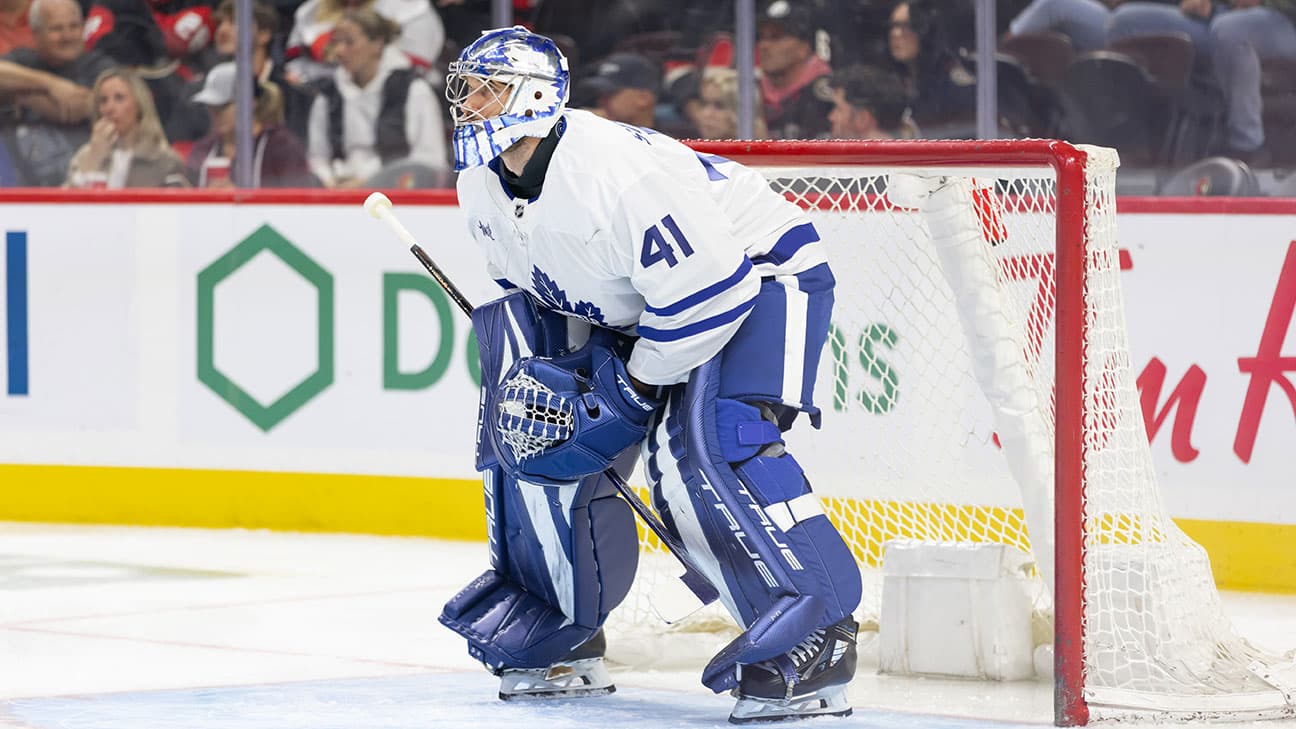
Photo: NHL.com
Panthers Land Markstrom and Push Bobrovsky Toward the Maple Leafs' Crease
Table of Contents
Sergei Bobrovsky, the Maple Leafs, and a Florida crease that just filled up
The clearest signal yet that Sergei Bobrovsky is leaving Florida arrived not from Bobrovsky, but from the Panthers' goalie moves. Florida acquired veteran Jacob Markstrom from the New Jersey Devils on the eve of free agency, days after adding Akira Schmid from Vegas — and with the crease suddenly crowded, the reigning back-to-back Stanley Cup champions look ready to let their two-time Vezina winner walk. That is where the Maple Leafs come in. Toronto has been named Bobrovsky's top alternative landing spot, and the Leafs' thin crease makes the fit obvious.
For a Toronto team that has spent the offseason rebuilding its goaltending depth, a Sergei Bobrovsky decision may be the single most consequential call John Chayka makes in the coming days.
What Florida did — and what it signals
The Panthers acquired Markstrom from the Devils in a five-player deal, sending forwards Evan Rodrigues, Jesper Boqvist and Ben Steeves to New Jersey while also picking up forward Angus Crookshank. Markstrom is on a two-year contract worth roughly $6 million per season that begins next year. A day earlier, Florida had added Schmid from Vegas.
Two goaltenders in two days is not the behaviour of a team planning to re-sign a 37-year-old netminder to the multi-year deal he is seeking. Bobrovsky ranks among the top handful of goaltenders in NHL history in career wins, backstopped Florida to consecutive championships, and has earned the right to chase term. But Florida appears to have decided that the number and the years no longer fit its cap structure. Reporting had already pegged Bobrovsky's ask in the range of six to seven years and around $42 million total — north of $6 million per season on a goalie entering his late 30s.
Why the Maple Leafs are the name attached
Toronto's interest is not new. Chayka has openly left the door ajar on a goaltending upgrade all summer, and insiders have consistently listed the Leafs alongside Buffalo and the Los Angeles Kings as the clubs most likely to pursue Bobrovsky if Florida moved on. We laid out the case and the cautions in our earlier look at why Chayka's crease hunt keeps circling Bobrovsky, and Florida's Markstrom trade turns that hypothetical into a live decision.
The roster logic is straightforward. Toronto traded Joseph Woll to Philadelphia earlier in the offseason and later flipped the goalie it got back, leaving Anthony Stolarz as the clear No. 1 and a collection of unproven youngsters behind him. We detailed just how quickly that depth thinned in our piece on the crease behind Stolarz. A Stolarz-Bobrovsky tandem would be, on paper, one of the most accomplished goaltending pairings in the Eastern Conference — a direct answer to the Florida-Edmonton axis at the top of the league.
The case against paying up
Here is where LeafsLurker's independent streak kicks in: the fit is obvious, and the risk is enormous. Bobrovsky is 37. He is seeking six or seven years. Handing that kind of term to a goaltender on the wrong side of 35 is exactly the sort of deal that ages into an albatross, and Toronto has spent this offseason under Chayka trying to get younger and more flexible, not older and more committed.
There is a version of this that works — a shorter deal at a rich annual number, one or two years that Bobrovsky might accept only if his market collapses. There is also a version that does not, where Toronto wins the bidding by adding the years nobody else will and regrets it by year three. The Leafs have $104 million to work with against the cap and roughly $22 million in space, but committing a big slice of it to a nearly-40 goaltender narrows everything else Chayka wants to do down the middle and on the wing.
What the numbers say about a late-30s goalie bet
History is not kind to long-term contracts handed to goaltenders past 35. The position is volatile year to year even for the best, and age tends to accelerate the decline once it starts. A netminder can be elite at 36 and ordinary at 38 with little warning, and the teams left holding those contracts rarely find a graceful exit. That is the shadow hanging over any Bobrovsky pursuit: the fear of paying for the goalie he was rather than the one he will be.
The counterpoint is that Bobrovsky has aged unusually well, carrying a heavy workload deep into two championship runs. Elite conditioning and technique can extend a goaltender's peak, and the very best sometimes defy the actuarial tables for a season or two longer than expected. Toronto would be betting that Bobrovsky is one of those outliers — and that even a partial decline still clears the bar of what the Leafs have behind Stolarz right now.
The structure of the deal is where that bet is won or lost. One or two years at a high number is a defensible gamble; the Leafs could stomach a down season on a short term. Six or seven years is a different animal entirely, the kind of commitment that can hamstring a roster long after the goaltender's best hockey is gone. The term, far more than the annual dollars, is the real risk.
The alternative: stand pat and spend elsewhere
The counterargument is that Stolarz, healthy, is a legitimate starter, and that the smarter July 1 play is to add a cheaper veteran backup and pour the savings into a forward group that still needs help. Toronto's most glaring hole is arguably at centre, where the market is famously thin — a problem we detailed in our look at the barren centre market. Every dollar spent on Bobrovsky is a dollar not spent solving that.
Goaltending, though, has a way of deciding playoff series, and Toronto's postseason history is a long argument for buying certainty in net. A front office that watched its season end early in 2025-26 may decide that a proven big-game goaltender is worth the risk the analytics community would warn against.
What's next
Bobrovsky is free to sign anywhere once the market opens, and the list of teams that can both afford him and justify the years is short. Toronto belongs on it. Expect Chayka to at least engage — the question is whether he is willing to match the term, or whether he holds his discipline and lets a rival overpay.
Watch Buffalo and Los Angeles as the other realistic suitors, and watch how quickly Bobrovsky's camp moves once free agency opens. If he signs fast and short, someone blinked on years. If he lingers, the market may be telling him his ask is too rich. Either way, Florida's decision to bring in Markstrom has set the board, and Toronto's crease is one of the biggest reasons the Bobrovsky sweepstakes matter. Keep an eye on our players page and contracts page as the goaltending picture resolves.
Frequently Asked Questions
Are the Maple Leafs going to sign Sergei Bobrovsky?
Toronto has been named Bobrovsky's top alternative landing spot and GM John Chayka has left the door open on a goaltending upgrade. No deal is done, but Florida's trade for Jacob Markstrom makes a Bobrovsky departure likely and puts the Leafs squarely in the conversation.
Why are the Panthers not re-signing Bobrovsky?
Florida acquired Jacob Markstrom from New Jersey and Akira Schmid from Vegas within two days, filling its crease. Adding two goaltenders that quickly signals the Panthers are moving on rather than paying Bobrovsky the multi-year deal he is seeking.
How much does Sergei Bobrovsky want in free agency?
Reporting has pegged his ask at roughly six to seven years and around $42 million total, which works out to north of $6 million per season — a steep commitment for a goaltender who is 37 years old.
What did Florida give up for Jacob Markstrom?
The Panthers sent forwards Evan Rodrigues, Jesper Boqvist and Ben Steeves to New Jersey and also acquired forward Angus Crookshank in the five-player deal. Markstrom is on a contract worth about $6 million per season that begins next year.
Why do the Maple Leafs need a goalie?
Toronto traded Joseph Woll earlier in the offseason and later moved the netminder it acquired in return, leaving Anthony Stolarz as the clear No. 1 with unproven prospects behind him. The crease depth thinned quickly, making a veteran addition a priority.
Would a Stolarz-Bobrovsky tandem be good for Toronto?
On paper it would be one of the most accomplished goaltending pairings in the Eastern Conference. The risk is Bobrovsky's age and the length of contract he wants, which runs counter to Chayka's effort to keep the roster younger and more flexible.


