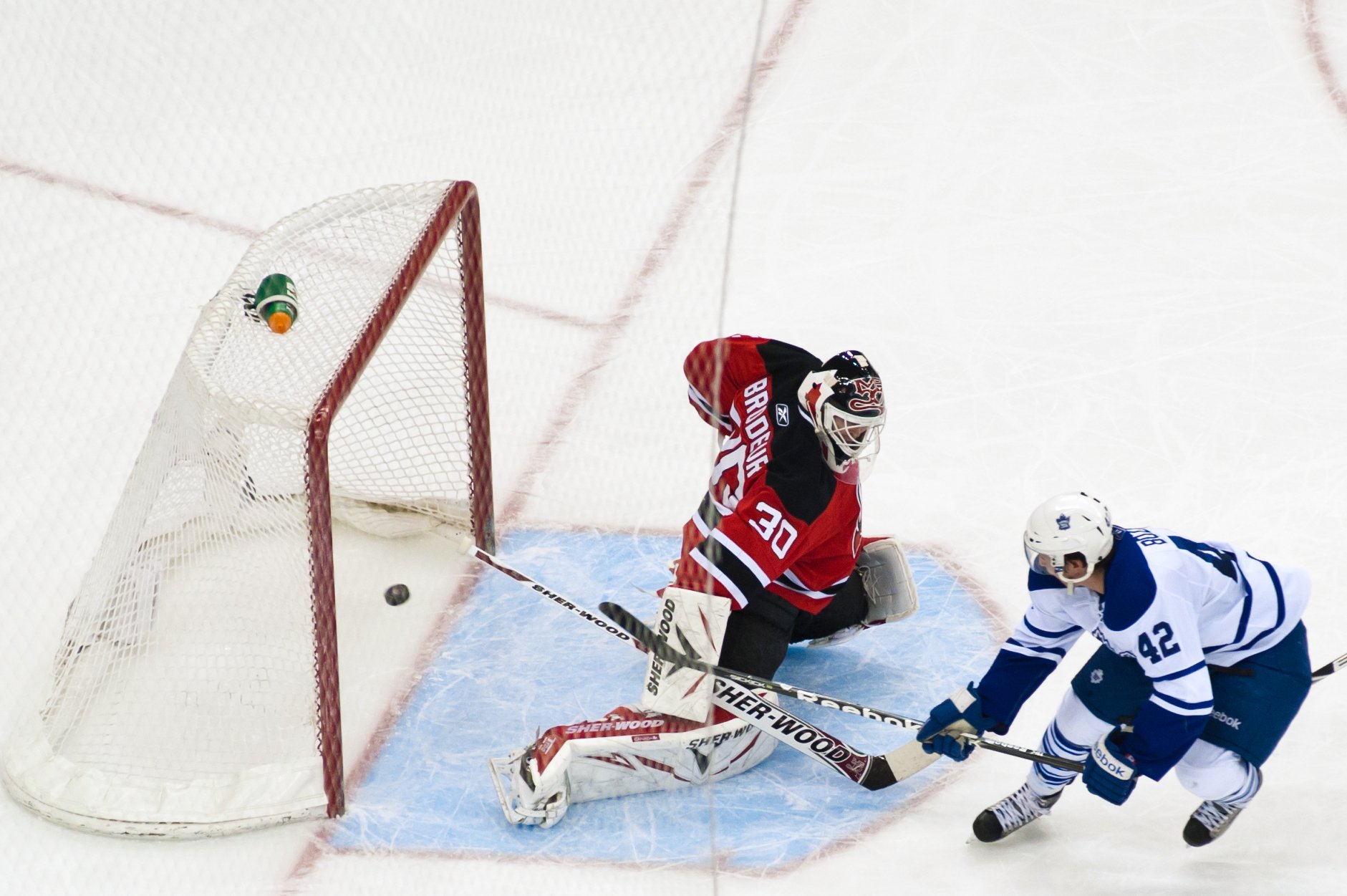
Photo: Michael Miller, Wikimedia Commons (CC BY-SA 3.0)
Dougie Hamilton to the Maple Leafs: The $9M Gamble Chayka Keeps Circling Back To
Table of Contents
Why Dougie Hamilton is back on the Maple Leafs' radar
A Dougie Hamilton trade to the Maple Leafs has resurfaced as one of the offseason's most persistent rumours, and this time the noise is loud enough to take seriously. The New Jersey Devils defenceman, who carries a $9 million cap hit through 2027-28, has been linked to Toronto repeatedly since questions about his fit in New Jersey boiled over last season. With John Chayka openly trying to overhaul Toronto's blue line, Hamilton is exactly the kind of swing a new general manager makes to put his stamp on a roster.
This is not a new flirtation. Toronto has had Hamilton on its board in past summers, and at least one national insider has gone as far as predicting the Leafs will win the sweepstakes if New Jersey commits to moving him. Detroit and several other clubs are reportedly in the mix, so this would not be a no-competition pickup. The question for Toronto is not whether Hamilton can play. It is whether the price and the cap math make sense.
The player: elite offence, real warts
Hamilton is one of the most productive offensive defencemen of his generation. At his peak he was a 70-plus-point right-shot blueliner who drives play, runs a power play, and shoots the puck as well as anyone at his position. That profile is precisely what Toronto's mobility-first blueline rebuild is supposed to be chasing — a true puck-mover who can quarterback transition and tilt the ice.
The warts are just as real. Hamilton turned 33 this offseason, his recent years have been interrupted by injury, and his defensive game has always drawn skeptics. There is a reason New Jersey was reportedly willing to make him a healthy scratch under head coach Sheldon Keefe — the same Sheldon Keefe who used to coach in Toronto. A 33-year-old, $9 million defenceman with defensive question marks and two years left is a genuine gamble, not a slam dunk. Buyers beware applies here as much as it did with our look at Darren Raddysh.
The cap math is the whole story
Fitting a $9 million defenceman onto Toronto's books is not trivial, even with the cap climbing to $104 million. The Leafs already have heavy money committed to their forward core, and adding Hamilton almost certainly means subtracting from the back end. The cleanest path runs straight through Morgan Rielly. A framework in which Rielly heads to New Jersey while Hamilton comes to Toronto has been floated as the kind of one-for-one reset that lets both teams reshape their blue lines at once.
That idea has a problem with a name: Rielly's no-move clause. As we detailed in our breakdown of Rielly's trade list, the longest-serving Leaf controls where he goes, and there is no indication New Jersey is on his preferred destinations. Without Rielly's sign-off, the simplest version of a Hamilton deal collapses, and Toronto would have to find $9 million in space some other way. For the full picture of what Toronto can actually afford, see our cap breakdown and the live contracts page.
What it would cost in assets
Money aside, New Jersey is not giving Hamilton away. Even a club motivated to move a pricey, aging defenceman will want real value — a roster player, a prospect, or a pick — especially with multiple teams interested. Hamilton's agent, J.P. Barry, has signalled his client would be willing to look beyond his existing trade list if a creative solution emerges, which widens the market but does not lower the cost.
Here is where Toronto has to be disciplined. The Leafs are coming off a lottery win and finally have a No. 1 overall pick and a thin-but-real prospect pool to protect. Surrendering a meaningful future asset for two years of a 33-year-old, even a talented one, runs against the longer-term reset Chayka is supposed to be running. There is a version of this trade that helps. There is also a version that mortgages tomorrow for a short-term name, and the line between them is thin.
The case for pulling the trigger
So why does the rumour keep coming back? Because the fit, on paper, is clean. Toronto needs right-shot puck movers, Hamilton is one of the best of his era, and a contending-adjacent team with stars in their primes cannot wait three years for prospects to develop. If Chayka believes this group has a two-year window, a two-year Hamilton contract lines up perfectly with it. Add a strong season and Hamilton becomes the offensive anchor the Leafs' second pair has lacked.
There is also a market reality: genuine top-pairing puck-movers almost never reach unrestricted free agency, and this summer's UFA class is historically thin. If you want a needle-mover on the back end, the trade market is the only place to find one, and Hamilton is one of the few genuinely available.
The alternatives Chayka should weigh first
Before committing $9 million and an asset package to a 33-year-old, Toronto owes itself a hard look at the cheaper paths to the same goal. The Leafs could draft and develop a puck-mover — Marlies blueliner William Villeneuve is producing at a record pace in the Calder Cup Final, and Toronto's prospect pool has more on the back end than the national narrative admits. Internal options are slower, but they are cheap and they do not cost a first-round pick.
There is also the trade market beyond Hamilton. Darnell Nurse has been linked to Toronto repeatedly, a possibility we examined in our Nurse trade breakdown, and the Rielly market itself could net Toronto younger, cheaper defensive pieces rather than a like-for-like swap. None of these is a clean upgrade the way a peak Hamilton would be, but each carries less risk. The point is not that Hamilton is a bad target — it is that he should be one option among several, not the only plan. A new GM under pressure to make a splash is exactly the kind of buyer who overpays, and Chayka has to resist that gravity.
The verdict
A Dougie Hamilton trade to the Maple Leafs makes sense at the right price and is a mistake at the wrong one — and the difference comes down to two things Toronto only partly controls: Rielly's no-move clause and New Jersey's asking price. If Chayka can land Hamilton without gutting the prospect pool and can solve the cap crunch cleanly, it is a defensible aggressive move for a team that needs to get better fast. If it costs a first-rounder and a top prospect for two years of a 33-year-old, Toronto should let Detroit or someone else take the swing.
This is the kind of decision that defines a general manager's first summer. Chayka has shown he is willing to be bold. The smart version of bold here is patience — chase Hamilton, but only on Toronto's terms.
Watch the timeline closely. The trade market tends to peak around the draft floor in Buffalo on June 26-27 and again in the days before free agency opens July 1. If New Jersey is genuinely moving Hamilton, that is the window it happens in, and it is the same window Toronto will be sorting out its own blue line and goaltending. A Hamilton decision will not be made in isolation; it is one domino in a busy fortnight, and how the Rielly situation resolves may dictate whether a Hamilton deal is even possible. For Leafs fans, the next two weeks will tell you far more than the past two months of rumours have.
The verdict, then, is a conditional yes — with the conditions doing all the heavy lifting. Get the cap fit clean, keep the prospect cost reasonable, and a healthy Hamilton is a real upgrade for a team that needs one now. Pay a premium in futures for an aging, oft-injured defenceman, and this becomes the kind of move that looks worse every year of the contract. Chayka's first big swing should be a calculated one.
Frequently Asked Questions
Are the Maple Leafs trading for Dougie Hamilton?
Nothing is done. As of mid-June 2026, Hamilton is a recurring trade target for Toronto, with multiple insiders linking the New Jersey defenceman to the Leafs. A deal would require solving Toronto's cap crunch, and competition reportedly includes Detroit and other clubs.
What is Dougie Hamilton's contract and cap hit?
Hamilton signed a seven-year, $63 million deal with New Jersey, carrying a $9 million annual cap hit. He has two years remaining on the contract, through the 2027-28 season.
Why would the Devils trade Dougie Hamilton?
Hamilton's fit in New Jersey came into question after head coach Sheldon Keefe made him a healthy scratch last season. With his cap hit and age, the Devils have reportedly explored moving him, and his agent has indicated he would consider teams beyond his existing trade list.
Could a Hamilton trade involve Morgan Rielly?
It has been floated. One framework would send Rielly to New Jersey while Hamilton comes to Toronto, letting both teams reshape their blue lines. The obstacle is Rielly's no-move clause — he controls his destinations, and New Jersey is not known to be on his preferred list.
How old is Dougie Hamilton?
Hamilton turned 33 this offseason. That age, combined with recent injury history and his $9 million cap hit through 2027-28, is the main reason a trade is considered a gamble rather than a sure thing for any acquiring team.
Does Dougie Hamilton fit the Maple Leafs' needs?
On paper, yes. Toronto is rebuilding its blue line around mobile, right-shot puck-movers, and Hamilton at his best is a 70-point offensive defenceman who runs a power play. The questions are cost, cap fit, and whether his defensive game and age make the price worth it.