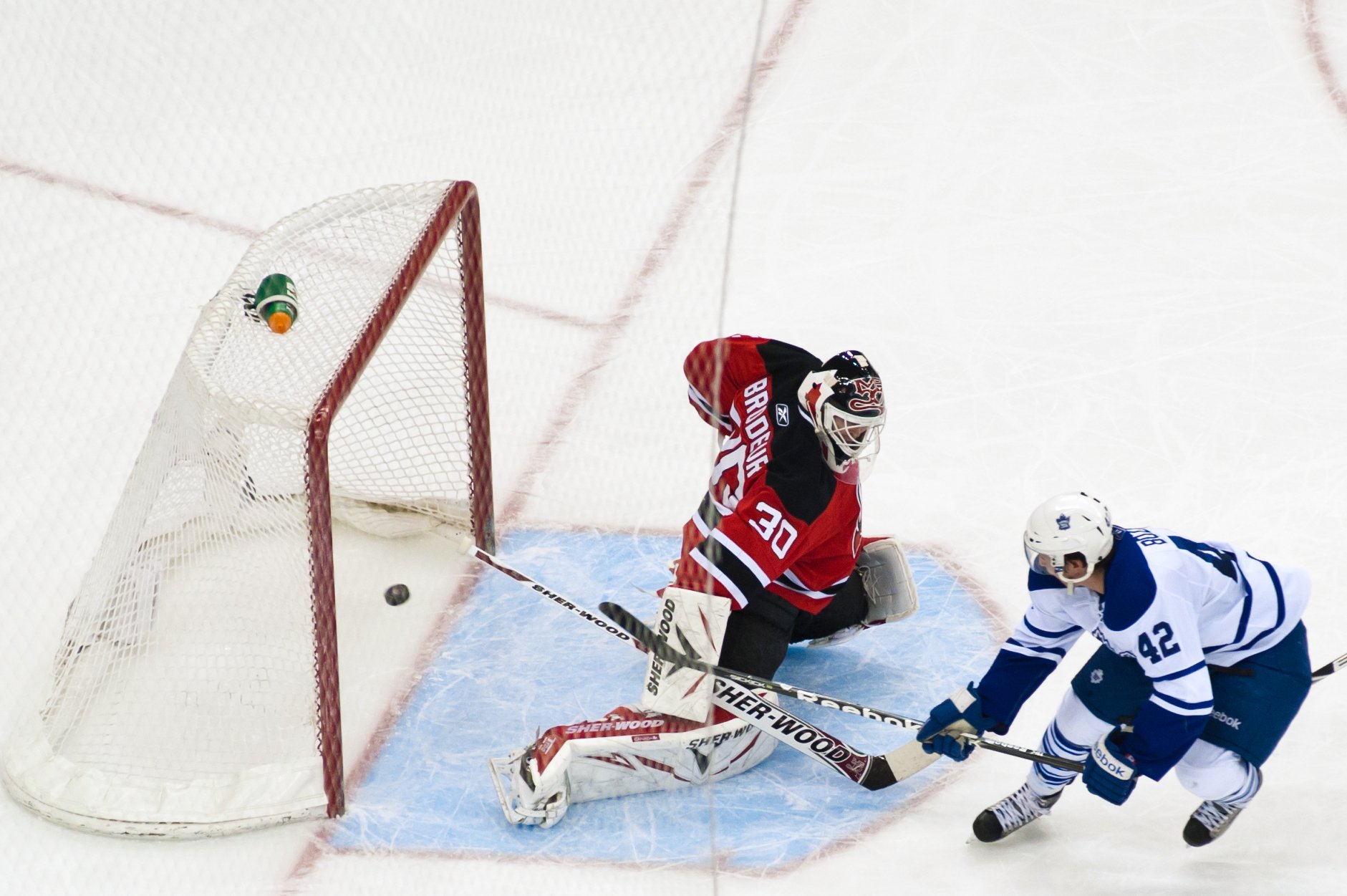
Photo: XTRAICE, Flickr (BY-2.0)
Alexander Nikishin Trade Market: The Maple Leafs Have Already Lost This Race
Table of Contents
The Alexander Nikishin trade market has three serious bidders and Toronto is not one of them. Elliotte Friedman reported this week that the St. Louis Blues have taken a long look at the Carolina Hurricanes' restricted free agent defenceman, joining the New York Rangers and Vancouver Canucks among clubs with reported interest. The Maple Leafs, who need exactly what Nikishin is, have not been meaningfully attached to the file since it opened. That is not an oversight by the reporters. It is the correct read on Toronto's situation, and Leafs fans should stop waiting for a plot twist.
What Nikishin costs, in both currencies
Nikishin is 24, left-shot, and coming off a rookie season in which he put up 33 points — 11 goals, 22 assists — and won a Stanley Cup with Carolina. That is a genuinely rare package: a young defenceman with NHL production, playoff pedigree, and years of control remaining.
He is also reportedly seeking a long-term contract averaging at least $8 million per season. And Carolina, per the reporting, does not want a pick-heavy return. The Hurricanes want a roster player back — someone who helps them next season, not in 2029.
Add those together and the price is a good NHL player plus the cap room to pay $8 million a year. Toronto has neither.
The cap math ends the conversation
The Leafs are currently projected roughly $2.75 million over the $104 million upper limit with 49 players under contract and 23 on the active roster. That is survivable — Max Domi is expected to open on long-term injured reserve, offseason rosters can exceed the ceiling by 10 per cent, and moving a depth contract or two to the Marlies frees more. We ran that math in full in our look at how Toronto gets compliant.
What it is not is a foundation for adding $8 million. To fit Nikishin, Toronto would have to move roughly $8 million to $11 million in salary out the door in the same transaction window. The obvious candidate is Morgan Rielly at $7.5 million, and Rielly holds a full no-movement clause with a reported list of four Western Conference teams. Carolina is not in the Western Conference. Any Nikishin deal involving Rielly requires a third team, Rielly's cooperation, and a Hurricanes front office willing to take on term it has shown no interest in.
Every other route runs through a player Toronto has just spent the summer saying it will not move. Assistant GM Ryan Hardy went on OverDrive this week and made the Matthew Knies position about as clear as a July answer gets, which we covered in our piece on Hardy's comments. Easton Cowan is the other name Carolina would want, and trading a 21-year-old who just produced 29 points as an NHL rookie for a 24-year-old you then have to pay $8 million is not an upgrade. It is a lateral move with a bill attached.
Toronto's blue line still has the same hole
None of which changes the underlying problem. The Leafs allowed a league-high 2,660 shots against last season and finished at minus-46 in goal differential. That is a structural defensive failure, not bad luck, and the top-four right side remains the least resolved part of the roster. We made that case in our piece on Chayka's unfinished blue line and nothing since has closed it.
Chayka's answer so far has been Darren Raddysh on a long-term deal — a mobile right-shot puck-mover who fits the archetype, covered in our breakdown of that contract — plus the return of a healthy Chris Tanev and a bet on internal development. Emil Andrae is on the roster. Ben Danford, now Toronto's top prospect after Cowan graduated, got 16 games with the Calder Cup-winning Marlies and put up three points.
That is a defensible plan. It is not a plan that gets you a 24-year-old top-four defenceman this August, and pretending otherwise is how fan bases talk themselves into bad trades.
It is worth being precise about what Toronto is actually short of, because the shorthand gets sloppy. The Leafs are not short of defencemen. They have Jake McCabe, Chris Tanev, Oliver Ekman-Larsson, Rielly, Raddysh, Troy Stecher and Andrae under contract, which is more than a full six plus insurance. What they lack is a player who can take the hardest minutes in the league against the Atlantic Division's top lines and come out ahead. Depth does not solve that. Only quality does, and quality is the one thing nobody sells in August.
The offer-sheet question
Because Nikishin is a restricted free agent, one alternative gets raised every time his name surfaces: sign him to an offer sheet and let Carolina decide.
It does not work here, for two reasons. The first is the same cap ceiling — an offer sheet requires the signing club to have the space to fit the contract immediately, and Toronto is over the limit. The second is that an $8 million offer sheet sits in a compensation tier that costs multiple high draft picks, and the Leafs traded a fourth-rounder in 2027 and a third in 2028 in the Nick Paul deal. Toronto's pick cupboard is not deep enough to fund that kind of raid on top of an inflated salary.
Carolina would almost certainly match anyway. Teams that have just won a Cup do not let a 24-year-old defenceman walk for picks, and the Hurricanes' cap situation gives them room to say yes. An offer sheet in this case is a way to overpay a player you probably will not get, which is the worst outcome available.
Why an Alexander Nikishin trade would be wrong for Toronto even if it were possible
Here is the harder take: even with the cap room, the Leafs should let this one go.
Nikishin's one NHL season was good, not conclusive. Thirty-three points from a rookie defenceman on a Carolina team that suppresses shots better than anyone in the league is a number that comes with a large asterisk about environment. Toronto is the opposite environment. A defenceman who looked composed behind Rod Brind'Amour's structure would be walking into a team that gave up more shot volume than any club in hockey.
Paying $8 million a year, for eight years, to find out whether the player travels — while surrendering a roster contributor to do it — is precisely the kind of swing that got the previous regime fired. Toronto's history with expensive, one-season-of-evidence defencemen is not a happy one.
There is also a timing argument. Carolina has not picked a direction. The Hurricanes may still extend him. If they trade him, the return goes to whichever club can absorb the money cleanest, and in early August that is a shrinking list. If Toronto genuinely wants a top-four defenceman, the leverage arrives in January, not now — when contenders know their injuries, sellers know their record, and Chayka can use the cap space Domi's LTIR creates rather than fighting it.
What Chayka should actually do
Three things, none of them glamorous.
- Get cap-compliant cleanly, bank the Domi LTIR room, and enter the season with flexibility instead of a maxed-out sheet.
- Give Andrae and, if he forces it, Danford real minutes early. If either is a top-four defenceman, you find out in October for free rather than trading for one in August at a premium.
- Hold the trade capital. The 2027 deadline market for defencemen will include better-fitting players at lower acquisition costs than a restricted free agent whose price includes an $8 million commitment.
The Leafs also have a first-overall pick on an entry-level contract, which is the single most efficient roster asset in the sport. Every dollar not spent on a defenceman this summer is a dollar available in 2027-28 when the cap hits $113.5 million and Auston Matthews' extension arrives.
What's next
Carolina's decision is the domino. If the Hurricanes extend Nikishin, the market closes and this becomes a footnote. If they trade him, expect St. Louis, New York or Vancouver — clubs with the cap room and the roster player Carolina wants — to be the destination. We looked at the broader Carolina picture in our piece on the Hurricanes' summer.
Toronto's job between now and September camp is smaller and less exciting: sort the cap, evaluate what it already has on the blue line, and resist the temptation to solve a real problem with the wrong player at the wrong price. Follow the roster picture on our contracts page and the depth chart on our players page as camp approaches.
Losing the Nikishin race is not a failure. Winning it, at this price, in this cap position, would have been.
Frequently Asked Questions
Which teams are interested in trading for Alexander Nikishin?
The St. Louis Blues, New York Rangers and Vancouver Canucks have all been linked. Elliotte Friedman reported that St. Louis took a long look at the 24-year-old defenceman. The Carolina Hurricanes have not decided whether to trade him or sign him to a long-term extension.
What contract is Alexander Nikishin looking for?
He is reportedly seeking a long-term deal averaging at least $8 million per season. He is a restricted free agent, so any acquiring team takes on both the trade cost and that contract commitment — which is why the market is limited to clubs with significant cap space.
What did Alexander Nikishin do in his rookie NHL season?
He recorded 33 points — 11 goals and 22 assists — for the Carolina Hurricanes in 2025-26 and won the Stanley Cup. He is a 24-year-old left-shot defenceman, which is one of the reasons his market has been active.
Why aren't the Maple Leafs in on Alexander Nikishin?
Cap space and assets. Toronto is projected roughly $2.75 million over the $104 million upper limit with 49 contracts, and Carolina reportedly wants a roster player back rather than picks. Fitting an $8 million defenceman would require moving out comparable salary, and Morgan Rielly's no-movement clause blocks the cleanest route.
What does Carolina want in return for Nikishin?
Per reporting, the Hurricanes are not interested in a pick-heavy package. They want a player who helps them next season. That requirement narrows the field to clubs with both surplus NHL talent and the cap room to absorb his next contract.
Do the Maple Leafs still need a top-four defenceman?
Yes. Toronto allowed a league-high 2,660 shots against in 2025-26 and finished at minus-46 in goal differential. John Chayka signed Darren Raddysh long-term and is counting on a healthy Chris Tanev plus internal development from Emil Andrae and Ben Danford, but the top-four right side remains the least settled part of the roster.
When is the best time for the Leafs to trade for a defenceman?
Closer to the 2027 trade deadline. By January, contenders know their injuries, sellers know their record, and Toronto will have the long-term injured reserve room from Max Domi's situation available. Acquisition costs for rental and short-term defencemen are also lower than the price of a restricted free agent seeking $8 million.