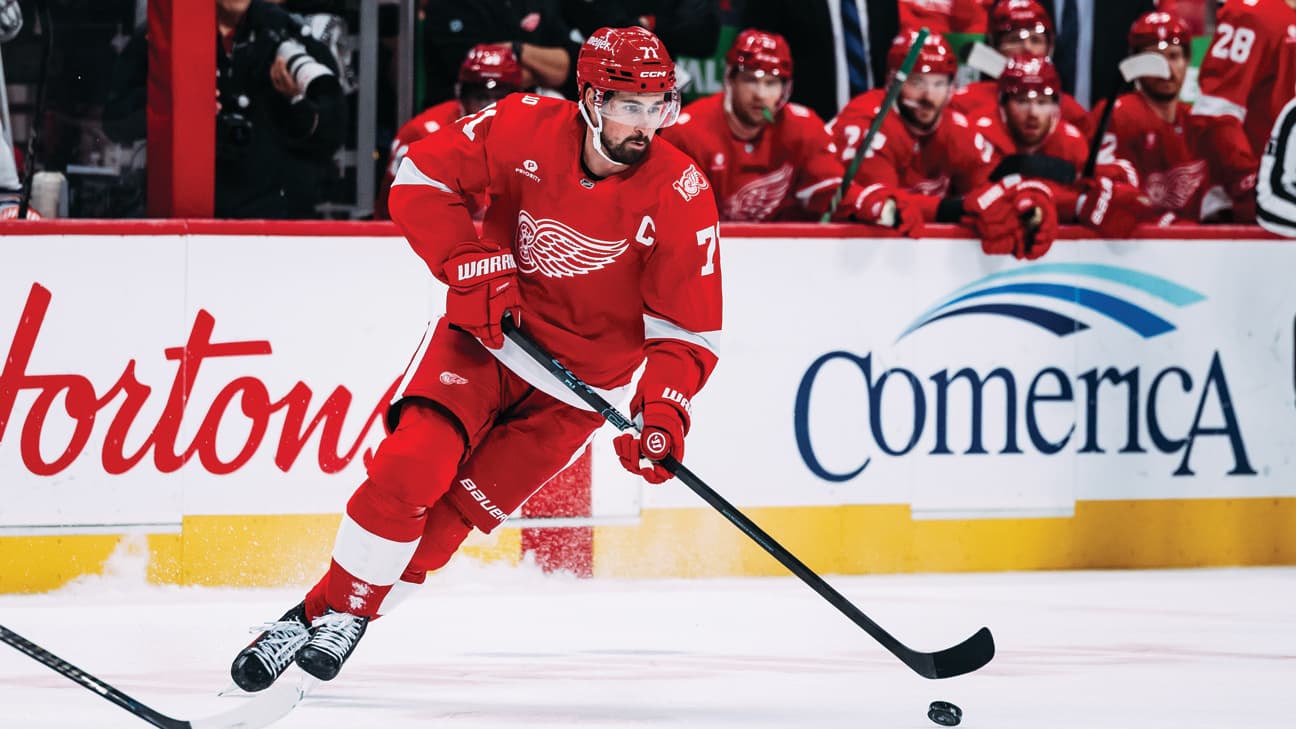
Photo: NHL.com
Red Wings GM Search Drags On, and the Maple Leafs Should Be Glad
Table of Contents
The Red Wings GM search now has a consultant and no candidate
The Detroit Red Wings GM search reached a new stage last week, and it was not the stage anyone in Michigan wanted. Reports on August 5 indicated the club has retained an outside search firm to help identify Steve Yzerman's successor, seven weeks before the puck drops on the 2026-27 season. Detroit does not have a general manager, does not have a shortlist that has leaked, and has now outsourced the process of finding one.
For the Toronto Maple Leafs, a team trying to climb back into a playoff position in the hardest division in hockey, this is quietly one of the more useful developments of the summer. Toronto missed the playoffs last season. So did Detroit. Only one of those clubs has spent the past three months making decisions.
None of this is a knock on the Red Wings' hockey people. It is a statement about the calendar. Every week without a general manager is a week Detroit cannot meaningfully act, and the weeks left before opening night are running out.
What has actually happened in Detroit
Yzerman ran the Red Wings from April 2019 until stepping into a senior adviser role in July. Shawn Horcoff has been handling day-to-day general manager duties on an interim basis, but that authority reportedly does not extend to trades — which is the single most important thing a general manager does in August.
Owner Christopher Ilitch and the search firm are reportedly looking for an analytics- and data-driven successor. The names that have been floated publicly are speculative rather than reported as candidates: Sam Ventura, the vice-president of hockey strategy in Buffalo; Tyler Dellow, an assistant general manager with the Stanley Cup champion Carolina Hurricanes; and Jeff Greenberg, the general manager of baseball's Detroit Tigers. Nobody has been firmly linked to the job.
Bringing in a third party generally means the process gets longer, not shorter. A firm has to build a slate, run interviews, and present options to ownership. That is a multi-week exercise starting from a standing start in August.
The Larkin problem nobody in Detroit can solve
The most consequential item sitting on the desk of a general manager who does not exist is Dylan Larkin. Detroit's captain reportedly requested a trade in the spring and submitted a short list — Florida, Minnesota and Vegas — that he has not widened. We wrote in July that the request was stuck precisely because there was no one empowered to resolve it, and a month later that is still the situation, now with a search consultant attached.
Think about what that means for Detroit's season. A captain who has asked out is going to report to camp, wear the C, and answer the same question every day until somebody with authority either trades him or convinces him to stay. Neither of those conversations can happen properly with an interim executive who cannot make trades.
The Maple Leafs are not a plausible destination — Toronto is over the cap and is not on Larkin's list — but the second-order effects matter. A distracted, rudderless Detroit is worth points to everyone else in the Atlantic, and Toronto needs every one of them.
The Atlantic math this actually changes
Toronto's projected finish depends less on beating Florida and Tampa Bay than on beating the teams around it. The Maple Leafs are widely modelled as a bubble club, a projection we broke down in our look at the 2026-27 playoff odds, and bubble teams are made by their record against the other bubble teams.
Detroit was supposed to be one of the clubs pushing from below. Instead it enters the season with no permanent general manager, an unresolved captaincy situation, and an offseason that could not include a significant trade because nobody was authorized to make one. In an 84-game schedule, four extra points against a divisional rival is often the entire difference between the second wild card and golf in April.
This is not a reason for Toronto to feel comfortable. Boston, Ottawa, Buffalo and Montreal all made moves this summer, and we mapped the whole division in our Atlantic Division retool piece. But one fewer functional competitor is a real, if unearned, advantage. You can follow how it plays out on our standings page once games begin.
The contrast with what Chayka did
Toronto's own front-office turnover was, by any measure, more chaotic on paper. Brad Treliving was out. Craig Berube was fired May 13. The Maple Leafs had a coaching vacancy, a general manager vacancy, a first overall pick to make and a roster that had just missed the playoffs.
John Chayka was hired in May. Mats Sundin came in as senior executive adviser. Jim Hiller was hired June 17. The Leafs made McKenna the first overall selection, signed a starting goaltender, remade the bottom six, and had a functioning roster by mid-July. Whether all of those decisions were correct is a separate argument — we have been sceptical of several of them, including the Bobrovsky bet in goal. But they were decisions, made by people with the authority to make them, in time to matter.
Detroit's ownership chose deliberation. There is a case for it: hiring the wrong general manager costs a franchise five years, and hiring the right one is worth more than any single summer. Ilitch has watched enough failed rebuilds to want to be certain. But deliberation has a price, and Detroit is paying it in this season.
The clearest way to see the gap is to look at what each club could do in July. Toronto could sign a goaltender, restock its bottom six and negotiate an entry-level contract with a first overall pick. Detroit could re-sign its own restricted free agents and wait. One of those is a summer. The other is a holding pattern with a payroll attached.
What a data-driven hire would signal
If Detroit does land an analytics-forward executive, the Atlantic will have three of its eight teams run by general managers who came up through the numbers rather than the scouting room. That is a meaningful shift for a division that spent a decade being run on hockey-lifer instinct.
It also raises a question worth sitting with in Toronto: Chayka's edge, to the extent he has one, is supposed to be process and infrastructure. If every rival hires the same kind of executive, that edge compresses. The advantage of being early is real but temporary, which is one reason the Maple Leafs' internal argument about a two-year window is more urgent than it sounds.
What's next
Realistically, Detroit hires someone in late August or September. The search firm's involvement makes a September announcement more likely than an August one, and there is no rule preventing a club from starting a season with an interim executive if the process runs long.
For Toronto, the practical takeaway is narrow but real: one divisional rival will spend camp answering organizational questions instead of hockey ones, and the trade market has one fewer active participant while the Maple Leafs work through their own Morgan Rielly stalemate. Detroit was one of the teams with the cap space and the young defencemen to be a logical partner. Right now, it cannot be one.
Camps open in mid-September and the season begins September 29. If the Red Wings still do not have a general manager by then, that will tell you more about their 2026-27 than any line combination.
Frequently Asked Questions
Who is the Detroit Red Wings general manager?
The position is vacant. Steve Yzerman moved into a senior adviser role in July 2026, and Shawn Horcoff has been handling day-to-day duties on an interim basis. Reports indicate his authority does not extend to making trades.
Why did the Red Wings hire a search firm?
Reports on August 5, 2026 indicated Detroit retained an outside firm to help identify Yzerman's successor. Owner Christopher Ilitch is reportedly seeking an analytics- and data-driven executive, and the third-party process is expected to extend the timeline by several weeks.
Who are the candidates for the Red Wings GM job?
No one has been firmly linked to the vacancy. Speculative names that have circulated include Buffalo's vice-president of hockey strategy Sam Ventura, Carolina assistant general manager Tyler Dellow, and Detroit Tigers general manager Jeff Greenberg.
Is Dylan Larkin still asking to be traded?
Larkin reportedly requested a trade in the spring and submitted a three-team list of Florida, Minnesota and Vegas that he has not widened. The request remains unresolved, in part because Detroit has no permanent general manager empowered to complete a trade.
Could the Maple Leafs trade for Dylan Larkin?
It is not realistic. Toronto is projected roughly $2.75 million over the $104 million salary cap with a full roster, and Larkin's reported list of acceptable destinations does not include the Maple Leafs.
How does Detroit's situation help the Maple Leafs?
Toronto is projected as a bubble team, and bubble teams are decided by results against direct competitors. A divisional rival entering the season without a permanent general manager and with an unresolved captaincy situation is one fewer functional competitor in an 84-game schedule.
How quickly did the Maple Leafs fill their own vacancies?
Toronto hired John Chayka as general manager in May 2026 after firing Brad Treliving, and named Jim Hiller head coach on June 17 following Craig Berube's dismissal on May 13. The roster was largely complete by mid-July.


