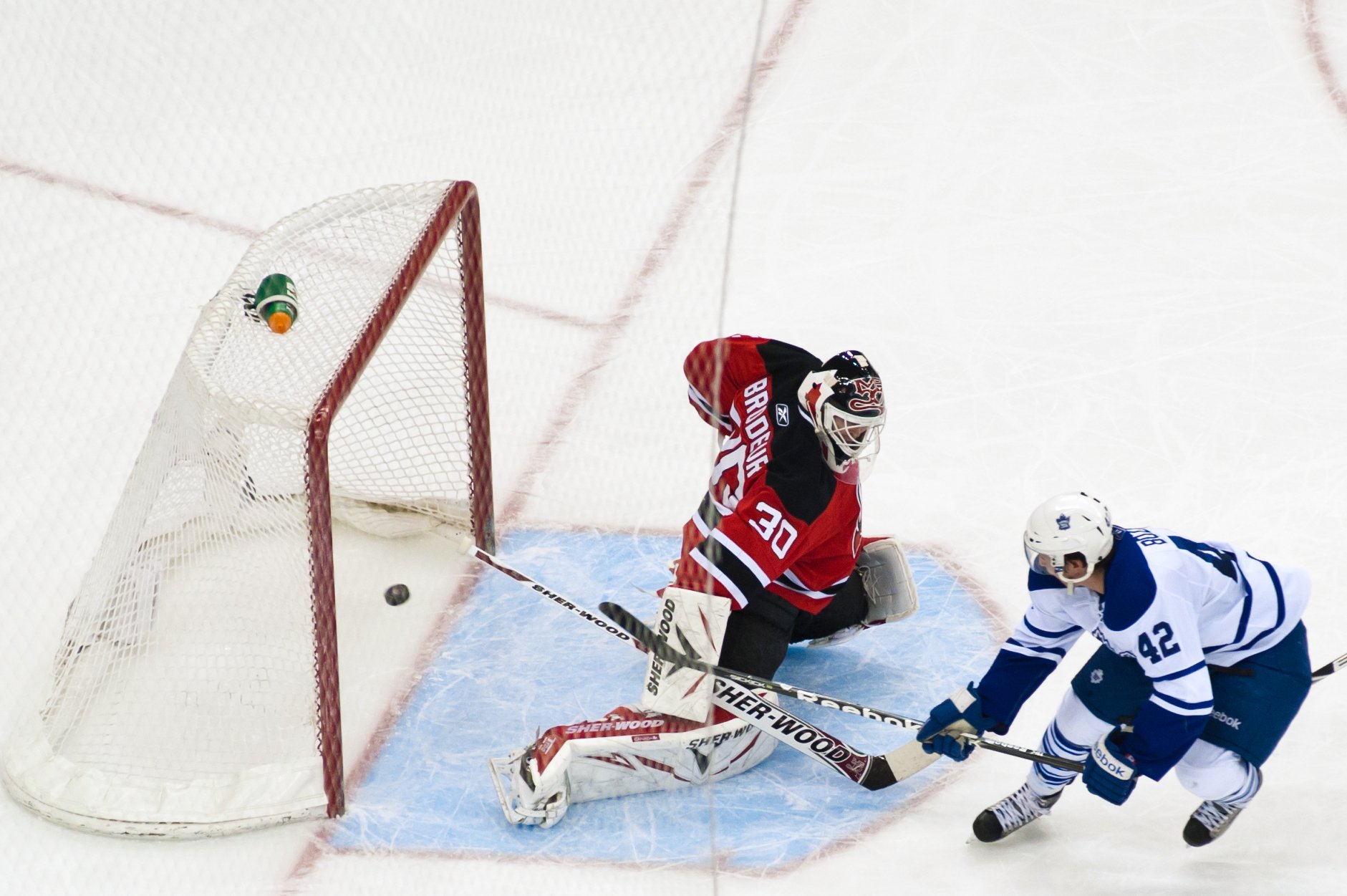
Photo: James DiBianco, Wikimedia Commons (BY-SA-2.0)
Oliver Ekman-Larsson Trade Watch: Toronto's Likeliest August Move
Table of Contents
The Oliver Ekman-Larsson trade case is back, and the cap math explains why
An Oliver Ekman-Larsson trade is the most logical move left on John Chayka's desk before training camp, and it has almost nothing to do with how Ekman-Larsson played last season. The Toronto Maple Leafs are projected over the salary cap, the blue line has more bodies than minutes, and the 34-year-old defenceman carries the one contract on the back end that is both movable and worth real money to another club. That combination is why his name keeps surfacing.
It is also why this is uncomfortable. Ekman-Larsson had his best offensive season since 2018-19 in 2025-26. He has said repeatedly that he wants to stay in Toronto. And he holds a clause that lets him say no to half the league. None of that makes a trade impossible. It makes it complicated.
The contract: $3.5 million, two years, and a clause with teeth
Ekman-Larsson signed a four-year, $14-million deal with Toronto in 2024. That is a $3.5-million cap hit, and he is entering year three of four — signed through the end of 2027-28. For a top-four-capable veteran defenceman in a $104-million cap environment, that number is genuinely reasonable. It is the single most tradeable price point on Toronto's blue line.
The complication is the modified no-trade clause, which allows him to block trades to 16 teams. Half the league. That does not stop a deal, but it collapses the market before negotiations start, and it hands the player leverage over where and whether. Any reporting you read about a "market" for Ekman-Larsson is really reporting about a market of 16 clubs, minus the ones with no cap space, minus the ones with no need on the left side.
Compare that to the club's other long-term blue line commitment. Morgan Rielly has four years left at a $7.5-million cap hit on the eight-year, $60-million extension he signed in 2022, with a full no-move clause and a modified no-trade attached to the back end. Chayka has said publicly he does not anticipate moving Rielly, and insiders have been openly sceptical — we walked through that in our piece on the Morgan Rielly trade talk and why nobody believed the denial. Between the two contracts, Ekman-Larsson's is the one another general manager actually wants.
What last season did to his value
Two things happened to Ekman-Larsson in 2025-26, and they pull in opposite directions.
The first is that he produced. His offensive numbers were the best he had posted since 2018-19, which for a defenceman entering his mid-30s is the sort of season that either signals a genuine fit or a career-year outlier. Toronto's internal read on which one it was will determine everything about how hard the club shops him.
The second is that he spent part of the season's most important stretch in the press box. As the Leafs slid out of the playoff race and turned sellers, then-general manager Brad Treliving made him a healthy scratch as asset protection ahead of the deadline. He was not the only veteran handled that way, and the trade never came. Ekman-Larsson has been candid about how strange it was — he had been bought out before and traded before, but sitting healthy in the press box to preserve trade value was new territory.
That episode matters now for a practical reason: he has already lived through this once, from a front office that no longer exists. The relationship a player has with the club that scratched him is not automatically the relationship he has with the club that replaced its entire hockey operations department.
Toronto's blue line after the Raddysh signing
Chayka's summer reshaped the defence in one direction — expensive and offensive. The headline move was acquiring Darren Raddysh's signing rights from Tampa Bay and handing him a long-term deal after a 22-goal, 70-point season in 73 games with the Lightning, a bet we examined in our breakdown of the Raddysh contract and Toronto's power-play gamble. Emil Andrae arrived as a younger left-side option. Brandon Carlo and Simon Benoit were moved out.
Add it up and Toronto has Rielly and Ekman-Larsson on the left, Raddysh imported to run a power play, Andrae pushing for minutes, and Troy Stecher as a depth right-shot who has been floated as a candidate to start in the AHL purely for cap reasons. That is a group with a real top-four problem and a real redundancy problem at the same time, which is an awkward thing to be.
The redundancy is the part that makes a trade rational. If Andrae is going to play, and Rielly is not going anywhere, the third left-shot veteran is the one whose minutes get squeezed.
The cap piece
Toronto is projected roughly $2.75 million over the upper limit on a 23-man roster, with a projected cap hit near $106.75 million against the $104-million ceiling. The club is not in crisis — Max Domi is expected to open the year on long-term injured reserve, teams can exceed the cap by 10 per cent in the offseason, and sending a depth player or two to the Marlies closes most of the remaining gap. We laid out the full menu in our piece on the three ways Toronto gets cap compliant.
But compliance-by-LTIR is not the same as flexibility. A team operating in LTIR relief has no accrual, no in-season room to add at the deadline, and no cushion for a second injury. Moving $3.5 million cleanly off the books is worth more than the roster spot it costs. That is the actual argument for trading Ekman-Larsson: not that he is bad, but that a bubble team needs deadline optionality more than it needs a third veteran on the left side.
What a realistic return looks like
Do not expect much, and do not expect Chayka to pay a sweetener to dump him — the contract is not bad enough to require one. A mid-round pick, a depth prospect, or a swap of problems with a team that needs left-side minutes is the honest range. If Toronto is willing to retain, the price improves marginally, but retention defeats most of the purpose.
The teams that make sense are the ones under the cap floor with a hole on the left side and no internal answer. Ten clubs are legally required to spend up to the floor this season, which is the quiet leverage point we covered in our look at the NHL cap floor and how it helps Toronto. A $3.5-million veteran defenceman on an expiring-in-two-years deal is precisely the kind of contract a floor team absorbs without blinking.
The case for keeping him
It is not weak. Toronto's defence corps has an obvious top-four hole, and subtracting a player who just produced his best offensive season in seven years does not fix it. Andrae is unproven at NHL volume. Stecher is a depth piece. Rielly at 32 is being asked to carry more, not less. If Jim Hiller's group starts 6-8-2 and the blue line is the reason, nobody in Toronto will be glad the club saved $3.5 million in August.
There is also the human read. Ekman-Larsson has said he likes it here and has wanted to stay. Trading a player who publicly recommitted after being scratched by the previous regime is the sort of move that costs a front office something in the room, even if the spreadsheet approves.
What's next
Nothing forces Chayka's hand before September. Toronto can carry the projected overage through the summer, sort compliance on the eve of the opener, and revisit the market once other teams' rosters settle — particularly once the league's remaining restricted free agents sign and cap space unfreezes across the NHL.
The realistic window is late August through the first week of camp, when injuries elsewhere create urgency and a floor team decides it needs a body. Watch the contracts page for changes to Toronto's cap picture, and the players page for roster moves as camp approaches.
Frequently Asked Questions
What is Oliver Ekman-Larsson's contract with the Maple Leafs?
Ekman-Larsson signed a four-year, $14-million contract with Toronto in 2024, carrying a $3.5-million average annual value. He is entering the third year of that deal and is under contract through the end of the 2027-28 season.
Does Oliver Ekman-Larsson have a no-trade clause?
Yes. He has a modified no-trade clause that allows him to block trades to 16 teams — half the league. That does not prevent a trade, but it significantly narrows the number of clubs Toronto can negotiate with.
Why would the Maple Leafs trade Ekman-Larsson?
Toronto is projected roughly $2.75 million over the $104-million salary cap on a 23-man roster. Moving his $3.5-million cap hit would create genuine flexibility rather than relying on long-term injured reserve relief, which leaves a team with no room to add at the trade deadline.
How did Ekman-Larsson play in 2025-26?
He posted his best offensive season since 2018-19. The complication is that he was made a healthy scratch late in the year by then-general manager Brad Treliving as asset protection ahead of the trade deadline, and he was ultimately not moved.
What could the Maple Leafs get back for Ekman-Larsson?
A realistic return is a mid-round draft pick, a depth prospect, or a swap of contracts with a team that needs left-side defence. His deal is reasonable enough that Toronto should not have to attach a sweetener to move it.
How much cap space do the Maple Leafs have for 2026-27?
Toronto is projected at roughly $106.75 million against a $104-million upper limit, leaving the club about $2.75 million over. Max Domi is expected to open on long-term injured reserve, and sending depth players to the Marlies would close most of the remaining gap.
Is Morgan Rielly more likely to be traded than Ekman-Larsson?
No. Rielly has four years left at a $7.5-million cap hit with a full no-move clause, which makes him far harder to move. Ekman-Larsson's shorter term and $3.5-million cap hit make him the more tradeable of the two, despite his 16-team no-trade list.