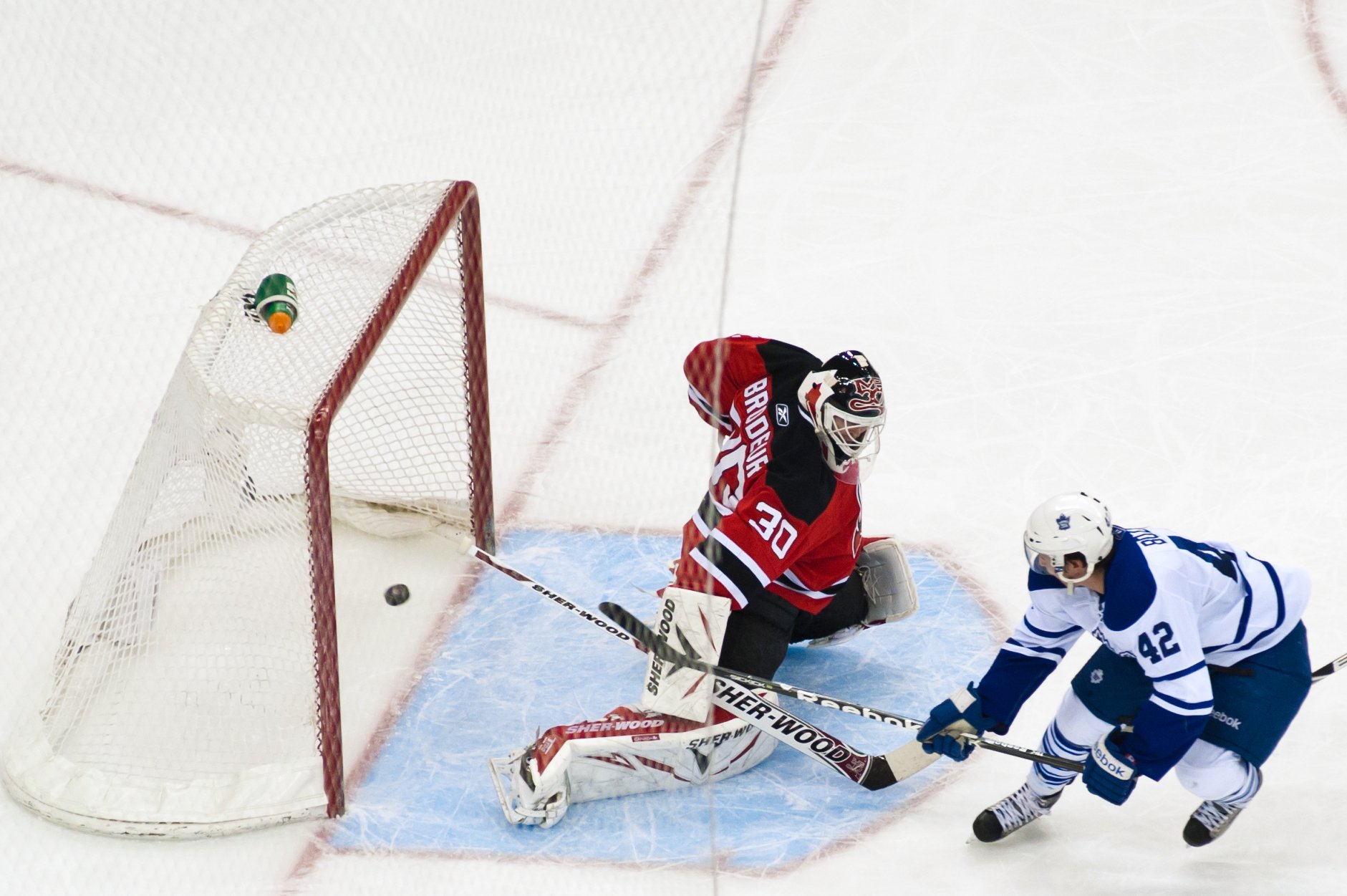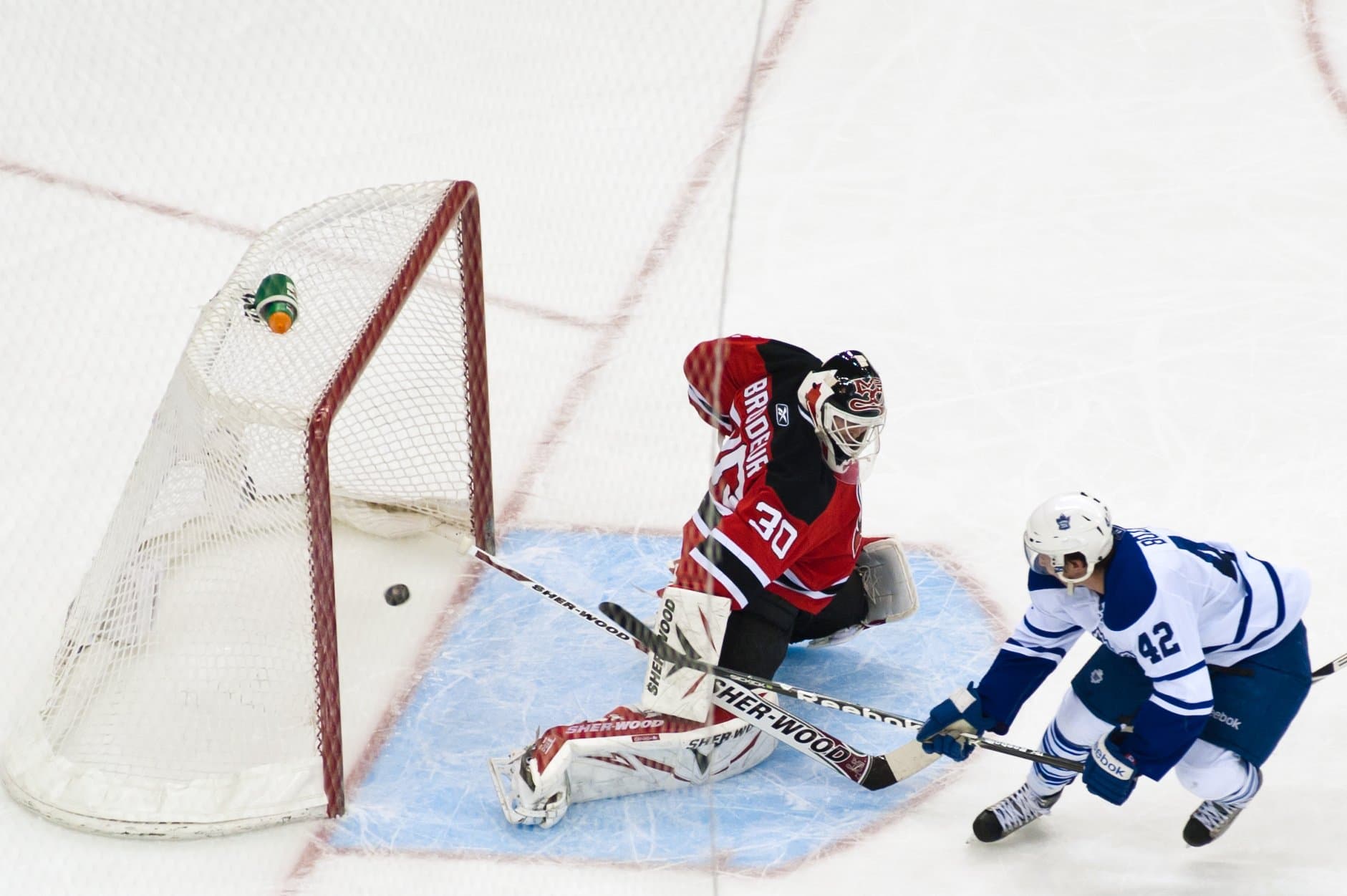
Photo: James DiBianco, Wikimedia Commons (BY-SA-2.0)
NHL Neck Guard Mandate Arrives for 2026-27: What It Means in Toronto
Table of Contents
The NHL neck guard mandate takes effect this season
The NHL neck guard mandate becomes real in 2026-27. Under the collective bargaining agreement that takes effect September 16, 2026, every player entering the league with zero games of NHL experience is required to wear cut-resistant neck protection. Anyone who has already played at least one NHL game is grandfathered and can keep dressing exactly as they do now. For the Toronto Maple Leafs, that draws a clean and slightly strange line straight through the middle of the dressing room.
On one side: Auston Matthews, William Nylander, John Tavares, Morgan Rielly, Matthew Knies and every other established Leaf, all of whom may choose. On the other: Gavin McKenna, the first-overall pick, who will wear one on his first NHL shift whether he likes the feel of it or not.
This is not a small rule buried in an appendix. It is the first equipment mandate the NHL has imposed on a body part since visors, and it arrived through the same bargaining process that produced the contract-structure overhaul and the 84-game schedule.
Exactly who has to wear one
The trigger is NHL games played, not age, not draft year, not contract type. A player with zero NHL games entering 2026-27 is covered. A player with one or more is not.
Applied to Toronto's depth chart, the split is easy to read. Easton Cowan played 66 NHL games last season before joining the Marlies for their Calder Cup run, so he is exempt. Artur Akhtyamov made his NHL debut on December 13, 2025, so he is exempt too. Every Marlies graduate who has not yet dressed for an NHL game — the defencemen pushing for a job this fall, the forwards on two-way deals, any goaltender called up in an emergency — falls under the mandate the moment they get the call.
Worth noting: most of those players are already wearing neck protection anyway. The AHL made it mandatory starting in 2024-25, so anyone who has spent the last two seasons on the Marlies has been playing in a guard the entire time. The NHL rule does not change their habits. It just means they do not get to drop the equipment on promotion.
Gavin McKenna is the headline name in Toronto
McKenna is the most-watched rookie in hockey this season, and he will be the most visible player in the league wearing mandated neck protection. That matters more than it sounds.
Equipment adoption in hockey is driven overwhelmingly by imitation, not by rules. Visors became near-universal years before the NHL grandfathered them in, because young players who grew up in them kept wearing them and the look stopped reading as unusual. A first-overall pick with McKenna's profile, wearing a guard on every highlight for the next decade, does more for adoption than any memo.
The practical impact on his game is negligible. Modern cut-resistant collars are thin, and McKenna has spent his junior career in leagues and tournaments where neck protection is either required or common. He is not learning a new sensation in his first NHL training camp — his availability for the rookie tournament is a far bigger question mark than his collar.
Why the rule exists
The mandate traces directly to the death of Adam Johnson in October 2023. The former Pittsburgh Penguins forward suffered a fatal neck laceration from a skate blade during a game in England's Elite Ice Hockey League. He was 29.
The response cascaded through the sport faster than the NHL moved. The AHL mandated cut-resistant neck protection effective 2024-25. USA Hockey mandated it for youth players. Hockey Canada, European federations and the CHL moved in the same direction. For roughly two years, the NHL was the significant outlier — the one league where the players most likely to be imitated were the ones least likely to be protected.
That gap is what the new CBA closes, and it closes it the way labour agreements usually close things: prospectively, without forcing anything on the current membership.
The grandfather clause is the compromise — and the flaw
Here is the uncomfortable part, and LeafsLurker is not going to pretend otherwise. A rule that protects only players who have never played an NHL game is a rule that protects the people at the lowest risk of a career-ending injury and exempts everyone with the most to lose.
The safety logic does not survive contact with the argument. A skate blade does not check a service-time table. If cut-resistant protection is necessary enough to compel a 19-year-old to wear it, the case for a 28-year-old in the same corner is identical. The grandfather clause exists because the NHLPA will not force existing members to change equipment mid-career, and that is a legitimate bargaining position — it is just not a safety position.
The counter-argument, and it is a real one, is that this is how the visor rule worked and the visor rule worked completely. Grandfathering produces near-universal compliance in about a decade without a fight. Slow and total beats fast and litigated. The players entering the league now will be the veterans in 2035, and by then the question disappears on its own.
Both things are true. The rule is the right long-term answer and an incomplete short-term one.
The other safety change landing with the new CBA
The neck guard mandate is not travelling alone. The same agreement rewrites the emergency backup goaltender system, which has been one of the league's stranger improvisations for a decade.
Beginning this season, emergency backups are team employees, approved by the league, and present at both home and road games. The era of a Zamboni driver or a beer-league goalie signing a one-day contract and dressing for an NHL team is finished. For a club like Toronto, which spent last season working through goaltending injuries and has since remade the position entirely around Sergei Bobrovsky and Anthony Stolarz, the change is mostly administrative — but it removes a genuinely absurd failure mode from the roster rules.
The same CBA also brings the 19-year-old AHL rule, the elimination of the playoff LTIR loophole, and a raft of contract changes. The neck guard mandate is the one that will be visible on camera every night.
What it changes for the Leafs, practically
Almost nothing operationally. Toronto's equipment staff has been outfitting Marlies call-ups in cut-resistant gear since 2024. The organization's prospects arrive already used to it. No cap implication, no roster implication, no lineup decision touched.
What it changes is optics, and optics are how equipment norms move. The Leafs will ice the league's most-scrutinized rookie in a mandated guard, in a market where every shift is broadcast nationally. If the mandate is going to accelerate voluntary adoption among veterans, Toronto is the single best place in hockey for that to start.
There is a smaller, more concrete effect too. Any player who dresses for his first NHL game this season — a Marlies defenceman on a recall, an emergency goaltender — is covered from that shift forward. Given how Toronto's camp battles are shaping up and how long an 84-game schedule is, that will be more than a handful of players by April.
What's next
The CBA takes effect September 16, days before Toronto opens its preseason schedule and roughly two weeks before the September 29 opener against Montreal. Expect the league to publish compliance guidance for equipment managers before camps open, and expect at least a few veterans to start wearing guards voluntarily once the rookies are all in them.
The honest measure of this rule will not be visible for years. It is whether, sometime in the 2030s, the question of who is required to wear neck protection has quietly stopped being a question at all. That is how the visor rule ended, and it is the outcome this one is built to produce.
Frequently Asked Questions
Are neck guards mandatory in the NHL for 2026-27?
Only for players with zero games of NHL experience. Under the CBA taking effect September 16, 2026, any player entering the league without a prior NHL game must wear cut-resistant neck protection. Players with at least one NHL game played are grandfathered and may choose.
Does Gavin McKenna have to wear a neck guard?
Yes. McKenna has never played an NHL game, so the mandate applies from his debut. As the first-overall pick in the 2026 draft and the league's highest-profile rookie, he will be the most visible player wearing mandated neck protection.
Is Auston Matthews required to wear a neck guard?
No. Matthews has played in the NHL since 2016 and is grandfathered under the rule, as are William Nylander, John Tavares, Morgan Rielly, Matthew Knies and every other established Maple Leaf. Veterans may wear cut-resistant protection voluntarily.
Why did the NHL mandate cut-resistant neck protection?
The push followed the death of former Penguins forward Adam Johnson, who suffered a fatal neck laceration from a skate blade during a game in England's Elite Ice Hockey League in October 2023. The AHL mandated neck protection starting in 2024-25 and USA Hockey did the same for youth players.
Do AHL players already wear neck guards?
Yes. The AHL made cut-resistant neck protection mandatory beginning with the 2024-25 season. Every Toronto Marlies player has been wearing it since, which is why the NHL rule changes very little for Leafs prospects arriving from the AHL.
Is Easton Cowan exempt from the NHL neck guard rule?
Yes. Cowan played 66 NHL games with Toronto last season before joining the Marlies for their Calder Cup run, so he has NHL experience and is grandfathered. Artur Akhtyamov, who debuted on December 13, 2025, is also exempt.
What other safety changes are in the new NHL CBA?
Emergency backup goaltenders become team employees approved by the league and present at both home and road games, ending the practice of signing a local goalie to a one-day contract. The agreement also brings the 84-game schedule, the 19-year-old AHL rule and the elimination of the playoff LTIR loophole.