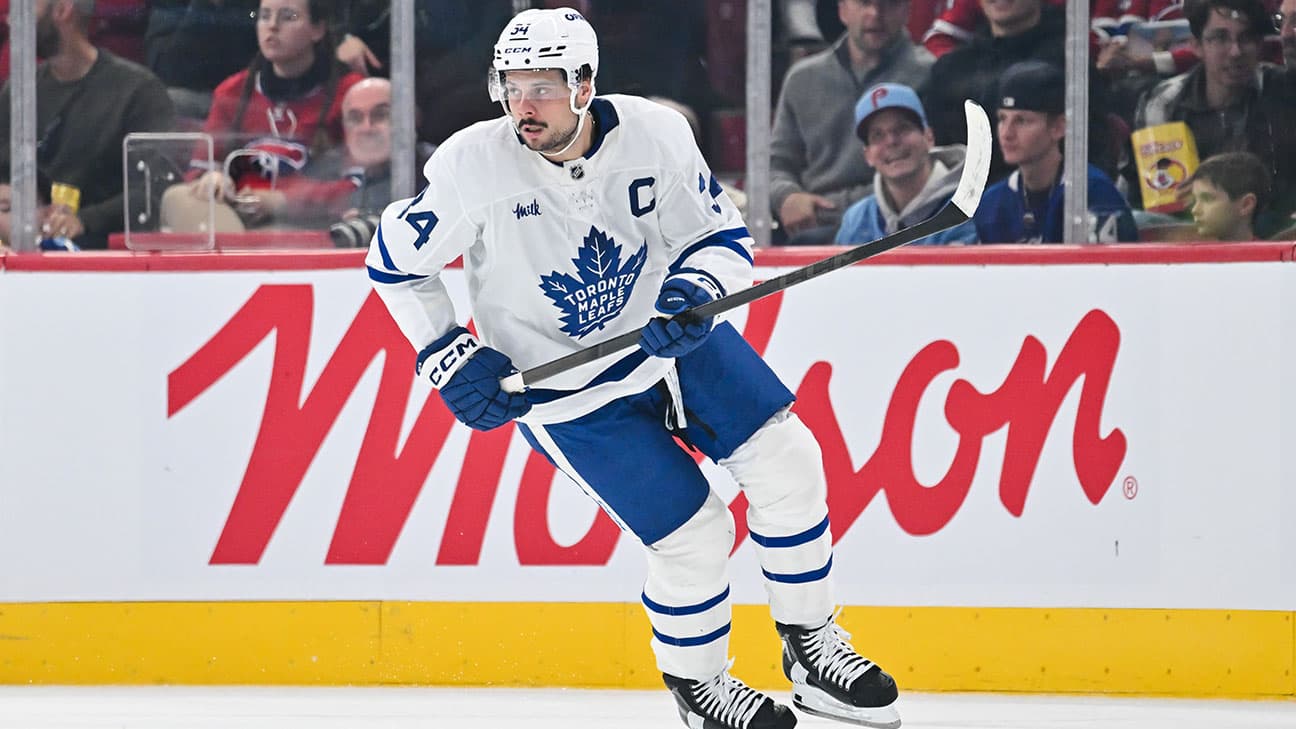
Photo: NHL.com
Maple Leafs Trocheck Trade Talks Heat Up as Chayka Balks at the Rangers' Knies Ask
Table of Contents
Chayka Circles Trocheck as Toronto's Centre Hole Gets Loud Again
A Maple Leafs Trocheck trade is back on the table, and this time it is John Chayka doing the calling. Multiple Toronto insiders reported this week that the Leafs general manager has "poked around" on an expensive deal for New York Rangers centre Vincent Trocheck, the clearest sign yet that Toronto still views the middle of its lineup as the one unfinished piece of a busy summer. The interest is real; the price, so far, is the problem.
The logic is not hard to follow. Max Domi remains out indefinitely after complications from back surgery, and until he is back the Leafs are effectively down a top-nine centre. That leaves Auston Matthews and John Tavares carrying the load down the middle, with Colton Sissons, Teddy Blueger and Nick Paul filling out the depth. It is a functional group. It is not a group built to win a matchup war against Florida or Tampa Bay over 84 games.
Why a Maple Leafs Trocheck Trade Makes Sense on Paper
Trocheck, 33, is exactly the kind of player Toronto has chased for two summers running: a right-shot, two-way centre who wins draws, kills penalties and can still score in the 20-goal, 60-point range on a good year. He is also a familiar face to the Leafs' best player. Matthews and Trocheck were Team USA teammates on the international stage, and that kind of chemistry is not nothing when you are trying to sell a veteran on a change of scenery.
Adding him would take enormous pressure off the top two centres. It would give Toronto a legitimate third pivot who can move up the lineup when Matthews needs a night off the toughest assignment, and it would let Chayka slow-play Gavin McKenna's development instead of leaning on the 18-year-old to plug a hole. For a team that finished 8th in the Atlantic at 32-36-14 last season and missed the playoffs, a proven middle-six centre is a straightforward upgrade.
The contract is the friendlier part of the equation. Public cap sites list Trocheck's cap hit at roughly $5.6 million with term running through the end of the decade — expensive, but not the kind of number that torches Toronto's books, especially once Domi's money slides onto long-term injured reserve. That is the same LTIR mechanism that gets the Leafs cap-compliant in the first place, a subject we broke down in our look at how Toronto gets under the cap with Domi on LTIR.
The Knies Ask Is Where It Falls Apart
Here is the snag. According to reports out of Toronto, the Rangers' opening ask on Trocheck started with Matthew Knies — and Leafs management said no, immediately and emphatically. Chris Drury's price, per those same reports, needs to begin with a young player ready to contribute right now, plus a longer-term prospect projected to become a core piece, plus draft capital. That is a heavy lift for a 33-year-old.
Knies is a non-starter, and it should be. He is a 22-year-old power forward on the Matthews line who is only getting better and is signed at a number that looks like a bargain more every month. We argued as much when the "sell-high on Knies" talk started circulating. Trading a foundational young winger to rent a centre in his mid-30s is the kind of move that ages badly the moment the deal is signed.
That does not mean there is no path here. It means the framework has to change. A package built around picks, a mid-tier prospect and a roster player Toronto can spare — rather than a top-six cornerstone — is the version of this trade that could actually clear Chayka's desk. Whether Drury moves off the Knies-level ask is the whole ballgame.
What Toronto Gives Up if It Says Yes
Chayka rebuilt this front office around a value-first, analytics-forward philosophy, and that philosophy does not love paying a premium for the wrong side of 30. The Leafs already spent real assets this offseason reshaping the middle of the lineup, trading for Paul and signing Sissons and Blueger. Layering a Trocheck acquisition on top of that would be a bet that this roster is closer to contention than the standings suggested last spring.
There is also the matter of the prospect pool Chayka has been carefully stocking. Toronto's system is deeper than it has been in years, and the whole point of the McKenna era is to build a sustainable core rather than mortgage it. Shipping out a "long-term project tapped to blossom into a core player" — Drury's phrasing, per reports — cuts directly against that plan.
The counter-argument is competitive urgency. Matthews and Tavares are not getting younger, the Atlantic is a gauntlet, and a healthy, deep down-the-middle group is the single biggest separator between a wild-card team and a division threat. If Chayka believes this roster can push into the top four of the Atlantic — and some analysts do — then a real second-line centre is worth paying for.
How It Fits the Lineup
Slot Trocheck into the projected roster and the picture sharpens quickly. Matthews anchors the top line, Tavares and William Nylander drive the second, and Trocheck gives the third line a genuine two-way pivot instead of a stopgap. That pushes Sissons and Blueger into the fourth-line and penalty-kill roles they are actually built for, and it buys McKenna time to earn a spot rather than have one handed to him. We laid out the current depth chart in our 2026-27 projected lineup breakdown, and a Trocheck addition is the cleanest single move to firm up the entire bottom six.
It also changes the special-teams math. Trocheck is a real penalty-killer and a net-front option on the second power-play unit, two areas where Toronto has room to improve after last season's uneven results. Depth at centre is depth everywhere — it lets a coach roll four lines and keeps the stars fresher into April.
The Age and Term Question
Every argument for Trocheck runs into the same wall: he turns 34 in the middle of next season, and there is term left on his deal. Toronto has spent the summer under Chayka deliberately getting younger and faster at the margins, shedding older contracts rather than adding them. Taking on a multi-year commitment to a centre in his mid-30s is a philosophical U-turn, and it is fair to ask whether the second half of that contract becomes an anchor precisely when the McKenna core is supposed to be hitting its stride.
The honest answer is that it depends on how you weigh now versus later. If Toronto believes its championship window is the next two or three seasons — while Matthews, Tavares and Nylander are still in their primes — then paying for a proven centre now, and living with the back end of the deal later, is a defensible bet. If the plan is to build slowly around McKenna and a young core, then Trocheck is the wrong player at the wrong time. Chayka's willingness to even poke around suggests he is not treating this as a pure rebuild.
The Internal Alternative
There is also a do-nothing option that deserves respect. Toronto could simply wait for Domi's return, lean on Sissons and Blueger in the interim, and give McKenna and Easton Cowan runway to seize bigger roles. That path costs no assets and keeps the prospect pool intact — the whole point of the retool. The risk is that it leaves the Leafs a body short down the middle if Domi's recovery drags or another centre goes down over an 84-game grind.
That tension — protect the young core or push chips in for a proven centre — is the real debate inside the Trocheck talks. It is not simply whether Toronto likes the player. It is whether this front office believes the roster is close enough to justify spending futures on a short-to-medium-term upgrade, or patient enough to trust the pipeline it just spent a draft and a summer building.
What's Next
Nobody involved is calling a deal close. The realistic read is that Toronto has registered interest, the Rangers have set a high bar, and both sides are content to let the market develop. Trade chatter tends to accelerate through the summer as teams sort out their cap situations, and the Leafs have their own dominoes to settle first — most notably the Morgan Rielly situation on the blue line, which could free up both money and roster flexibility.
For now, file this as a live thread rather than a done deal. Chayka has been explicit that he is not finished tinkering with this roster, and centre is the position that keeps pulling his attention. If the Rangers blink on the Knies demand, a Maple Leafs Trocheck trade goes from summer rumour to legitimate possibility. If they do not, Toronto walks — and Domi's return becomes the centre reinforcement that matters most. Keep an eye on our contracts tracker for the cap math as it evolves.
Frequently Asked Questions
Are the Maple Leafs trying to trade for Vincent Trocheck?
Yes. Multiple Toronto insiders reported in mid-July 2026 that GM John Chayka poked around on an expensive trade for Rangers centre Vincent Trocheck. The interest is real, but no deal is close as of July 14, 2026.
Why do the Maple Leafs want Vincent Trocheck?
Toronto needs a middle-six centre with Max Domi out indefinitely after back-surgery complications. Trocheck, 33, is a right-shot, two-way pivot who wins faceoffs, kills penalties and can score 20 goals, taking pressure off Auston Matthews and John Tavares.
What did the Rangers ask for in a Trocheck trade?
Per reports, New York's opening ask started with Matthew Knies, which Toronto rejected outright. GM Chris Drury's price reportedly requires a young player ready to contribute, a long-term prospect and draft picks.
What is Vincent Trocheck's contract and cap hit?
Public cap sites list Trocheck's cap hit at roughly $5.6 million per season with term running through the end of the decade. For Toronto the fit works only once Max Domi's contract slides onto long-term injured reserve.
Would the Maple Leafs trade Matthew Knies for Trocheck?
No. Toronto said no to a Knies-based package immediately. Knies is a 22-year-old power forward on the Matthews line signed to a favourable contract, and moving him for a centre in his mid-30s is not a trade Chayka is willing to make.
How would Trocheck fit the Maple Leafs lineup?
He would slot in as a genuine third-line centre behind Matthews and the Tavares-Nylander line, pushing Colton Sissons and Teddy Blueger into fourth-line and penalty-kill roles and buying Gavin McKenna time to earn a spot rather than being forced into one.


