Photo: de:Benutzer:Flyout, Wikimedia Commons (CC BY-SA 3.0)
Auston Matthews' Rehab Clears a Real Hurdle: He's Shooting Again
Table of Contents
Auston Matthews' rehab has reached the shooting stage
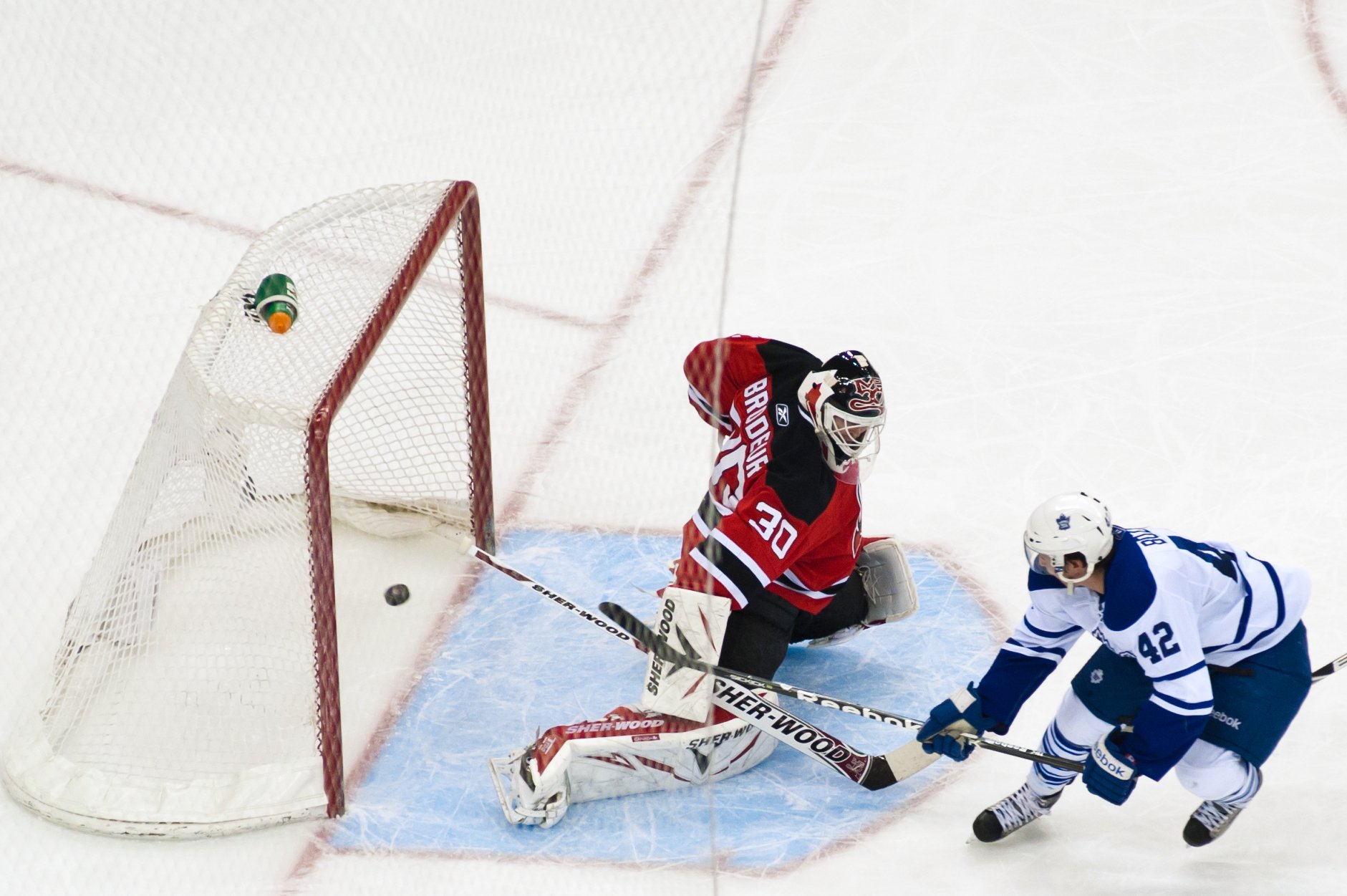
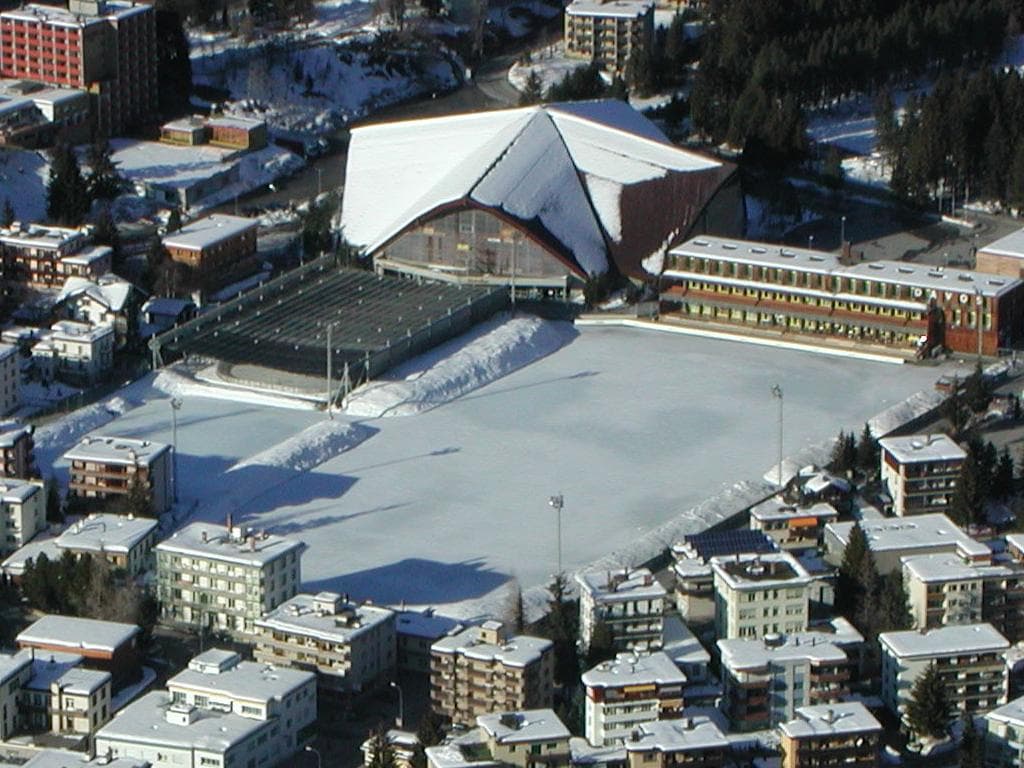
The Auston Matthews rehab timeline hit its most meaningful checkpoint of the summer this week. Video circulating from HC Davos in Switzerland shows the Toronto Maple Leafs captain on the ice taking shots alongside former teammate Joe Thornton, firing pucks at 17-year-old Davos U-21 goaltender Silvano Andri. It is the first sign of real shooting work since the knee surgery that ended his 2025-26 season, and it lands roughly six weeks before training camp opens.
Nobody should read a summer skate as a medical clearance. But this is the step Toronto has been waiting on, and it arrived close to on schedule.
The injury, precisely
Matthews suffered a grade 3 MCL tear and a quad contusion in his left leg on March 12, 2026, in a knee-on-knee collision with Anaheim defenceman Radko Gudas. Gudas was ejected from the game. Matthews had surgery, and the NHL published a recovery timeline of approximately 12 weeks.
He finished the season with 27 goals and 26 assists for 53 points in 60 games and missed Toronto's final 16, a stretch during which the Leafs' playoff position collapsed and the franchise missed the postseason for the first time in nearly a decade. It was his second consecutive injury-shortened campaign, which is the part of this that matters more than any single rehab video.
Run the clock forward from surgery and the nominal 12-week window closed in June. Everything since — the skating clips that surfaced at the start of July, the Davos shooting work now — is not about whether the knee has healed. It is about whether the player is ready to be hit.
What the Davos footage actually shows
Not much intensity, and that is the point. By multiple accounts Matthews was keeping the session light, placing shots to the blocker and the glove rather than trying to pick corners on a teenager. Thornton, who spent parts of his post-Toronto career at Davos and lives in the area, was on the ice with him.
What it demonstrates is weight transfer. A shot from a stationary position off the left leg — the injured leg — requires loading that knee and rotating through it. A player protecting an MCL does not do that comfortably, and he certainly does not do it repeatedly on camera in front of a junior goaltender.
The skating clips in early July showed the knee could bear the mechanics of stride and edge work. This shows it can bear rotational load. Those are two different tests and Matthews has now passed both in public.
Why shooting is the marker, not skating
Skating comes back first in almost every knee rehab. It is linear, it is symmetrical, and a player can compensate for a weak leg longer than most fans would guess. Coaches and trainers do not learn much from watching a forward skate laps in July.
Shooting is different, particularly for this player. Matthews' shot is built on an unusually violent hip and knee rotation — it is the mechanical reason he can release from angles other players cannot. That release depends on the left leg being able to plant, absorb and drive. If the MCL were still an issue, the shot would be the first thing to look wrong, and it would look wrong specifically on the plant side.
He is not shooting at full velocity here. He does not need to be in the first week of August. What matters is that the movement pattern is available to him at all.
The timeline against training camp
Toronto's rookie tournament comes in early September, main camp follows, the preseason opens September 19 with split-squad games against Montreal, and the regular season starts September 29 against the Canadiens at Scotiabank Arena.
That gives Matthews roughly six weeks between now and the first day of camp. In a typical progression from where he appears to be, that is enough runway to move from light shooting to full-speed skating with contact drills, but it is not generous. The relevant question is not whether he is on the ice for day one of camp — he almost certainly will be — but whether Jim Hiller's staff feels comfortable putting him into preseason games rather than easing him toward the opener.
Toronto has some latitude there. The 84-game schedule opens with a heavy October, which cuts both ways: more games to bank early, and more reason not to rush a captain whose last two seasons both ended in a training room.
What Toronto actually needs from him
Games. That is the whole answer. Matthews at 60 games is a very good player having a disappointing season by his standards. Matthews at 78 games is the difference between this roster making the playoffs and repeating last year.
The supporting cast has been rebuilt around the assumption that he plays. John Chayka added Colton Sissons, Teddy Blueger and Jack Roslovic in free agency, brought in Nick Paul by trade, and drafted Gavin McKenna first overall. None of that depth reads as a contender's supporting cast if the first-line centre plays 60 games again. Toronto is $2.75 million over the cap with no room to solve a mid-season hole at centre.
It also matters for reasons beyond this season. Matthews turns 29 in September, and his next contract is the largest single financial question the organization faces. A healthy 84-game season strengthens Toronto's hand and his simultaneously. Another 60-game year strengthens neither.
The Gudas hit, and what it left behind
One more thing worth sitting with, because it shapes how Toronto should handle September. The injury was not a wear-and-tear breakdown or a bad landing. It was a knee-on-knee hit that got an opposing defenceman ejected, delivered to a player who had already lost significant time to injury the season before.
That distinction matters for risk assessment. A soft-tissue injury caused by workload tells you something about a player's durability. A grade 3 MCL tear caused by another player's knee tells you almost nothing about it. Matthews is not fragile in the way two straight shortened seasons might suggest — he has been unlucky in a way that is difficult to plan around and impossible to coach.
The practical implication is that Toronto should not treat him as a maintenance case. There is no load-management program that prevents the next knee-on-knee collision. What the club can control is making sure the joint is fully stable before he takes contact, which is exactly why the August progression is worth watching this closely.
The caution flag
One honest note. Social media rehab footage is the least reliable evidence in sports. We do not know how long the session lasted, what he did before or after, or how the knee felt the next morning. Nobody posts the bad days.
Grade 3 MCL tears also carry a specific tail risk: the ligament heals but the joint's proprioception and lateral stability take longer to normalize, and the first real test is not a shooting drill. It is the first time somebody skates through him along the wall. That test does not happen until September at the earliest, and possibly not until a game that counts.
The optimism here is warranted and it is limited. He is doing hockey things in August, which is exactly what you want to see. It is not the same as being right.
What's next
Expect Matthews to ramp up through August, return to Toronto in the back half of the month for skates with teammates, and be in the building when camp opens. The first real information comes from Hiller and the medical staff on day one — specifically whether Matthews is a full participant from the start or on a modified plan.
Watch for two things after that. Whether he plays preseason games, and whether he is taking his usual faceoff and power-play workload when he does. Toronto's entire top-six construction assumes a healthy Matthews driving the first line. The video from Davos is the first genuine evidence this summer that the assumption is safe.
Frequently Asked Questions
What injury did Auston Matthews have in 2026?
Matthews suffered a grade 3 MCL tear and a quad contusion in his left leg on March 12, 2026, in a knee-on-knee collision with Anaheim defenceman Radko Gudas, who was ejected. He had surgery with a published recovery timeline of approximately 12 weeks.
Is Auston Matthews ready for the 2026-27 season?
All indications point that way, though the Maple Leafs have not declared him cleared. He was skating in early July and has since been filmed shooting pucks at HC Davos, and the nominal 12-week recovery window from his surgery closed in June. Training camp opens in September.
How many games did Auston Matthews play in 2025-26?
Sixty. He recorded 27 goals and 26 assists for 53 points before the knee injury ended his season, missing Toronto's final 16 games. It was his second consecutive injury-shortened campaign, and the Leafs missed the playoffs.
Where is Auston Matthews training this offseason?
He has been on the ice at HC Davos in Switzerland, where former Maple Leafs teammate Joe Thornton is based. Video circulated showing Matthews taking shots on 17-year-old Davos U-21 goaltender Silvano Andri, keeping the session light rather than shooting for corners.
When does Maple Leafs training camp open in 2026?
The rookie tournament comes in early September, with main camp following. Toronto's preseason begins September 19 with split-squad games against Montreal, and the regular season opens September 29 against the Canadiens at Scotiabank Arena.
Why does shooting matter more than skating in a knee rehab?
Skating returns first because it is linear and symmetrical, and players can compensate for a weak leg. Shooting requires loading and rotating through the plant leg, which for Matthews is the injured left side. Clearing that movement pattern is a more demanding test than stride work.
What do the Maple Leafs need from Auston Matthews in 2026-27?
Games played. Toronto rebuilt its forward depth around a healthy first-line centre, adding Colton Sissons, Teddy Blueger, Jack Roslovic and Nick Paul while drafting Gavin McKenna first overall. With the club roughly $2.75 million over the salary cap, there is no room to patch a hole at centre mid-season.