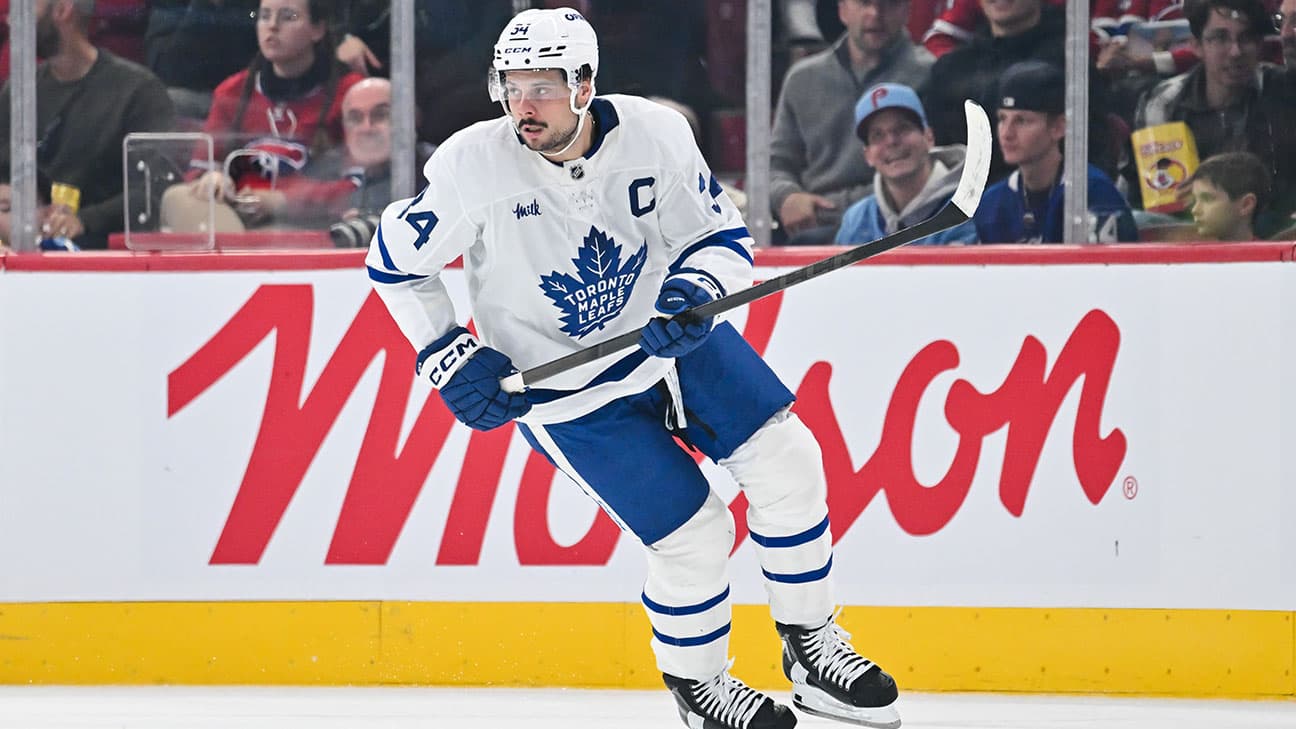
Photo: NHL.com
World Cup of Hockey 2028: What February 2028 Costs the Maple Leafs
Table of Contents
The World Cup of Hockey 2028 lands in the middle of Toronto's most important season
The World Cup of Hockey 2028 will be played in February 2028, in Calgary, Edmonton and Prague, in the middle of the 2027-28 NHL season. For most of the league that is a scheduling curiosity two years out. For the Toronto Maple Leafs it is the tournament that interrupts the season at the exact moment their entire contract structure comes due — and it will take a meaningful number of their best players out of the building for two weeks.
This is not a story anyone is telling in August 2026, and that is precisely why it is worth telling. John Chayka has built a roster whose deals overwhelmingly expire after 2027-28. Best-on-best hockey now sits inside that window, with real injury risk attached, at the point where Toronto can least afford to lose anybody. Planning for it starts long before it happens.
What has actually been announced
The NHL and NHLPA confirmed the tournament's return in March 2026 — the fourth World Cup of Hockey after 1996, 2004 and 2016, and the next step in a deliberate international calendar that began with the 4 Nations Face-Off and continued through the Milano Cortina 2026 Olympics, with the French Alps Games to follow in 2030.
The host cities came shortly after. Scotia Place, the new home of the Calgary Flames opening in 2027, and Rogers Place in Edmonton will handle the North American games. The O2 Arena in Prague is the European site. Calgary and Prague each get seven games — six round-robin plus one elimination game apiece — and Edmonton hosts both semifinals and the championship.
The format is eight teams, and unlike 2016 there will be no Team North America or Team Europe. National teams only. That single decision changes the arithmetic for a club like Toronto, because the hybrid rosters that absorbed a lot of NHL bodies in 2016 no longer exist to spread the load.
The eighth spot, and the Bobrovsky problem
The participating countries have not been named. Canada, the United States, Sweden, Finland, Czechia, Germany and Switzerland are the seven that essentially pick themselves. The eighth is contested between Russia, Slovakia and Latvia, and the resolution of that is not a hockey question.
Russia and Belarus have been suspended from international competition by the IIHF because of the war in Ukraine. Gary Bettman has said no decision has been made on Russian participation in 2028. Reporting indicates the federations of Sweden, Finland and Czechia have told the NHL they would not take part if Russia were involved, which makes the practical path fairly narrow.
For Toronto, that matters in one specific place: the crease. Sergei Bobrovsky's three-year, $21-million contract runs through 2028-29, which means he is a Maple Leaf in February 2028. If Russia is excluded, Toronto's starter stays home and stays fresh while other clubs lose their goaltenders. If Russia is admitted, a 39-year-old Bobrovsky plays high-leverage hockey during what should be his rest window. That is not a small difference for a team whose season depends on his workload management.
Who from Toronto is a candidate
Two years out, roster projection is guesswork, so treat this as a map of exposure rather than a prediction.
The United States has the strongest Toronto pull. Auston Matthews would be a lock if healthy, and Matthew Knies has spent two seasons building the case for a bottom-six-or-better role on a deep American team. Anthony Stolarz is a plausible goaltending candidate depending on how the next two seasons go.
Sweden runs through William Nylander, who has been a fixture in their best-on-best conversations, with Emil Andrae a longer shot on the back end. Canada is the crowded one: Morgan Rielly and John Tavares would both be on the outside looking in at their ages, but Gavin McKenna will be 20 in February 2028 and — if his first two NHL seasons resemble what Toronto believes they will — a genuine candidate. Darren Raddysh's inclusion would depend on whether his offensive production travels.
Add it up and a realistic worst case has Toronto sending four to six players to a tournament played at playoff intensity, in the middle of a season, with no roster relief and no cap relief.
Why February 2028 is the wrong month for this team
Toronto is the only NHL club with no expiring contracts after 2026-27. That is Chayka's signature achievement of this summer and it is genuinely valuable: it buys two seasons of evaluation with no negotiation noise. The cost is that almost everything expires at once, after 2027-28.
Which means 2027-28 is the season that decides the next version of this team. It is the year Toronto has to prove the retool worked, with a salary cap projected around $113.5 million and a set of renewals waiting on the other side. Dropping a two-week best-on-best tournament into the middle of it, with the club's most important players exposed to injury in games the Maple Leafs have no stake in, is a risk Chayka cannot manage and cannot insure against.
The schedule compounds it. The league has already moved to an 84-game regular season, and an in-season international break has to be carved out of a calendar that is fuller than it has ever been. That means denser stretches on both sides of February 2028 — more back-to-backs, less practice time, and a compressed run to the trade deadline for a roster that just got its top players back from a tournament.
The upside nobody should ignore
There is a real argument on the other side, and it is not just sentiment. Best-on-best exposure is how young players become stars in the public imagination, and Toronto has a stake in that with McKenna. A 20-year-old McKenna playing for Canada in Calgary and Edmonton in February 2028 would be one of the defining sports moments in this country that winter, and it would do more for the Maple Leafs' brand than any marketing campaign.
There is also the competitive-conditioning argument that players themselves make: high-stakes February hockey sharpens people rather than dulling them. The 4 Nations Face-Off produced a version of Matthews and Nylander who came back to their clubs playing better, not worse. That evidence is thin — one tournament, one sample — but it is not nothing.
And the tournament being staged in Canada matters. Two of the three host buildings are a short flight from Toronto, in a country where hockey is the only sport that reliably stops the room. Leafs fans will be able to watch their players in the biggest games of that season without a five-hour time difference.
What Chayka should be doing about it now
Nothing dramatic. But two things are worth building into the plan.
First, the 2027-28 roster should carry more genuine depth at centre and on the back end than a normal contender would need, because a two-week window without four core players is a survivable problem only if the replacements are NHL-calibre. Toronto's contract structure gives Chayka the flexibility to do that; the question is whether he uses it on depth or spends it chasing a difference-maker.
Second, load management for the older players — Tavares will be 37, Bobrovsky 39, Rielly 33 — has to account for a February with no rest in it. The roster Toronto is carrying is not young, and the 84-game schedule already stresses that.
What's next
The next concrete milestone is the announcement of participating countries, which will resolve the Russia question and with it Bobrovsky's status. There is no announced date for that. Roster-building rules, eligibility cutoffs and the mid-season break dates will follow, likely during the 2026-27 season.
None of that changes what the Maple Leafs do this September. It changes what they should be thinking about when they build the 2027-28 team — the one that has to answer for all of this.
Frequently Asked Questions
When and where is the World Cup of Hockey 2028?
February 2028, in Calgary, Edmonton and Prague. Scotia Place — the new Calgary Flames arena opening in 2027 — and Rogers Place in Edmonton are the North American venues, with the O2 Arena in Prague hosting the European games. Calgary and Prague each host seven games; Edmonton hosts both semifinals and the final.
How many teams play in the 2028 World Cup of Hockey?
Eight. Unlike the 2016 tournament, there will be no Team North America or Team Europe — national teams only. The participating countries have not yet been announced.
Will Russia play in the 2028 World Cup of Hockey?
It has not been decided. Russia and Belarus remain suspended from international competition by the IIHF over the war in Ukraine, and Gary Bettman has said no decision has been made for 2028. Reporting indicates the Swedish, Finnish and Czech federations have told the NHL they would not participate if Russia were included.
Which Maple Leafs could play in the 2028 World Cup of Hockey?
Auston Matthews and Matthew Knies are candidates for the United States, William Nylander for Sweden, and Gavin McKenna — who will be 20 that February — for Canada. Anthony Stolarz, Emil Andrae and Darren Raddysh are longer shots. Sergei Bobrovsky's availability depends entirely on whether Russia is admitted.
Why does the 2028 World Cup matter to the Maple Leafs specifically?
Toronto is the only NHL club with no contracts expiring after 2026-27, which means almost the entire roster comes due after 2027-28. That makes 2027-28 the season that decides the retool, and the World Cup drops a two-week, playoff-intensity tournament into the middle of it with real injury risk to Toronto's most important players.
How does the 84-game schedule affect the World Cup break?
The NHL moved to an 84-game regular season under the new collective bargaining agreement, so an in-season international break has to be carved out of a fuller calendar. That means denser stretches on both sides of February 2028 — more back-to-backs and less practice time heading into the trade deadline.
Has the World Cup of Hockey been held before?
Yes. The 2028 event will be the fourth, following 1996, 2004 and 2016. It is part of a regular international calendar that includes the 4 Nations Face-Off, the Milano Cortina 2026 Olympics and the French Alps Games in 2030.


