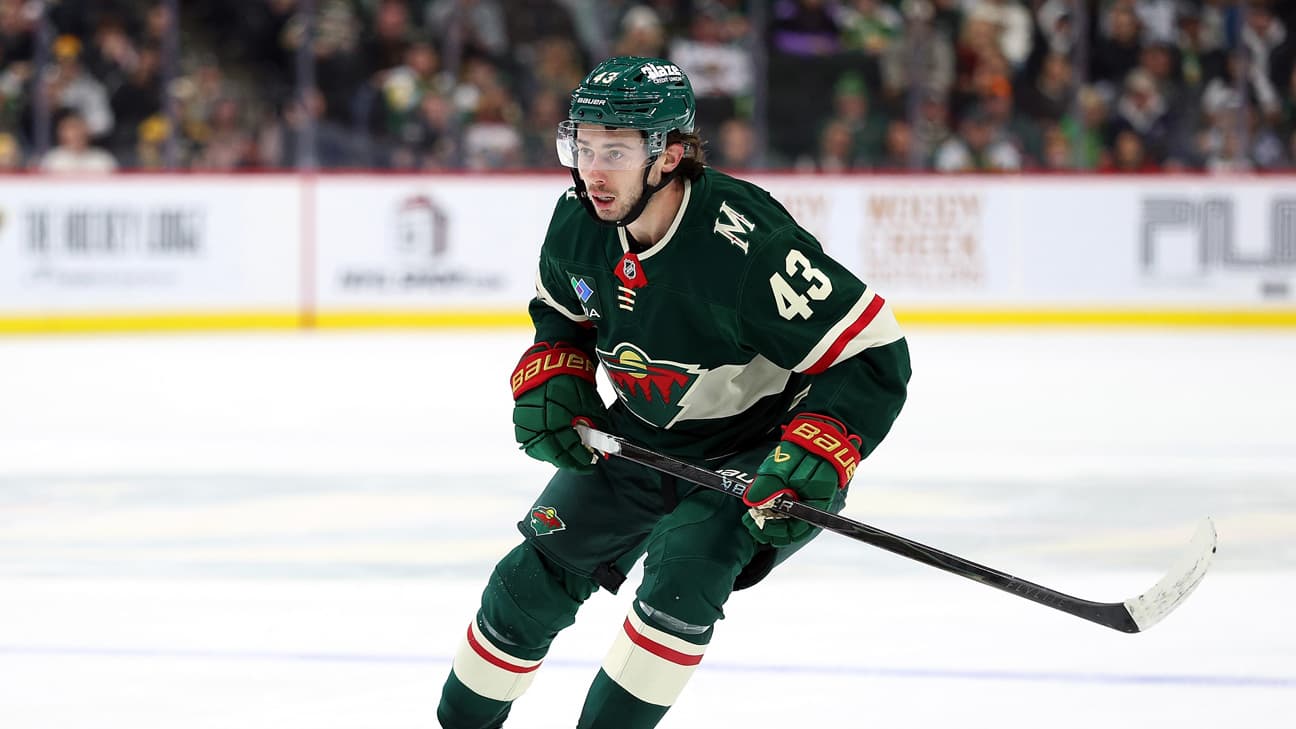
Photo: NHL.com
Quinn Hughes Contract Extension Stalls in Minnesota. Toronto Should Notice
Table of Contents
The Quinn Hughes contract extension is not done, and that is the story
The Quinn Hughes contract extension was supposed to be a formality by now. It is the second week of August, Hughes is entering the final season of his deal, Minnesota gave up an enormous package to get him, and the Wild's owner has said publicly that the club will sign him. Nothing has been announced.
Wild general manager Bill Guerin addressed it this week on SKOR North's Judd's Hockey Show, saying in effect that he has been in contact with Hughes's camp throughout and that decisions of this size take time for players and teams alike. That is the language of a negotiation that is proceeding, not one that is collapsing. It is also, notably, not the language of a deal that is close.
For the Toronto Maple Leafs this is not a story about acquiring Quinn Hughes. It is a story about what the best defenceman likely to reach unrestricted free agency in July 2027 is reportedly prioritizing — and about how badly Toronto is positioned to compete for that kind of player when the moment comes.
How Hughes ended up in Minnesota
On December 13, 2025, Vancouver traded its captain to the Wild for Marco Rossi, Liam Öhgren, Zeev Buium and a 2026 first-round pick. Canucks president Jim Rutherford has since said publicly that he had known for some time Hughes was not staying in Vancouver.
Hughes never formally requested a trade. The widely reported belief around the league was that he did not intend to re-sign in Vancouver once his contract expired in the summer of 2027, and that he preferred a United States-based club, with the East Coast frequently mentioned. Vancouver moved him with a year and a half of term remaining rather than risk the alternative.
Minnesota's side of it was a declaration of intent. Guerin had already signed Kirill Kaprizov to the richest contract in league history; adding Hughes made the Wild a team built to win immediately. Buium, a 2024 first-rounder, went the other way as the long-term replacement for exactly the role Hughes was being acquired to fill.
What is reportedly holding it up
The reporting suggests the sticking point is not money. According to analyst Jeff Marek, Hughes is focused on playing for a Stanley Cup team, and he has raised Minnesota's weakness down the middle as a concern. Guerin has framed contract length as the open question rather than whether a deal gets done at all.
Treat all of that as what it is — secondhand characterization of a private negotiation, not a confirmed position. But the two threads are consistent, and they point at something specific. A player who has already forced one franchise to trade him rather than lose him for nothing is applying the same standard again, and this time the standard is roster quality at centre.
That is the detail that should make a Leafs fan sit up, because centre is the one position where Toronto has genuine, sustained surplus.
Toronto's need is exactly what Hughes is
The Maple Leafs' most obvious structural weakness heading into 2026-27 is a legitimate No. 1 defenceman. The blue line has been reworked — Darren Raddysh arrived from Tampa Bay on an eight-year deal, Chris Tanev and Jake McCabe anchor the defensive side, Oliver Ekman-Larsson and Emil Andrae fill out the depth — but there is no one on the roster who drives play from the back end the way the league's genuine top-pairing defencemen do.
Morgan Rielly is the awkward centre of that problem. He is paid like a top-four defenceman and is difficult to place: too expensive for a third pair, and the subject of real questions about relying on him against top opposition. We covered Chayka's handling of that situation in our piece on the Rielly trade talk and why insiders were skeptical.
Toronto's centre group, meanwhile, is deep in a way Minnesota's reportedly is not: Auston Matthews, John Tavares, Nick Paul and Colton Sissons, with Gavin McKenna arriving as an 18-year-old and Easton Cowan pushing for minutes. Whatever else is wrong with this roster, the middle of the ice is not the problem.
Why Toronto almost certainly cannot win this
Now the cold water, because this is where most Leafs takes about star free agents go wrong.
Toronto is currently projected roughly $2.75 million over the upper limit for 2026-27 and has to solve that before opening night. Matthews is signed through 2027-28 at a number that will look like a bargain and will need to be replaced by a much larger one. Nylander, Knies, Raddysh, Bobrovsky and Tanev all carry real money. And the club does not control its own first-round picks in 2027 or 2028, which removes the most obvious sweetener from any conversation.
A team in that position does not sign the best available unrestricted free agent defenceman in an open market. It signs the fourth-best one, or it trades for someone on an expiring contract, or it does neither. We laid out the full landscape in our look at the 2027 free agent class and Toronto's cap reality, and nothing about the past week improves it.
There is also the small matter of the reported preference itself. If Hughes wants a Stanley Cup contender, a club that just missed the playoffs and is now running a two-year window around a captain coming off knee surgery is not the obvious answer.
The honest version of the Toronto pitch
What would Toronto actually be selling in July 2027? Matthews and Nylander in their primes for two more years. McKenna on the front end of what the organization believes is a franchise-altering entry-level contract. Knies signed through 2030-31. A goaltending situation that is either stabilized or a disaster, depending on how Bobrovsky's age-38 and age-39 seasons go.
That is a real pitch. It is not a Stanley Cup team, and pretending otherwise is how organizations talk themselves into bad decisions. The Leafs are, at this moment, a bubble club with elite forwards and an unresolved blue line — the same profile that has produced a decade of the same result.
The pitch improves dramatically if 2026-27 goes well. It disappears entirely if it does not. That is the whole ballgame for Chayka's next 12 months.
What Chayka should do instead
Stop planning around free agency and start planning around cap flexibility. Every dollar Toronto commits between now and the summer of 2027 should be judged against whether it preserves the ability to add a top-pairing defenceman, by trade or otherwise, when Matthews's contract situation forces the issue.
That means resisting the temptation to spend into the middle of the roster for marginal upgrades. It means being genuinely willing to move term off the blue line, Rielly included, even at a discount. And it means treating the 2027 defence market as a trade market rather than a free agent market, because a club with no cap space and no first-round picks is not going to win an auction.
The Hughes situation is useful mostly as a reminder of the standard. The very best players now choose their teams on roster quality, and they have the leverage to make it stick. Toronto has spent a decade assuming its market and its money were enough. They are not.
What's next
The Wild reportedly prefer to have Hughes signed to a long-term extension before September. If that happens, the 2027 unrestricted free agent class loses its headline name and the market for defencemen tightens further, which is bad for everyone in Toronto's position.
If it does not happen — if Hughes plays out the season unsigned — then next spring's trade deadline becomes one of the more interesting in years, and the Maple Leafs will be watching from a position they have chosen: over the cap, short on picks, and hoping this is the year the forwards are enough. Track how the roster is actually built on our Leafs players page and standings page as the season unfolds.
Frequently Asked Questions
Has Quinn Hughes signed a contract extension with the Minnesota Wild?
Not as of early August 2026. Hughes is entering the final season of his contract and becomes an unrestricted free agent in July 2027. Wild GM Bill Guerin has said he has been in contact with Hughes's camp throughout, and the club's owner has stated publicly that Minnesota will sign him, but no deal has been announced.
When was Quinn Hughes traded to the Minnesota Wild?
Vancouver traded Hughes to Minnesota on December 13, 2025, in exchange for Marco Rossi, Liam Öhgren, Zeev Buium and a 2026 first-round pick. Canucks president Jim Rutherford has since said he had known for some time that Hughes was not staying in Vancouver.
When does Quinn Hughes become a free agent?
Hughes's current contract expires after the 2026-27 season, making him eligible for unrestricted free agency in July 2027. That places him at the top of a 2027 class that also includes several other high-profile names.
Why has the Quinn Hughes extension taken so long?
Reporting suggests contract length, not salary, is the main open question. Analyst Jeff Marek has reported that Hughes is prioritizing playing for a Stanley Cup contender and has raised Minnesota's lack of depth at centre as a concern. These are secondhand characterizations of a private negotiation.
Could the Maple Leafs sign Quinn Hughes in 2027?
Realistically, no. Toronto is projected roughly $2.75 million over the salary cap for 2026-27, carries several large long-term contracts, and does not control its own first-round picks in 2027 or 2028. A club in that position is not positioned to win an open-market auction for the best available defenceman.
Who are the Maple Leafs' top defencemen for 2026-27?
Toronto's blue line features Darren Raddysh, acquired from Tampa Bay on an eight-year deal, alongside Chris Tanev, Jake McCabe, Morgan Rielly, Oliver Ekman-Larsson and Emil Andrae. The group lacks a true play-driving No. 1 defenceman, which remains the roster's clearest structural weakness.
Do the Maple Leafs have their 2027 and 2028 first-round picks?
No. Toronto does not control its own first-round selections in 2027 or 2028, the result of earlier trades whose obligations shifted after the club won the 2026 draft lottery. That removes the most common sweetener from any major trade conversation.


