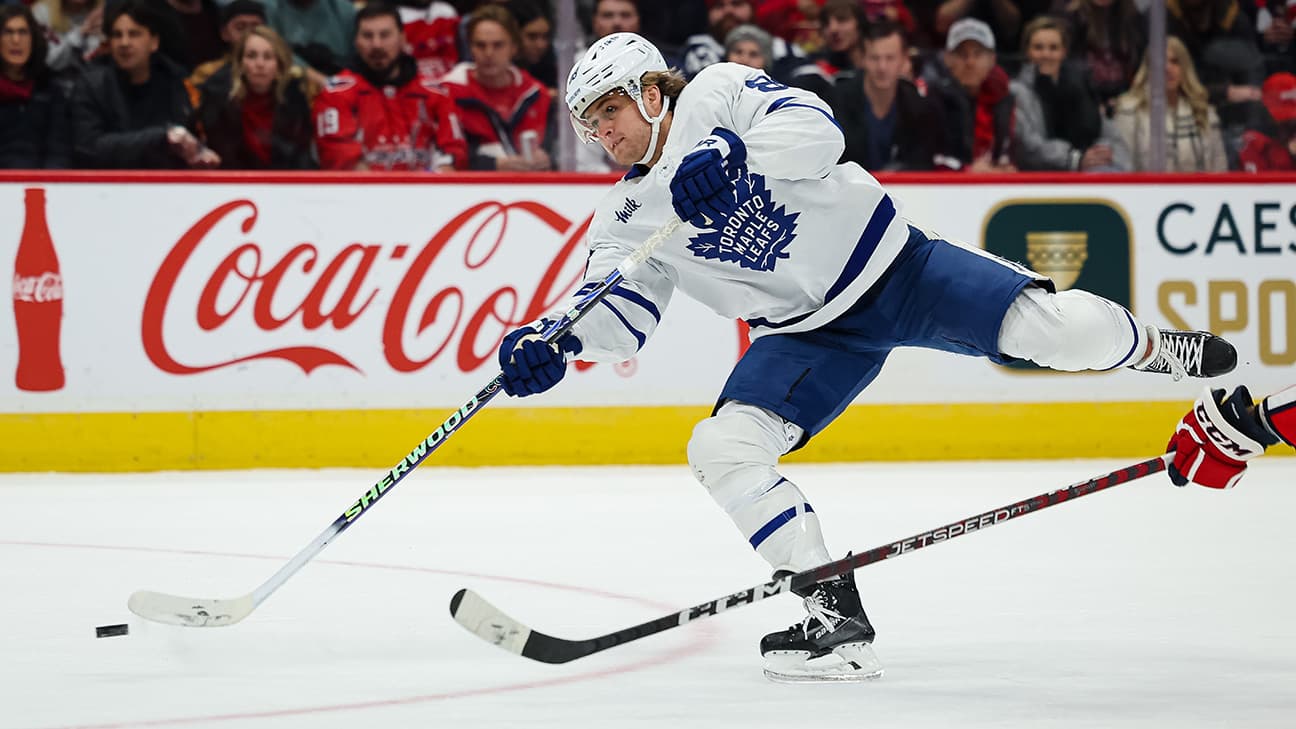
Photo: NHL.com
Opinion: William Nylander Gets His Clean Slate — Now the Maple Leafs Need Him to Cash It In
Table of Contents
The William Nylander clean slate is the Maple Leafs' quietest bet of the summer
Every headline out of Toronto this offseason has been about someone arriving or leaving — Gavin McKenna at No. 1, Brandon Carlo shipped to St. Louis, Sergei Bobrovsky signing on to reset the crease. The most consequential decision John Chayka has made might be the one that involves no transaction at all: William Nylander stays, and the Maple Leafs are handing him a clean slate for 2026-27. Sportsnet's Elliotte Friedman reported this week that last season was a genuinely rough one between Nylander and the organization, and that everyone involved is treating the coming year as a fresh start. That is the right call. It is also a bet, and the Maple Leafs need Nylander to cash it in.
Here is the part that gets lost in the noise about locker-room friction: Nylander was still one of the few Leafs who produced when the season came apart. He put up 79 points in 65 games, scored 30 goals, and closed with 12 points over his final 10 outings while the team around him was losing seven straight to end the year. The tension was real. So was the production. Those two facts are why the clean slate makes sense — and why wasting it would be the actual failure.
What actually went wrong in 2025-26
Toronto finished 32-36-14 for 78 points, 28th overall, and missed the playoffs for the first time in a decade. That collapse cost Brad Treliving his job, ended Craig Berube's tenure behind the bench in May, and brought in Chayka as general manager and Jim Hiller as head coach. When a season goes that badly, the search for a villain starts fast, and Nylander — a $11.5-million winger who plays a loose, perimeter-heavy style when he is not engaged — is an easy target.
But blaming the 30-goal scorer for a 78-point season is lazy. The Leafs lost their goaltending for stretches, leaned on a defence that thinned out as the year went on, and ran out of answers down the middle. Nylander's disagreements with the old regime were about role, deployment and structure, not effort on the scoresheet. A new coach and a new manager mean the arguments that soured last winter simply do not carry over. Hiller does not owe anyone in that room a grudge, and he inherits a Nylander who has never scored fewer than 30 goals in a full season since establishing himself.
The contract makes the clean slate non-negotiable
There is a practical reason the Maple Leafs are choosing patience over a trade: Nylander is signed through 2032-33 at $11.5 million per season, with a full no-move clause. You do not move a contract like that in July for cents on the dollar, and you do not want to. We have argued before that the Leafs can't let Nylander become the next domino in a teardown, and nothing about this summer has changed that. His deal is a cornerstone, not an anchor — and understanding what that 2032 contract is actually worth matters more than any one frustrating season.
Chayka has spent his first offseason trimming the edges of the roster and keeping cap flexibility for a mid-season strike. Trading Nylander would blow a hole in the top six that McKenna, for all his promise, is not ready to fill as an 18-year-old rookie. Keep him, get him right, and the Leafs have a legitimate first line again. That is the math, and it points in exactly one direction. You can track the full picture on our contracts page.
What a fresh start should look like on the ice
A clean slate is a slogan until it shows up in deployment. For Nylander, that means a few concrete things. First, a defined role: is he Auston Matthews' running mate, or does he anchor a second scoring line that takes pressure off the top unit? Both can work, but drifting between them is how last season's friction started. Second, power-play clarity. Nylander is one of the best one-timer threats in the league from his off wing, and the Leafs cannot afford to bury that on a stale second unit — especially with McKenna arriving to reshape the top group.
Third, and least glamorous, is buy-in on the defensive details Hiller will demand. Nobody is asking Nylander to become a checker. But the difference between a good Nylander season and a great one has always been whether the compete level in his own zone matches the skill in the offensive one. If the fresh start means anything, it means both sides of the arrangement giving a little.
The McKenna factor cuts both ways
Gavin McKenna's arrival changes the arithmetic of the top six, and it is not obvious whether that helps Nylander or crowds him. On one hand, a dynamic 18-year-old creates a second genuine offensive threat, which means opponents can no longer roll their best defensive pairing against Matthews and Nylander every shift. Spread the matchups out and Nylander's numbers should breathe. On the other hand, McKenna will want power-play time, offensive-zone starts and the puck — the same currency Nylander trades in.
The teams that get the most out of skilled wingers manage that competition for touches deliberately rather than letting it fester. That is Hiller's job, and it is why the clean-slate framing matters beyond the feel-good language. If Nylander senses his role shrinking to make room for the rookie without a conversation about it, the same friction that defined last season comes right back. Handled well, McKenna's emergence is the best thing that could happen to Nylander's production. Handled poorly, it is the next flashpoint.
What a bounce-back is actually worth
Put a number on it. Nylander has cleared 90 points in a full season before, and across an 84-game schedule a healthy, engaged version of him is a realistic bet to push back toward that range. Compare that to what the Maple Leafs would have to surrender to acquire a point-per-game winger on the trade market — a first-round pick, a top prospect, and often a bad contract coming back. The difference maker Chayka keeps talking about could be the one who is already here, at a cost of zero additional assets.
That is the whole argument for patience distilled. A retooling team with cap constraints cannot afford to give away production it already owns and then go pay a premium to replace it. Keeping Nylander, getting him right, and letting McKenna grow into the lineup around him is both the cheapest and the highest-upside path available to Toronto this season.
Why this matters more than another 'difference maker'
Chayka has been open that he wants to add another impact player, and Friedman has echoed that the Leafs are keeping their powder dry for a summer or in-season move. Fine. But the cheapest difference maker on the roster is the one already signed through 2032. A bounce-back Nylander — say, a return toward 90-plus points across the new 84-game season — is worth more than most of the names being floated in trade rumours, and it costs nothing but patience and a functioning relationship.
The Leafs have leaned on this core for years and asked it to carry them. This is the same bet, just with the volume turned down. Matthews still has to drive the bus and stay healthy, McKenna has to grow up quickly, and Nylander has to prove that last season's tension was a product of a broken environment rather than a broken player. Everything we know about his track record says it was the former.
What's next
Training camp opens in September, and the first real tell will be how Hiller talks about Nylander and where he slots him in early practices. If the Maple Leafs mean the clean-slate talk, Nylander opens the year in a top-six role with a clear job and a green light on the power play. If he responds the way his numbers suggest he can, the whole 'is this core done?' conversation looks very different by American Thanksgiving. You can follow where Toronto sits all season on our standings tracker and keep tabs on the roster on the players page. The clean slate is the easy part. Cashing it in is the season.
Frequently Asked Questions
Are the Maple Leafs trading William Nylander?
As of mid-July 2026 there is no indication Toronto is trading Nylander. Sportsnet's Elliotte Friedman reported the Leafs are giving him a clean slate under new GM John Chayka and coach Jim Hiller. His full no-move clause and $11.5-million cap hit through 2032-33 also make a trade impractical.
How many points did William Nylander score in 2025-26?
Nylander put up 79 points in 65 games, including 30 goals, during a difficult 2025-26 season. He closed strong with 12 points over his final 10 games even as the Maple Leafs lost seven straight to end the year.
What is William Nylander's contract with the Maple Leafs?
Nylander is signed through the 2032-33 season at a $11.5-million average annual value, with a full no-move clause. It is one of the longest-term deals on Toronto's books and a key reason the Leafs are choosing patience over a trade.
Why did the Maple Leafs change GM and coach in 2026?
Toronto finished 32-36-14 for 78 points in 2025-26 and missed the playoffs. That collapse led to Brad Treliving's firing, the end of Craig Berube's tenure in May, and the hiring of John Chayka as general manager and Jim Hiller as head coach.
Did William Nylander have problems with the Maple Leafs last season?
Reporting from Elliotte Friedman described genuine tension between Nylander and the organization during 2025-26, largely tied to role and deployment. Both the player and the team are treating 2026-27 as a fresh start under the new coaching and management group.
Who is on the Maple Leafs' first line in 2026-27?
It is not settled, but the most likely top-six centrepieces are Auston Matthews and William Nylander, with rookie Gavin McKenna reshaping the group. How Jim Hiller deploys Nylander — as Matthews' winger or anchoring a second scoring line — is one of the biggest questions of training camp.


