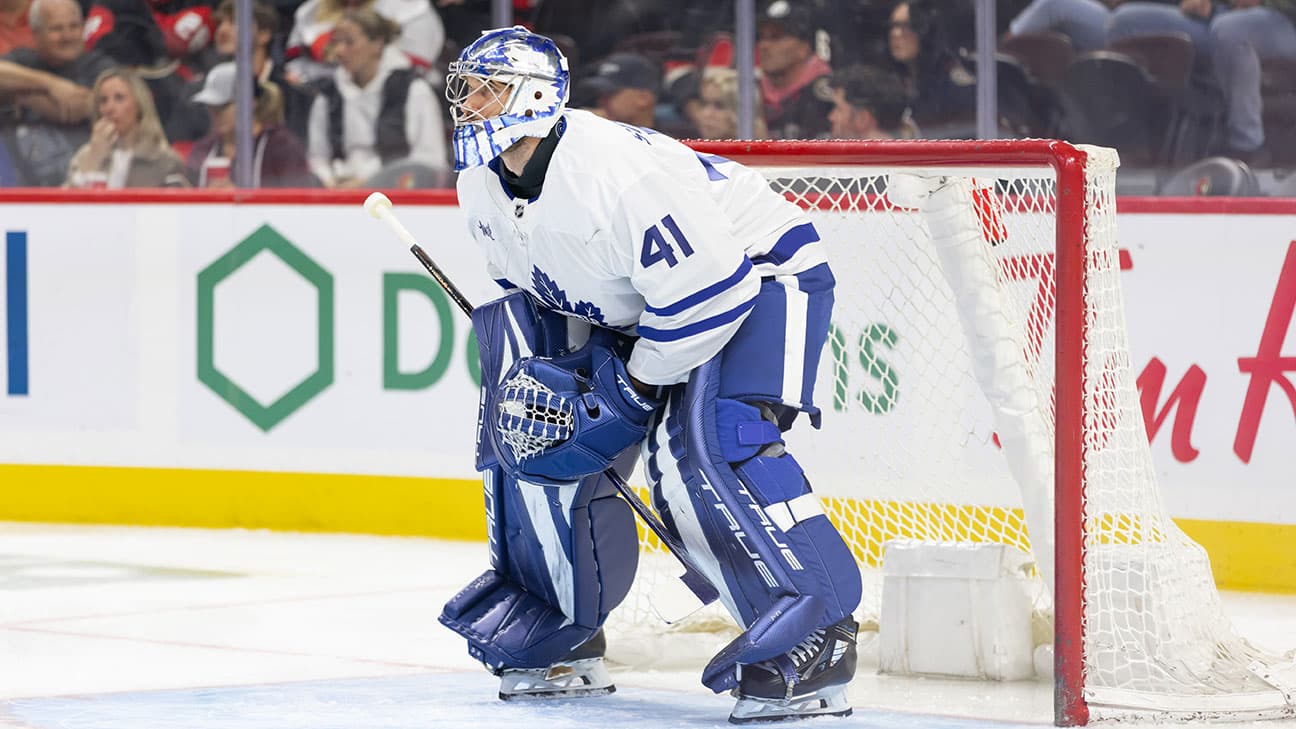
Photo: NHL.com
Opinion: The Maple Leafs' Sergei Bobrovsky Gamble Is the Real Swing Factor in Toronto's Season
Table of Contents
Sergei Bobrovsky and the Maple Leafs: the bet that decides everything
Every retooling team has one move that quietly holds up the whole structure, and for Toronto it is not the coach, the draft pick or the reshaped forward group. It is the crease. Signing Sergei Bobrovsky was the boldest decision of John Chayka's summer, and the Sergei Bobrovsky Maple Leafs experiment is going to determine, more than any other single factor, whether this season is a step forward or a very expensive lesson. When you hand a 37-year-old goaltender a three-year commitment, you are not hedging. You are betting the season on him.
Let me be clear about where I land: I think it is a defensible gamble, and I also think it is a gamble, and anyone selling it as a sure thing is not being straight with you.
The case for Bobrovsky is real
Start with why Chayka did it, because the logic holds up. Bobrovsky is a two-time Vezina winner who reinvented himself in Florida as a playoff-tested, big-game goaltender and won two Stanley Cups doing it. He arrived in Toronto on a three-year deal worth $21 million, a $7 million annual cap hit, as detailed when the Leafs signed him to reset the crease. That is not a flier. That is a franchise deciding its goaltending would no longer be the thing that cost it in the spring.
The pedigree matters for a team that has spent years watching its net become a talking point every April. Bobrovsky has been there, calmed rooms, and stolen series. If you are going to bet on an older goalie, you want one whose résumé is built precisely on the moments Toronto keeps failing in. On that count, Chayka picked the right profile.
Now the part nobody wants to say out loud
He is 37, and he will be 38 during this contract. Goaltending is the least forgiving position in sports when it comes to age, and history is unkind to netminders asked to carry heavy workloads into their late thirties. The expectation is that Bobrovsky plays north of 50 games — his normal recent workload — and across a brutal new 84-game schedule, that is a lot of hockey to ask of a goalie on the wrong side of the aging curve.
The regular-season floor is probably fine; Bobrovsky is too good and too proud to fall apart in October. The risk is cumulative. It is March, after 60-plus starts, legs heavier than they used to be, the season on the line. That is the version of this bet that keeps me up, and it is the version a defence-first system under a new coach is partly designed to protect against.
The backup situation raises the stakes
Here is what turns a reasonable gamble into a nervier one: the safety net is thin. Anthony Stolarz is the nominal 1B, and when healthy he is a genuinely good goaltender. The problem is the qualifier. Stolarz has never played more than 34 games in an NHL season and has a long injury history, which makes him exactly the wrong partner to lean on if Bobrovsky needs his workload managed down.
Toronto also thinned its depth by trading Dennis Hildeby to Tampa Bay, leaving prospect Artur Akhtyamov as the organizational next-man-up before he is truly ready — the plan is reportedly to pair him with Bobrovsky a year from now, not this season. So the crease math is stark: if either of the top two goes down for any length of time, the drop-off is severe. A bet on a 37-year-old is a lot more comfortable when the backup can shoulder 40 games. This one cannot count on that.
Why this outweighs the other summer storylines
Fans have spent the offseason litigating the second-line centre, the Rielly trade and the Gavin McKenna timeline, and those all matter. But they are second-order. A team with elite goaltending can survive a soft 2C; a team with collapsing goaltending cannot be saved by any forward line. Goaltending is the variable with the widest range of outcomes on this roster, and the widest range means the biggest swing.
Consider the McKenna detail that already tells the story: the No. 1 overall pick willingly surrendered his No. 72 to Bobrovsky out of respect for a two-time Cup winner. The kid gets it. Bobrovsky is the veteran this room is being built around. That is a lot of weight to put on a goaltender in his late thirties, and it is why his season, more than anyone's, will define Toronto's.
What history says about betting on old goalies
The uncomfortable truth is that the track record for late-thirties starters carrying a real workload is mixed at best. For every Dominik Hasek or Tim Thomas who defied the curve, there are more netminders whose bodies simply stopped cooperating once the calendar turned on them. Goaltending is uniquely dependent on explosive lower-body movement, and that is the first thing to go. Bobrovsky has aged well so far, but well so far is doing a lot of work in that sentence.
What tilts this bet toward reasonable is context. Bobrovsky is coming off a stretch in Florida where a strong defensive team in front of him limited the volume and quality of chances he faced. Toronto is explicitly trying to recreate that environment with a defence-first coach and a reshaped, more responsible group in front of the net. A goalie in his late thirties survives on a team that protects him. If the new structure delivers, Bobrovsky does not need to steal games nightly — he needs to be steady behind a system built to keep the shot map clean.
That is the optimistic read, and it is a coherent one. It also depends on a lot going right at once: the system holding, the backup staying upright, and a 37-year-old's legs lasting into April. Stack enough conditions on a bet and even a defensible one starts to feel like a tightrope.
The verdict
I would have made the same signing. The alternatives in this year's goalie market were thin, the price of a proven starter is always high, and Toronto genuinely needed to stop treating its crease as a problem to be endured. Bobrovsky was the best realistic answer available, and pairing him with a new defence-first structure is a coherent plan to keep his workload survivable. The alternative — running it back with an unproven tandem and hoping a young goalie seized the job — was the kind of wishful thinking that has burned this franchise before. At least this bet has a floor built on a real résumé.
But defensible is not the same as safe. The Sergei Bobrovsky Maple Leafs bet is the highest-variance decision on the roster, propped up by a fragile backup situation and a punishing schedule. If it hits, Toronto has the goaltending it has been missing for a decade. If age catches up at the wrong time, no forward group Chayka assembles will bail the Leafs out. Everything else this season is noise around that one question. You can follow how it plays out on our standings and players pages once the games start counting.
Frequently Asked Questions
What contract did Sergei Bobrovsky sign with the Maple Leafs?
Bobrovsky signed a three-year deal worth $21 million, a $7 million annual cap hit, on July 1, 2026. It was the boldest goaltending decision of John Chayka's offseason and made Bobrovsky Toronto's presumptive starter.
How old is Sergei Bobrovsky and how many games will he play?
Bobrovsky is 37 and will turn 38 during the contract. He is expected to play north of 50 games in 2026-27, consistent with his recent workload, across the NHL's new 84-game schedule.
Who is the Maple Leafs' backup goaltender behind Bobrovsky?
Anthony Stolarz is the 1B. He is a strong goaltender when healthy but has never played more than 34 games in an NHL season and carries a lengthy injury history, which limits how much workload he can reliably absorb.
Why is Bobrovsky considered a gamble for the Maple Leafs?
Goaltending declines sharply with age, and Toronto is committing multiple years to a netminder in his late thirties on a punishing 84-game schedule. With a fragile backup in Stolarz and thin depth after trading Dennis Hildeby, the margin for injury or decline is small.
Has Sergei Bobrovsky won a Stanley Cup?
Yes. Bobrovsky won two Stanley Cups with the Florida Panthers and is a two-time Vezina Trophy winner, giving him exactly the playoff-tested pedigree Toronto has lacked in net.
Why does the Maple Leafs' goaltending matter more than the second-line centre?
Goaltending has the widest range of outcomes on the roster. Elite goaltending can carry a team with an average 2C, but collapsing goaltending cannot be offset by any forward line. That makes Bobrovsky's season the single biggest swing factor in Toronto's year.


