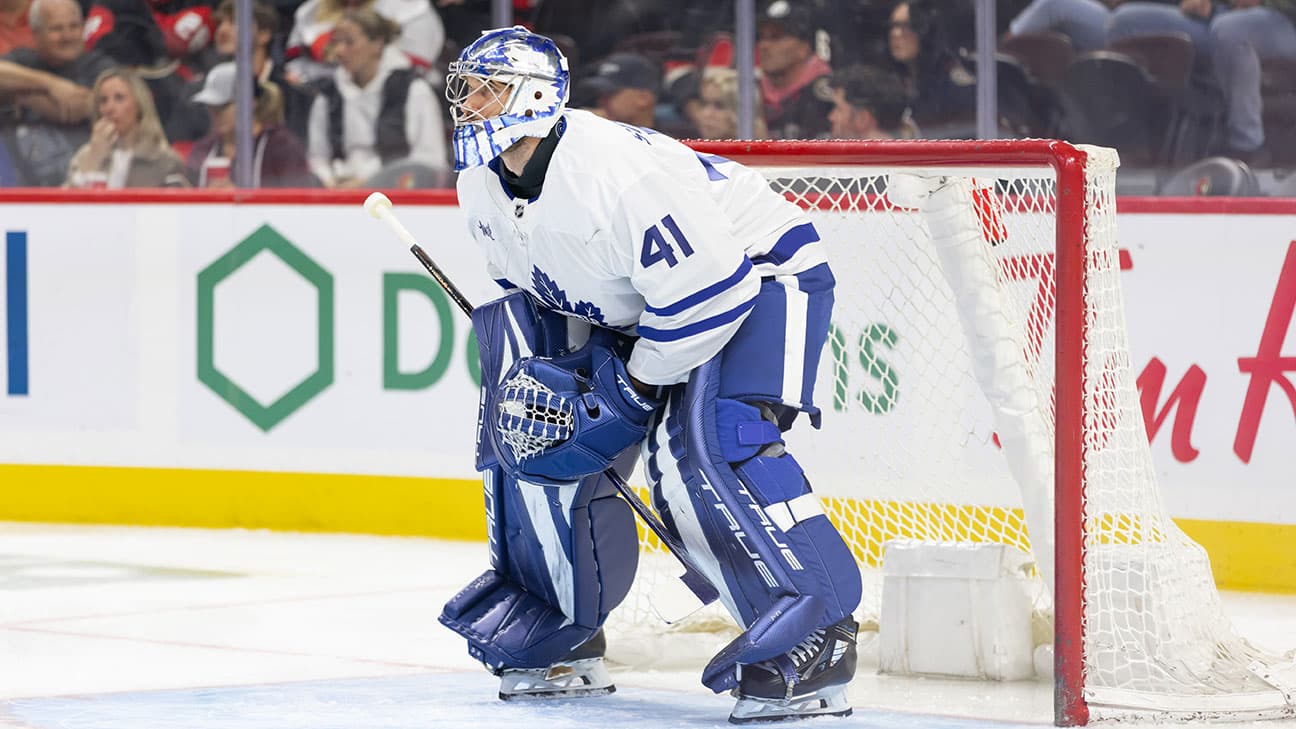
Photo: NHL.com
Maple Leafs Head Team Physician Out After 20 Years in Medical Overhaul
Table of Contents
The Maple Leafs head team physician is gone after two decades
The Toronto Maple Leafs have parted ways with head team physician Dr. Noah Forman, ending a tenure that stretched back roughly 20 years and closing out the last unfinished corner of John Chayka's organizational teardown. The Maple Leafs head team physician change surfaced over the weekend of August 29-31 and was picked up across the Leafs media ecosystem, though the club itself has not issued a press release announcing it — which is, in its own way, the most Chayka detail in the story.
Forman had been the medical director and head team physician since the mid-2000s, meaning he served under Cliff Fletcher's interim stint, Brian Burke, Dave Nonis, Lou Lamoriello, Kyle Dubas and Brad Treliving. Five general managers, two arena naming rights deals and one very long playoff drought. He is not being replaced by a stranger to Toronto sport: Dr. David Lawrence, whose background includes work with the Toronto Blue Jays as well as the 2016 Rio Olympics and the 2015 Pan Am and Parapan Am Games, now appears in the club's primary care sports medicine physician role. Lawrence's stated professional interests are injury prevention and sport-related concussion — two subjects the Maple Leafs spent all of last season losing arguments with.
This is a small headline attached to a large idea. Team doctors do not get fired for going 32-36-14. They get moved when a front office decides the way a club diagnoses, communicates and manages injuries is part of what went wrong.
What has been confirmed, and what has not
Be careful with this one, because it arrived through the side door. The reporting is consistent across multiple outlets and is anchored to a visible change on the club's own management directory rather than a quote from anyone in the building. Nobody from the Maple Leafs has publicly characterised the split, and no one has publicly framed it as a firing versus a mutual parting versus a retirement.
What can be stated plainly: Forman is no longer listed in the role he held for two decades, Lawrence is now listed in the primary care sports medicine physician position, and this follows a summer in which Chayka replaced a startling proportion of the hockey and performance departments. What cannot be stated: that any individual injury was mishandled, or that any player pushed for the change. Nobody has said that on the record, and this site is not going to invent it.
Also worth flagging: "head team physician" and "primary care sports medicine physician" are not automatically the same job at every NHL club. Toronto has historically carried a medical group — orthopaedic surgeons, primary care sports medicine, chiropractic, athletic therapy — rather than one doctor. The club has not published a full new medical staff list. Until it does, treat the Lawrence appointment as the confirmed piece and the shape of the department around him as unconfirmed.
The season that made this possible
The 2025-26 Maple Leafs did not simply lose. They came apart physically. Toronto finished 32-36-14 for 78 points, last in the Atlantic Division and 15th in the Eastern Conference, a 30-point collapse from the 108-point season before it — a franchise record for a single-year decline. They scored 253 goals and allowed 299, a minus-46 differential, and they surrendered a league-leading 2,660 shots against.
Underneath the standings was an availability crisis. Chris Tanev played 11 games. Auston Matthews played 60. Anthony Stolarz's season was a rolling series of upper- and lower-body issues, including a stretch where the club had to publicly rule out a concussion, and an April exit against Washington that carried into his offseason. Max Domi's back surgery and its complications are still shaping Toronto's salary cap plan for opening night.
Injuries happen to every team. What separates a bad-luck season from an organizational problem is the pattern of ambiguity: return timelines that moved repeatedly, injuries described in terms so generic that the room itself seemed unsure, and at least two key players whose availability was mismanaged in the public telling even if it was handled fine in the treatment room. Tanev himself said in April that he was disappointed he could only play 11 games and felt he had let people down. That is a player carrying a burden that was not entirely his to carry.
This is the last brick in a full performance rebuild
The medical change does not read as an isolated decision once you line it up against the rest of Chayka's summer. On August 3 the Leafs hired Andy O'Brien as vice-president of sport performance — a 48-year-old with four Stanley Cup rings in the last decade, more than 15 years as Sidney Crosby's personal trainer, and a working relationship with Chayka that predates Chayka's first NHL front-office job. We argued at the time that the O'Brien hire was the most underrated move of Toronto's offseason, and this is the reason why.
Hand someone the training, nutrition, recovery and rehab pipeline and you have handed them a mandate. But a VP of sport performance who does not control the medical side is running half a department. Return-to-play decisions sit with physicians. So do diagnosis, imaging, surgical referral and clearance. If Chayka wanted one integrated performance operation under O'Brien, aligning the medical group was not optional — it was the next required step.
That reframes the story. This is less "the Leafs fired their doctor for last season" and more "the Leafs finished assembling a performance department and the previous structure did not fit inside it." Both readings can be uncomfortable for the people involved. Only one of them is a strategy.
Fourteen departures and a clean sweep
Zoom out and the number is genuinely startling. Since taking over in May, Chayka has cleared out a reported 14 personnel across hockey operations and the front office. In July alone the Leafs parted with assistant general manager Darryl Metcalf, director of player personnel Dave Morrison and director of amateur scouting Mark Leach, along with assistant general manager Hayley Wickenheiser, who has since described the split as a misalignment in organizational vision. The Toronto Sun reported 11 longtime employees let go in a single wave.
Chayka then rebuilt with his own people, a process we tracked through the Palango, Rossen and Perpich hires. The coaching staff turned over too: Craig Berube was fired May 13, Jim Hiller was named the 41st head coach in franchise history on June 17, and the assistant group was rebuilt around him.
Against that backdrop, a 20-year team physician departing in the last week of August is not an outlier. It is the tail end of a list. Almost nobody who held a hockey-side job in Toronto in March 2026 holds the same job in September.
Why a team doctor change matters more than it sounds
NHL medical staffs are invisible when they work. They become the story only in failure, which makes them nearly impossible to evaluate from outside. But three things are true regardless of who is in the chair.
First, availability is the cheapest performance gain in hockey. Toronto does not need Matthews to be better than he was in 2024-25. It needs him to play 78 games instead of 60. Our 40-goal benchmark math is a games-played problem before it is a shooting-percentage problem.
Second, the 84-game schedule raises the stakes. Two extra divisional games, a preseason capped at four, and a season that starts September 29 and is meant to hand out the Cup by mid-June. Every club is being asked to absorb more hockey in a similar window. A team already carrying an older roster into a longer season has the least margin for a medical group that is still finding its footing.
Third, communication is part of the job now. Modern NHL rooms leak, insiders ask, and vague injury language creates its own drag. Some of last season's worst days in Toronto came not from the injury but from the information vacuum around it.
The risk in changing absolutely everything
Here is the case against, and it is not trivial. There is real institutional value in a doctor who has known a player's body for six seasons. Continuity of care is not a corporate buzzword in sports medicine; it is how a physician knows that a particular back complaint is the same one from 2023 and not a new one. Chayka has now removed that continuity from scouting, player development, coaching, sport performance and medicine inside a single calendar year.
If Toronto opens 2026-27 healthy, this looks like the final piece of a coherent redesign. If Stolarz misses time in November and Tanev's core issue resurfaces, the criticism writes itself: the new GM tore out the entire support structure and the injuries kept coming anyway. Nobody gets to know which until the games start.
For what it is worth, this site's read is that the direction is right and the pace is aggressive. A club that allowed 299 goals and lost its starting goalie and its most important defensive defenceman for long stretches earned an audit of every department that touches player health. Doing all of it in four months is the gamble. So is doing it two weeks before camp.
What's next
The immediate test is the physicals. Toronto's players report for training camp medicals in mid-September, ahead of prospect games in Gatineau on September 12-13 and preseason openers on September 19 — the full calendar is in our key dates guide. Those medicals are the first live work for the reshaped group, and they are where Stolarz's offseason, Tanev's core repair and Domi's rehab all get formally assessed.
Watch for three things. Whether the Maple Leafs publish a full medical staff list, which would tell us whether this is one appointment or a rebuilt department. Whether the club's injury language changes under Hiller and Chayka, both of whom have been noticeably more direct than their predecessors. And whether Domi's status resolves cleanly enough for Toronto to sort its cap situation before opening night against Montreal on September 29.
The 2025-26 Maple Leafs lost a lot of hockey games. They also lost a lot of man-games. Chayka has now made a personnel change aimed at each. One of those problems will be judged in the standings. The other will be judged on the injury report, quietly, week after week, by people who mostly notice it only when it goes wrong.
Frequently Asked Questions
Who is the Maple Leafs head team physician?
Dr. Noah Forman held the role for roughly 20 years, dating back to the mid-2000s, and is no longer listed in it as of the end of August 2026. Dr. David Lawrence now appears in the club's primary care sports medicine physician role. Toronto has not published a full new medical staff list, so the complete structure of the department is not yet confirmed.
Why did the Maple Leafs part ways with Dr. Noah Forman?
The club has not publicly explained the decision or issued a press release. It follows a 2025-26 season in which Toronto lost Chris Tanev for all but 11 games, Auston Matthews for 22 games, and Anthony Stolarz for multiple stretches, and it comes after GM John Chayka hired Andy O'Brien as vice-president of sport performance on August 3.
Who is Dr. David Lawrence?
Lawrence is a sports medicine physician whose background includes work with the Toronto Blue Jays, the 2016 Rio Olympics and the 2015 Pan Am and Parapan Am Games. His stated professional interests include injury prevention and sport-related concussion, both directly relevant to Toronto's 2025-26 problems.
How many staff have the Maple Leafs let go under John Chayka?
Reporting has put the figure at roughly 14 personnel across hockey operations and the front office since Chayka took over in May 2026. That includes assistant GMs Hayley Wickenheiser and Darryl Metcalf, director of player personnel Dave Morrison and director of amateur scouting Mark Leach, with the Toronto Sun reporting 11 longtime employees released in one wave in July.
How bad were the Maple Leafs' injuries in 2025-26?
Severe. Chris Tanev played 11 games before core muscle surgery ended his season, Auston Matthews played 60, Anthony Stolarz missed multiple stretches with upper- and lower-body issues, and Max Domi's back surgery complications are still affecting Toronto's cap planning for 2026-27.
What was the Maple Leafs' record in 2025-26?
Toronto finished 32-36-14 for 78 points, last in the Atlantic Division and 15th in the Eastern Conference. It was a 30-point drop from the previous season's 108 points, a franchise record for a single-season decline, with 253 goals for, 299 against and a league-leading 2,660 shots against.
When does Maple Leafs training camp start in 2026?
Prospect games run September 12-13 at the NHL Prospect Challenge in Gatineau, main camp medicals follow in mid-September, and the preseason opens September 19 against Montreal. The regular season begins September 29, the first September opening night since 2007-08.


