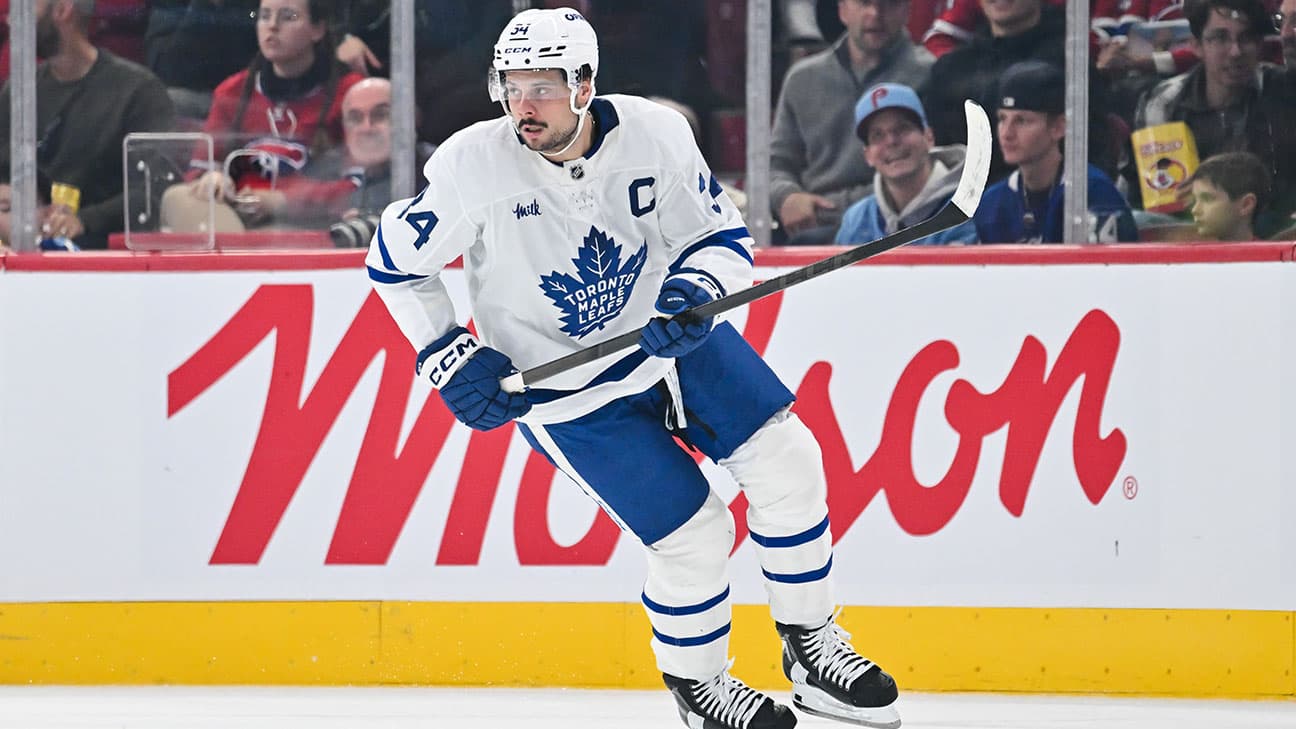
Photo: NHL.com
Jim Hiller Timeout: 'Hindsight's 20-20' Is the Wrong Answer at 0-8-1
Table of Contents
The Jim Hiller Timeout Answer: One Word
The Jim Hiller timeout question got a one-word answer on Sunday, Nov. 22. Asked after practice whether he had considered calling a timeout once the Maple Leafs fell behind the Columbus Blue Jackets late on Saturday, the Toronto head coach said, "No," per TSN. He added, "Oh, hindsight's 20-20," according to The Hockey News, and told reporters he "didn't think we were flailing in the third period," per Maple Leafs Hot Stove. He said Toronto "actually played pretty well defensively in the third."
Toronto lost that game 4-3. It was the Leafs' ninth straight loss (0-8-1), and it came after they gave up two goals in 52 seconds late in the third period to turn a 3-2 lead into a 4-3 deficit. Hiller never used his timeout.
This is an opinion piece. Our view is that the timeout itself is a small thing, and almost never decides a hockey game. The answer matters more. A coach whose team has lost nine straight, and blown multi-goal leads in two of its last three home games, should not be telling reporters his team wasn't flailing. LeafsLurker already argued on Nov. 22 that John Chayka should replace Hiller before this road trip goes much further. Sunday's answer is more evidence for that view.
What Happened in the Final Five Minutes
Here is the sequence that prompted the question. Toronto carried a 3-2 lead deep into the third period at Scotiabank Arena. Matthew Knies, playing his first game back in Toronto since the Sept. 29 trade that brought Kirill Marchenko to the Leafs, tied it at 15:40 after a William Nylander turnover. Zach Werenski scored the winner 52 seconds later. We went through each goal in our recap of the 4-3 loss.
That left Toronto with about three and a half minutes to find an equalizer. Anthony Stolarz went to the bench for an extra attacker, and the Leafs pressed six-on-five without stopping play to organize. Fans in the building chanted "Fire Hiller" as the lead slipped away, according to Editor in Leaf and other reports from the arena.
Most NHL coaches use their timeout in that situation, after pulling the goalie or after an icing, to rest the top unit and set a play. It is not a law, and plenty of coaches keep it in their pocket. But the timing was hard to miss, and Hiller's "no" meant he didn't even weigh it.
The Chayka Clip, and Why We Won't Overread It
The question became a story partly because of a broadcast shot. With about 48 seconds left, cameras caught Chayka in the press box leaning over and, according to several outlets that slowed down the clip, appearing to say "No timeout?" to someone out of frame. Markerzone, House of Hockey and others ran with it on Sunday.
We are going to be careful with this. It is a lip-read of a few seconds of video. The team has not commented, and nobody has reported what Chayka actually said or who he said it to. A GM reacting to a late-game decision is normal. Every GM in the league second-guesses his coach from the press box at some point. Treating that clip as proof of a rift would be the same mistake as treating Howard Berger's single-source firing report from Nov. 20 as a done deal. We covered that report in our breakdown of what Berger said and what Chayka has said.
The confirmed part is what Hiller said himself. That is enough.
Why "We Weren't Flailing" Is the Real Problem
Hiller's read of the third period does not match what happened in it. The Leafs did hold Columbus off for most of the third. Then they gave up the tying goal on a turnover and the winner 52 seconds later. Two goals in 52 seconds is the definition of a team losing its structure. A timeout after the tying goal would have been the natural moment to reset, and the coach didn't think the moment called for one.
This is the same pattern as Nov. 19, when Toronto led the Los Angeles Kings 3-0 and lost 4-3 in a shootout. In both games, the Leafs controlled the scoreboard and then lost control of the game in a short burst. Coaches can't stop every bad bounce, but they're paid to recognize when the momentum is turning and to intervene. A timeout is one of the few tools a coach has to do that during play. Saying you didn't consider it, after the team lost its ninth straight, is a statement about how Hiller reads games, not just about one decision.
It also cuts against what Hiller said right after the game. TSN's Mark Masters reported that the Leafs were lamenting "another blown lead," and Hiller said the team has "moments like we had tonight, which is just not National Hockey League level," per The Canadian Press and TSN. If the late-game play wasn't NHL level, it is hard to also say the team wasn't flailing. Both statements can't be true at once.
The Fair Case for Hiller
There is a reasonable defence of the decision, and it deserves a hearing. Hiller may have wanted his players to keep their legs and pace going rather than stop and think. Some coaches believe a timeout in that spot helps the opponent as much as their own team, because it lets the defending side rest its best players too. And "hindsight's 20-20" is a fair line in general: a timeout would not have guaranteed a goal.
The players have also stood behind him. Captain Auston Matthews put the responsibility on the players after Saturday's game, saying "We should be embarrassed," per CP24 and The Canadian Press, and Hiller has said he has not lost the room, per The Hockey News. Nothing reported so far suggests otherwise. We believe both of them.
But the case for Hiller has to rest on results, and the results are nine straight games without a win, a 1-10-1 record over the last 12, per The Canadian Press, and a team last in the Atlantic Division at 8-14-3. The timeout is just the newest, smallest piece of evidence on a pile that was already large enough.
Where This Leaves Chayka
Chayka said on Nov. 16 that he and senior executive adviser Mats Sundin had "full support" behind Hiller, after an 0-6-0 homestand. We went through that availability in what Chayka said about Hiller. Since then, the Leafs have gone 0-2-1. Hiller is Chayka's hire, made on June 17, and firing him 25 games in would be an admission that the first big hockey decision of the Chayka era didn't work.
That is a hard thing for a GM to admit. It is also the job. Chayka has said the team's process is better than its results. A coach saying he didn't consider a timeout in the middle of the team's worst skid is a process question, and that is exactly what Chayka says he values.
What's Next
The Leafs open a three-game road trip on Monday, Nov. 23 against the New York Islanders at UBS Arena, then visit Boston and Pittsburgh. As of Sunday night, the team had announced no coaching change. Hiller ran practice on Sunday, with Marchenko and Colton Sissons still in red non-contact jerseys and Jack Roslovic listed as day-to-day. Our Islanders preview covers the matchup.
If the skid reaches 10 on Long Island, Chayka's decision gets simpler. If the Leafs win, Hiller buys a few days. Either way, the next time a game turns late, everyone in the building will be watching whether the coach reaches for the timeout card. The standings say there isn't much room left to hold it.
Frequently Asked Questions
Why didn't Jim Hiller call a timeout against Columbus?
Hiller said on Nov. 22 that he did not consider calling a timeout once Toronto fell behind 4-3 late in the third period, answering "No" when asked, per TSN. He added "hindsight's 20-20" and said he didn't think the team was flailing in the third period.
What did John Chayka say about the timeout?
Chayka has made no public comment about it. A broadcast clip from late in the Nov. 21 game appears to show him in the press box asking "No timeout?" with about 48 seconds left, but that is a lip-read of the video and the team has not commented.
How many games have the Maple Leafs lost in a row?
Toronto has lost nine straight games (0-8-1) after a 4-3 home loss to the Columbus Blue Jackets on Nov. 21, 2026. The Leafs are 8-14-3 and last in the Atlantic Division, and The Canadian Press had them at 1-10-1 over their last 12 games.
How many timeouts does an NHL team get?
Each NHL team gets one 30-second timeout per game. Coaches commonly use it late in a game, often after pulling the goaltender or after an icing, to rest their top players and set up a six-on-five play.
Is Jim Hiller getting fired?
As of Nov. 22, the Maple Leafs had not announced a coaching change and Hiller ran practice that day. Chayka publicly backed Hiller on Nov. 16, and Howard Berger reported on Nov. 20 that a change was likely, but no other outlet has confirmed a decision.
When was Jim Hiller hired by the Maple Leafs?
Toronto named Jim Hiller head coach on June 17, 2026, replacing Craig Berube, who was fired on May 13. Hiller was GM John Chayka's first head-coaching hire and previously coached the Los Angeles Kings.


