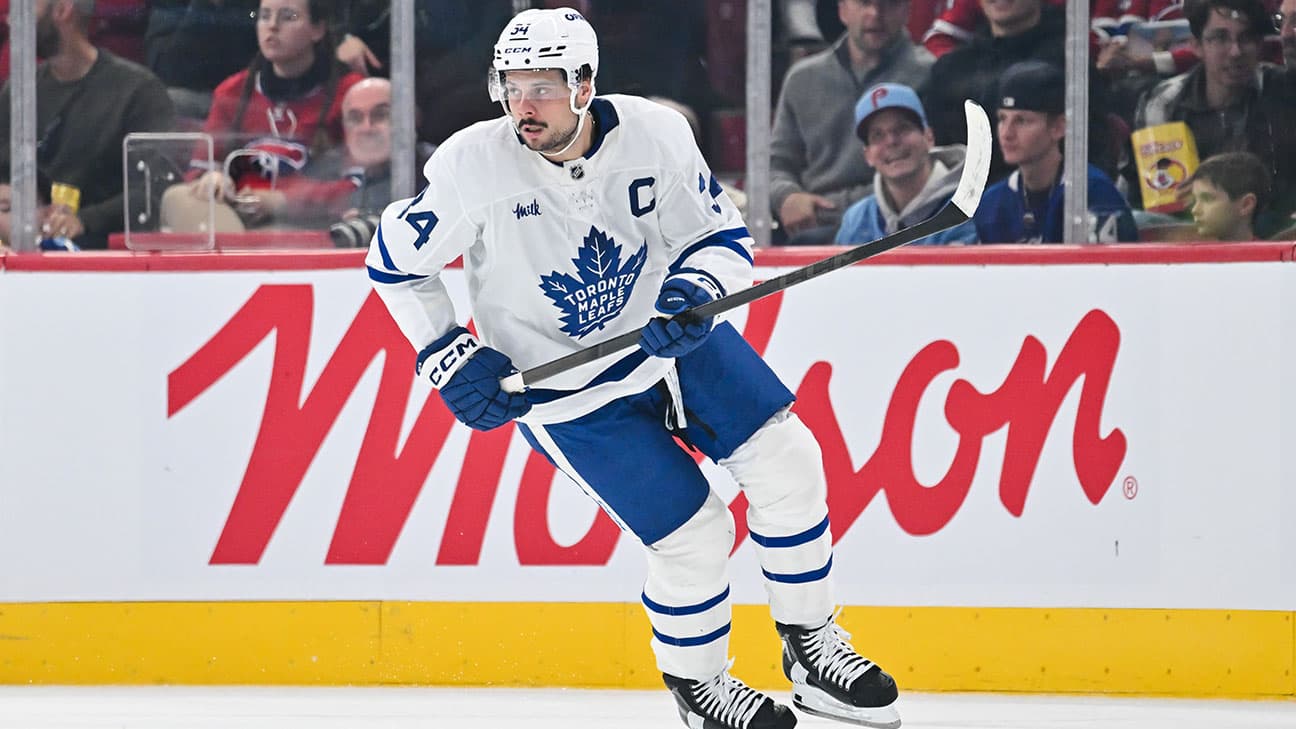
Photo: NHL.com
Gavin McKenna Calder Trophy Goal Comes Second to the Playoffs
Table of Contents
Gavin McKenna Calder Trophy talk starts with his own words
Asked at the NHLPA Rookie Showcase in Chicago what he wants out of his first NHL season, Gavin McKenna gave an answer worth reading twice. "For sure, make the playoffs," he said. "Hopefully go on a run there with the team that we got." Then, and only then: "And of course you want to win a Calder Trophy in your rookie season. I think if that happens, that's a pretty good year."
The Gavin McKenna Calder Trophy conversation is going to follow him from October to April regardless of what he says about it. What is notable is that the No. 1 overall pick led with the team result and treated the individual hardware as a consequence rather than a goal. That is either media training or genuine perspective, and the rest of what he said in Chicago suggests the second one.
He also delivered the line of the week for a franchise that has spent a decade being told it wastes talent: "It's pretty common that players who get drafted first overall go to a team who's tanking and it's not the case for me. I know I've gotten lucky."
What McKenna is walking into
He is right about the luck, and the point is sharper than a throwaway. Recent first-overall picks have generally landed on teams three years from relevance. McKenna arrives on a club with Auston Matthews, William Nylander, Matthew Knies, Morgan Rielly and a goaltender with two Stanley Cup rings, and he arrives expected to play a top-six role and power-play minutes from day one.
That is a genuinely different assignment than the one Connor Bedard or Macklin Celebrini got. It also cuts both ways. On a rebuilding team a first-overall pick gets 20 minutes a night and every power play regardless of results. On a team trying to make the playoffs in a hard Atlantic, minutes are earned and a slow October gets you moved down the lineup.
McKenna signed his three-year entry-level contract in early July. Toronto also holds the nine-game decision point that every club holds with a first-year player, and we walked through why the slide rule is a live consideration rather than a formality. Nothing about that has changed. It is a genuine decision the organization will make in mid-October.
The player, honestly assessed
Strip away the hype and look at what he actually did. At Penn State in 2025-26, McKenna put up 51 points in 35 games — 15 goals and 36 assists — good for second in the NCAA in points per game at 1.46. He won the Big Ten scoring title with 38 points in 24 conference games, the first Penn State player ever to do it. He set Nittany Lions freshman records for assists and points, became the third player in program history to reach 50 in a season, was named Big Ten Freshman of the Year, and finished as a Hobey Baker top-10 finalist.
The year before, in the WHL with Medicine Hat, he scored 41 goals and 129 points in 56 games.
Read the shape of those two seasons together and something useful emerges. McKenna's junior year was a goal-scoring explosion against 17-year-olds. His NCAA year, against men, was overwhelmingly a playmaking season: 36 assists against 15 goals. That is the profile that translates to the NHL first — vision, puck retrieval, manipulation of defenders — and it is also the profile that produces assists before it produces goals.
What a realistic rookie season looks like
One published projection has McKenna at 15 goals and 37 assists for 52 points. That number is not a lowball. It would be one of the better rookie seasons of the past decade and it would put him squarely in Calder contention.
Set the tiers honestly:
- Disappointing: under 35 points, bounced between the second and third lines, off the top power-play unit by Christmas.
- Good and expected: 45 to 55 points, locked into the top six by December, a real contributor on a playoff team.
- Calder-winning: 65-plus points with power-play production and a visible role in Toronto making the postseason.
The middle band is the honest expectation. The gap between "good rookie" and "Calder winner" in a modern voting environment is usually about 15 points, and 18-year-olds who clear 65 in their first NHL season are historically rare.
There is one structural advantage worth naming: Toronto's power play is being rebuilt around Darren Raddysh's shot volume from the point, which we broke down in our look at the fix Chayka paid $8.5 million for. A playmaking winger on the flank of a unit with a genuine point shot and Matthews in the bumper is a very good place to accumulate assists.
The Calder field is not soft
McKenna's competition includes the rest of a strong rookie class, several of whom were beside him in Chicago — Porter Martone among them. Calder voting also has a habit of rewarding whoever plays the most games in the biggest role, which means a rookie on a rebuilding club with 21 minutes a night can beat a more talented player getting 15 on a contender.
That is the specific risk of McKenna's landing spot. Toronto's top six is full. Matthews and Nylander are not sharing minutes. Knies is a fixture. Easton Cowan, coming off a Calder Cup run with the Marlies, is competing for the same ice time, something we covered in our piece on Cowan's full-time job and top-six audition.
If McKenna spends November on the third line with 13 minutes a night while a rookie somewhere else gets 20 on a bad team, the Calder race is over before American Thanksgiving and it will have nothing to do with who is better.
The historical base rate is worth keeping in view too. Calder winners who arrive on established playoff teams are the exception rather than the rule, precisely because those clubs have veterans occupying the minutes that generate award-level counting stats. Toronto is asking McKenna to win a race in which his own team is one of the obstacles.
The Matthews connection
McKenna said he has been in contact with Matthews this summer about handling attention in the most scrutinized market in the sport. The parallel is obvious — Matthews was the No. 1 pick in 2016, won the Calder, and has spent a decade learning what Toronto does to young players — and the mentorship is more valuable than any tactical instruction.
McKenna also spent part of the offseason skating with Celebrini, which we wrote about when the sessions surfaced in Vancouver. Two No. 1 picks pushing each other in August is exactly what you want from an 18-year-old with nothing left to prove at lower levels.
What's next
The first sighting is the NHL Prospect Challenge on September 12-13 in Gatineau, though whether McKenna dresses is genuinely uncertain — clubs routinely hold their most valuable young assets out of low-stakes September hockey. Main camp follows, preseason starts September 19, and the season opens September 29 against Montreal.
Then comes the real checkpoint: game nine. Toronto has to decide whether McKenna stays or whether his entry-level contract slides, and unlike most such decisions this one involves a player the organization believes is ready. The nine-game window is the single most consequential date on the Leafs' calendar this fall, and it arrives in mid-October.
Track the full pipeline on our draft page and the current depth chart on the players page.
Frequently Asked Questions
What did Gavin McKenna say his rookie season goals are?
Speaking at the NHLPA Rookie Showcase in Chicago, McKenna said: "For sure, make the playoffs. Hopefully go on a run there with the team that we got." He added that "of course you want to win a Calder Trophy in your rookie season. I think if that happens, that's a pretty good year."
What were Gavin McKenna's college stats at Penn State?
In 2025-26 he recorded 51 points in 35 games — 15 goals and 36 assists — finishing second in the NCAA at 1.46 points per game. He won the Big Ten scoring title with 38 points in 24 conference games, set Penn State freshman records for assists and points, and was a Hobey Baker top-10 finalist.
What contract did Gavin McKenna sign with the Maple Leafs?
A three-year entry-level contract, signed in early July 2026 after Toronto selected him first overall in the 2026 NHL Draft. He is expected to compete for a top-six role and power-play time immediately.
Is Gavin McKenna the Calder Trophy favourite for 2026-27?
He is a leading candidate but not a lock. Calder voting often favours rookies who get the largest role, and Toronto's top six is crowded with Auston Matthews, William Nylander and Matthew Knies. A rookie getting 20 minutes a night on a rebuilding team can outpoint a more talented player getting 14 on a contender.
How many points will Gavin McKenna score as a rookie?
One published projection has him at 15 goals and 37 assists for 52 points. A reasonable expectation band is 45 to 55 points, with 65-plus required to seriously contend for the Calder Trophy in most voting years.
What did Gavin McKenna say about being drafted by Toronto?
He framed it as good fortune: "It's pretty common that players who get drafted first overall go to a team who's tanking and it's not the case for me. I know I've gotten lucky." Toronto won the 2026 draft lottery despite having a veteran roster.
What were Gavin McKenna's junior numbers in the WHL?
With Medicine Hat in 2024-25 he scored 41 goals and 129 points in 56 regular-season games before moving to Penn State for his draft-eligible season in the NCAA.
When will Gavin McKenna make his NHL debut?
Toronto opens the regular season on September 29, 2026 against Montreal at Scotiabank Arena. Before that, the Leafs play prospect games September 12-13 in Gatineau and begin preseason on September 19, though clubs often hold top picks out of rookie tournaments.


