Photo: NHL.com
Gavin McKenna Trained 17 Hours a Week With Macklin Celebrini. That Matters.
Table of Contents
Gavin McKenna spent his first pro summer chasing Macklin Celebrini around a Vancouver rink
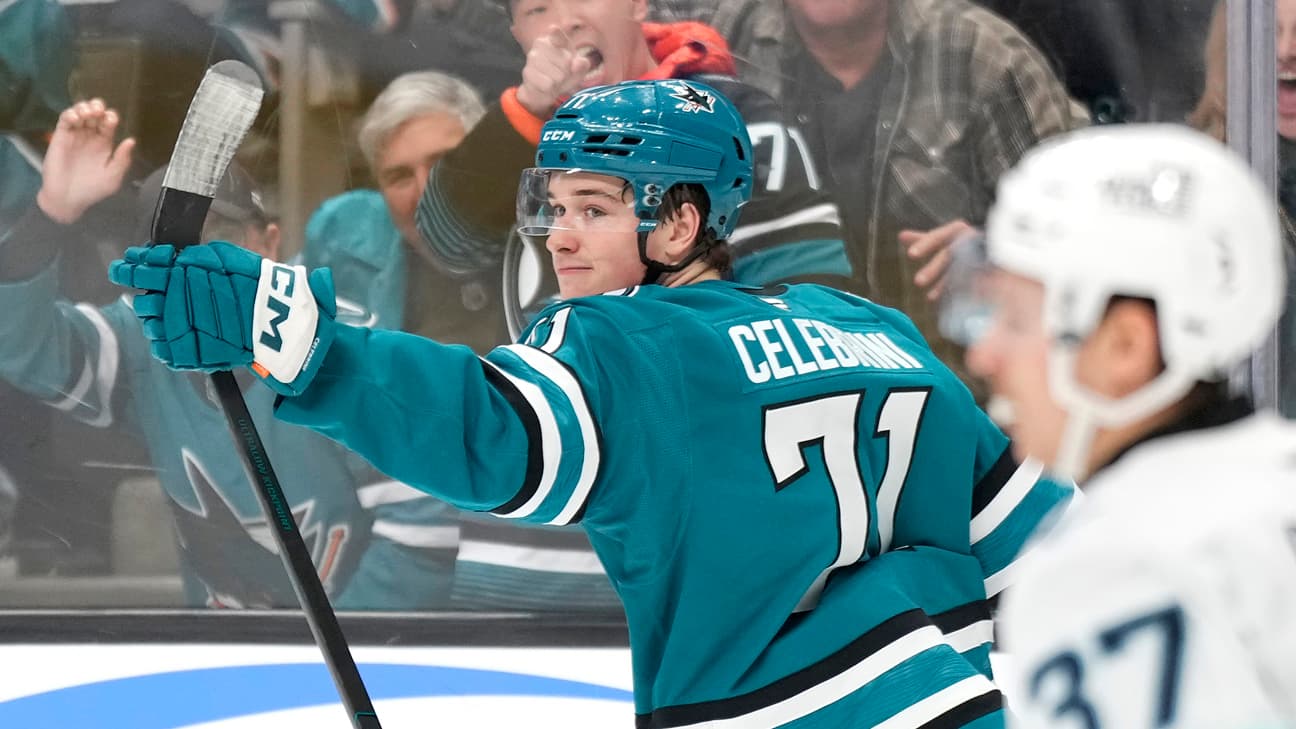
Gavin McKenna has spent the summer training in Vancouver alongside San Jose's Macklin Celebrini, and the number that came out of it is the one worth writing down: roughly 17 hours on the ice in a single week. That is close to three hours a day, in July, for an 18-year-old who has not played an NHL game. For a Maple Leafs organization that just spent the first-overall pick on him, it is the most encouraging thing to come out of a quiet August.
Toronto drafted McKenna first overall in June and signed him to a three-year entry-level contract days later. Since then he has been a name on a depth chart and a subject of speculation. The Vancouver sessions are the first concrete evidence of how he intends to approach the transition, and the choice of training partner says as much as the hours do.
McKenna has described Celebrini as intense about both his on-ice and off-ice work, and said the summer made him better. Take that for what it is — an 18-year-old talking in August — but the underlying decision was his to make, and he made a demanding one.
Three hours a day in July is not normal, and that is the point
Summer skates for NHL players are usually shorter and less structured than the number suggests. An hour of skill work, a bag skate, some small-area games with whoever is in town. Seventeen hours in a week means something closer to a training camp workload sustained through the off-season, and it means McKenna is arriving at his first professional camp with a base that most first-year players do not have.
The reason that matters is specific. The single biggest reason 18-year-olds fail to stick in the NHL is not skill — it is that the pace and the physical demand of an 82-game grind, now 84, breaks them somewhere around game 30. Players who arrive under-conditioned get exposed in November. Players who arrive with a real summer behind them at least get to be judged on hockey.
Toronto's new sport performance department, led by Andy O'Brien as vice-president, inherits a top pick who has already done the work. We covered the O'Brien hire and what it signals about the organization, and the timing is convenient: the club rebuilt its conditioning and rehabilitation infrastructure in the same summer its most important young asset showed up in shape.
What he did at Penn State, and why the ceiling talk is not hype
The résumé McKenna brings to camp is not a projection. In 2025-26 he put up 51 points at Penn State — 15 goals and 36 assists, the latter a Penn State single-season record — as an 18-year-old freshman in the Big Ten. He averaged 1.46 points per game, which led the conference and ranked second nationally, and he became the first Penn State player to win the Big Ten scoring title with 38 points in 24 conference games.
The single game that travelled furthest was February 20 against Ohio State, when he put up eight points, including seven assists, in an 11-4 win. Eight points is the most in an NCAA Division I game in 39 years; seven assists is the most since 1983. Those are the kinds of numbers that make scouting reports read like fan fiction, except they happened.
He was named Big Ten Freshman of the Year, a CCM/AHCA Second-Team All-American, and a top-10 Hobey Baker finalist. The gap between that level and the NHL is still enormous — freshman college hockey is not a fourth line in Sunrise in March — but it removes the usual first-overall caveat about whether a player has produced against men.
Why Celebrini is the right template
Of all the players McKenna could have chosen to shadow, Celebrini is the most useful comparison available. He went first overall in 2024 to San Jose, arrived in the NHL at 18, and did it on a bad team where every mistake was visible and nobody could hide him. That is a closer analogue to McKenna's situation than any of the other recent top picks.
The differences matter too. Celebrini went to a rebuilding San Jose club with no expectation of a playoff race. McKenna is walking into a Toronto team that missed the playoffs by a hair, spent the summer adding nine NHL bodies, and intends to compete immediately. The scrutiny is not comparable. Neither is the pressure to produce in October.
But the day-to-day habits transfer, and that is what a training partner is for. Learning how a first-overall pick who survived his rookie year actually structures a summer is more valuable to McKenna than any amount of advice from someone who did it fifteen years ago.
The number question still has not been answered
McKenna wore No. 72 when he took the ice at Toronto's development camp in June. He almost certainly will not wear it in September. Sergei Bobrovsky signed a three-year, $21 million deal on July 1 and has worn 72 for his entire career, and goaltenders rarely surrender their number to a rookie.
This has already produced one round of misinformation this summer, which we addressed when a fabricated story about McKenna requesting No. 92 went around the rumour mill. The real answer is mundane: the club will sort it before camp, and it will not be news for more than a day.
It is worth mentioning only because it is a small illustration of the environment. A jersey number becomes a story in Toronto. McKenna has not played a professional game and has already had one invented controversy attached to his name.
The rookie tournament is still up in the air
Toronto's prospects play at the NHL Prospect Challenge in Gatineau on September 12 and 13, sharing the event with Ottawa, Montreal and Winnipeg. McKenna's participation remains unconfirmed, with his plans described as undecided as recently as late July.
We argued at the start of August that holding him out is defensible rather than alarming. Rookie tournaments are three games of loosely structured hockey against players who will mostly never reach the NHL. The downside risk — a freak injury a week before main camp — is real, and the upside is a highlight reel.
The counterargument is that McKenna has said he wants to make the roster, and skipping the first competitive event of the fall is an odd way to start. Both positions are reasonable. Expect the decision to come down to how the medical and performance staff read his summer volume.
What making the roster would actually require
McKenna's stated goal is to open the season in Toronto. The Maple Leafs have a structural reason to want that too: an entry-level contract is the cheapest useful asset in a cap system, and Toronto is projected roughly $2.75 million over the $104 million ceiling before Max Domi's long-term injured reserve situation is settled. A productive 18-year-old on an entry-level deal is the closest thing to free money the cap allows, as we broke down in our look at how his contract functions as a cap weapon.
But the bar is not "is he one of the twelve best forwards in camp." It is whether Jim Hiller can find him minutes that are both meaningful and survivable. That means a spot alongside a centre who can carry defensive responsibility, a second power-play unit at minimum, and matchups that do not start every shift in his own end against Florida's top pair.
If those minutes exist, he plays. If the only opening is a fourth-line checking role — and Toronto signed Colton Sissons, Teddy Blueger, Nick Paul and Brandon Duhaime precisely to fill those jobs — then playing him in the NHL is worse for his development than not.
What's next
The Gatineau decision comes first, in early September. Main camp follows, with Toronto's preseason opening September 19 against Montreal and the regular season starting September 29 against the Canadiens. Nine games is the number that matters after that: teams can play a player on an entry-level contract up to nine NHL games before the first year of the deal burns.
Watch McKenna's linemates in the first week of camp and whether he draws power-play reps with the first unit. That is the tell. Everything else — the Vancouver hours, the training partner, the number on his back — is prologue. For the rest of Toronto's young group, see the fall runway for the prospect pool and our draft coverage.
Frequently Asked Questions
Who did Gavin McKenna train with this summer?
McKenna trained in Vancouver with San Jose Sharks forward Macklin Celebrini, the first-overall pick in the 2024 NHL Draft. The two spent roughly 17 hours on the ice over a single week, close to three hours a day, and McKenna said the sessions made him better.
Did the Maple Leafs draft Gavin McKenna first overall?
Yes. Toronto won the 2026 NHL Draft lottery after missing the playoffs in 2025-26 and selected McKenna with the No. 1 overall pick in June 2026. He signed a three-year entry-level contract shortly afterward.
Will Gavin McKenna play for the Maple Leafs in 2026-27?
He has said his goal is to make the opening-night roster, but nothing is settled. Toronto added Colton Sissons, Teddy Blueger, Nick Paul and Brandon Duhaime to the bottom six this summer, so McKenna would need a role with real offensive minutes rather than a checking job to make playing him worthwhile.
What number will Gavin McKenna wear with the Maple Leafs?
It is unresolved. He wore No. 72 at Toronto's June development camp, but goaltender Sergei Bobrovsky has worn 72 throughout his career and signed with the Leafs on July 1. A separate story circulating this summer claiming McKenna requested No. 92 was fabricated.
When is the Maple Leafs rookie tournament in 2026?
Toronto's prospects play at the NHL Prospect Challenge in Gatineau, Quebec on September 12 and 13, hosted by Ottawa and also featuring Montreal and Winnipeg. McKenna's participation has not been confirmed and was described as undecided in late July.
How many games can Gavin McKenna play before his entry-level contract starts?
Nine. Under the CBA, a club can play a player on an entry-level contract in up to nine NHL games in a season without burning the first year of the deal. Toronto could use that window to evaluate McKenna and still slide the contract if it decides he needs more time.
When do the Maple Leafs open the 2026-27 season?
September 29 against the Montreal Canadiens. The preseason opens September 19, also against Montreal. It is the NHL's first 84-game regular season, two games longer than the previous format.
What were Gavin McKenna's stats at Penn State in 2025-26?
McKenna had 51 points in his freshman season — 15 goals and 36 assists, a Penn State single-season assist record — averaging 1.46 points per game, first in the Big Ten and second nationally. He won the Big Ten scoring title with 38 points in 24 conference games and was named Big Ten Freshman of the Year, a Second-Team All-American and a Hobey Baker top-10 finalist.


