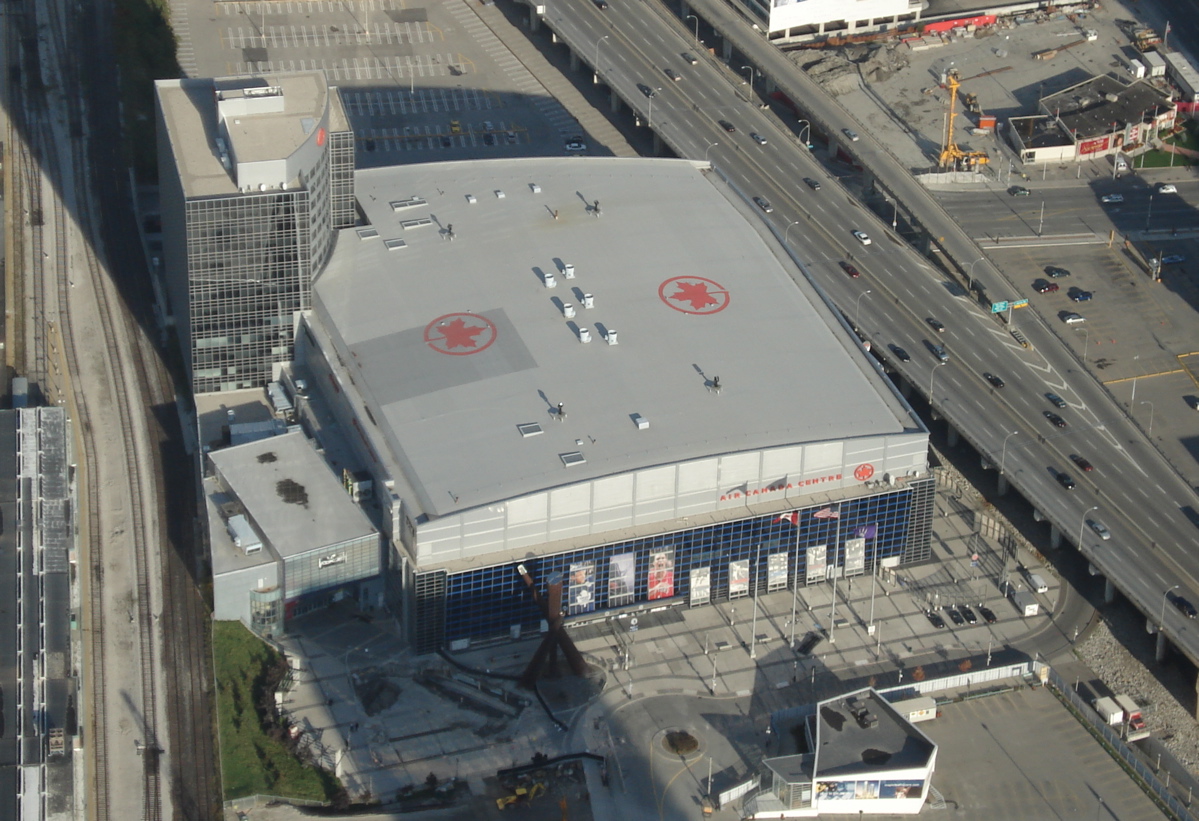
Photo: Ken Lund, Flickr (BY-SA-2.0)
Rogers MLSE Deal Closes: What 100% Ownership Changes for the Leafs
Table of Contents
The Rogers MLSE deal is closed
The Rogers MLSE deal is done. Rogers Communications closed its $4.35-billion purchase of Kilmer Sports Inc.'s 25 per cent stake in Maple Leaf Sports & Entertainment on Thursday, October 1, giving the telecom company 100 per cent ownership of the Toronto Maple Leafs, the Raptors, Toronto FC, the Argonauts, the Toronto Marlies and Scotiabank Arena. For the first time since 2012, the Leafs answer to one owner.
Larry Tanenbaum's Kilmer was the last outside partner left in the building. When we broke down what full Rogers control would mean in August, the deal still needed league approvals and a fourth-quarter close. It got both, and it landed on the same day Toronto was coming off its first win of the season under Jim Hiller.
The paperwork is a business story. The consequences are a hockey story, and they start with who runs the place.
How Rogers got from partner to sole owner
Rogers did not buy MLSE in one go. It took 14 years and three transactions to get from co-owner to sole owner. The timeline below covers the key steps.
StepSellerStakePrice2012Ontario Teachers' Pension Plan37.5 per cent, with BCE matching itPart of a $1.32-billion joint dealJuly 2025BCE (Bell)37.5 per cent$4.7 billionOctober 1, 2026Kilmer Sports (Tanenbaum)25 per cent$4.35 billionThe Kilmer price implies a valuation of roughly $17.4 billion for MLSE as a whole. That number matters less for what it says about the Leafs' worth than for what it says about the debt Rogers took on to get here, which is the thread that runs through everything that comes next.
Keith Pelley's job just got bigger
Keith Pelley stays on as president and chief executive of MLSE, and effective immediately he also takes on responsibility for Rogers' media operations. Mark Shapiro remains president and CEO of the Blue Jays.
That matters to Leafs fans because Pelley is the executive who fired Brad Treliving and hired John Chayka and his front office in May. The Leafs' general manager reports to a CEO whose portfolio now includes Sportsnet, the network that holds the NHL's national rights in Canada. That is not a conflict of interest so much as a concentration of interest: the same executive now benefits directly when the Leafs are good television.
There is a reasonable worry on the other side. Pelley's attention is now spread across the Leafs, Raptors, TFC, the Argos and a media business. Chayka has had unusual freedom in his first five months, from the Knies-for-Marchenko trade to the Kirill Marchenko extension. A busier boss tends to mean a longer leash for a GM who is executing. That is good news as long as Chayka keeps being right.
Rogers Sports and the 2027 minority sale
Rogers says it will create a new business unit called Rogers Sports to house MLSE, the Blue Jays and its other sports, media and entertainment assets. The company puts the value of that combined group at more than $25 billion and plans to sell minority stakes to outside investors by the first half of 2027, with the proceeds aimed at paying down company debt.
Read that sequence carefully. Rogers bought out every partner and is now preparing to bring new partners in. The difference is control. Minority investors buy a piece of the economics without a vote that can block decisions, which is the opposite of the old Rogers-Bell-Tanenbaum arrangement, where two telecom rivals and a long-time governor all had to agree.
For the hockey club, a minority sale is mostly neutral. NHL teams spend to the same salary cap no matter who owns them, and no investor buying a slice of a Rogers-controlled entity is going to dictate the Leafs' lineup. The risk is subtler: a parent company focused on debt reduction tends to look hard at every line item that is not the cap, and those are exactly the places where rich teams separate themselves from everyone else.
Where ownership actually matters in a capped league
Every NHL team can spend to the same ceiling. What a single, deep-pocketed owner changes is everything around the cap. For the Leafs, that comes down to four areas:
- Hockey operations staff. Scouts, analysts, development coaches and data infrastructure are uncapped. Chayka built his reputation in Arizona on analytics, and he has already added staff in Toronto.
- Sport science and medical. The club's sport performance overhaul under Andy O'Brien is the kind of investment a single owner can sign off on quickly.
- The Marlies. The AHL affiliate is where Toronto's recent wave of young players came from. Funding its staff and travel is a direct line to cheap, cap-friendly NHL talent.
- Contract structure. Front-loaded signing bonuses, like the one in Auston Matthews' deal, require cash up front. An owner with debt to manage can be less keen on writing those cheques.
The last point is the one to watch. Toronto's biggest contract decisions of the next two years, including the Matthews extension window that opens on July 1, 2027, will be negotiated in an environment where the parent company is publicly committed to reducing debt.
Tanenbaum's exit and the end of an era
Tanenbaum was the longest-serving face of MLSE ownership and the person Leafs and Raptors fans most associated with the boardroom. He was expected to step down as the Raptors' NBA governor and chair of the NBA Board of Governors at the end of September, and to leave his MLSE role once the sale closed.
He leaves with a mixed hockey legacy. His years in the boardroom included the Raptors' 2019 championship and TFC's 2017 MLS Cup. They also included decades of Leafs hockey without a Stanley Cup Final appearance. That is not on one minority partner, but it is the measuring stick in this market, and his exit removes the last link to the ownership group that presided over the Brendan Shanahan years.
What it means for fans watching at home
The Leafs, the Blue Jays and Sportsnet now sit under one corporate roof. If you have been following how to watch the Maple Leafs in 2026-27, nothing about this season's broadcast schedule changes because of the closing. National rights are governed by league-level contracts, and the regional schedule was set before the puck dropped.
Longer term, the logic of Rogers Sports is to bundle teams and broadcast assets together. Expect more cross-promotion, more Leafs content on Rogers platforms, and more of the arena and media business being sold as a package. Whether fans get anything for that beyond more ads depends on what the company reinvests.
Our take: no more excuses at the top
LeafsLurker is independent, not neutral, so here it is plainly. For 14 years the Leafs' ownership was a committee of rivals, and every fan who wanted to blame the boardroom had an easy target: nobody was fully in charge. That excuse ended on Thursday.
Rogers now owns all of it. It hired the CEO, the CEO hired the GM, and the GM has spent the summer rebuilding the roster his way. The team is 1-1-0, plays Ottawa at home on Saturday (our Maple Leafs vs Senators preview covers that matchup), and carries projections in the 90-point range. If the 100th season goes sideways, there is exactly one name on the door.
That is the right structure. It is also a higher bar. Single ownership is only an upgrade if the owner spends like it wants a parade more than it wants a lower debt ratio. The 2027 minority sale will tell us which of those comes first.
What's next
Watch three things over the coming months: the formal structure of Rogers Sports and who sits on its leadership team, the identity and size of any minority investors in the first half of 2027, and whether hockey operations spending around the cap keeps growing. On the ice, nothing changes this weekend. In the boardroom, everything already has. Track the roster consequences on our Maple Leafs contracts page.
Frequently Asked Questions
Does Rogers own 100% of the Maple Leafs now?
Yes. Rogers Communications closed its purchase of Kilmer Sports Inc.'s 25 per cent stake in MLSE on October 1, 2026, taking it to 100 per cent ownership of Maple Leaf Sports & Entertainment, the parent company of the Maple Leafs. It had already bought BCE's 37.5 per cent stake in July 2025.
How much did Rogers pay for Larry Tanenbaum's MLSE stake?
Rogers paid $4.35 billion for Kilmer Sports Inc.'s 25 per cent stake, which implies a valuation of roughly $17.4 billion for MLSE. Rogers paid $4.7 billion for BCE's 37.5 per cent stake in 2025.
Who runs MLSE after the Rogers takeover?
Keith Pelley remains president and CEO of MLSE and, effective immediately, also takes on responsibility for Rogers' media operations. Mark Shapiro remains president and CEO of the Toronto Blue Jays.
What is Rogers Sports?
Rogers Sports is a new business unit Rogers is creating to house MLSE, the Blue Jays and its other sports, media and entertainment assets. Rogers values the combined group at more than $25 billion.
Is Rogers selling part of the Maple Leafs?
Rogers plans to sell minority stakes in the combined Rogers Sports group to outside investors by the first half of 2027, with proceeds aimed at paying down debt. Rogers would keep control, and minority investors would not run the hockey club.
Does the Rogers MLSE deal change the Maple Leafs' salary cap?
No. Every NHL team spends to the same salary cap regardless of ownership. Ownership affects uncapped spending such as scouting, analytics, sport science, the Marlies and the cash needed for signing-bonus-heavy contracts.
Who owned the Maple Leafs before Rogers?
From 2012 until July 2025, MLSE was owned by Rogers and BCE at 37.5 per cent each, with Larry Tanenbaum's Kilmer Sports holding 25 per cent. Before 2012, the Ontario Teachers' Pension Plan was the majority owner.