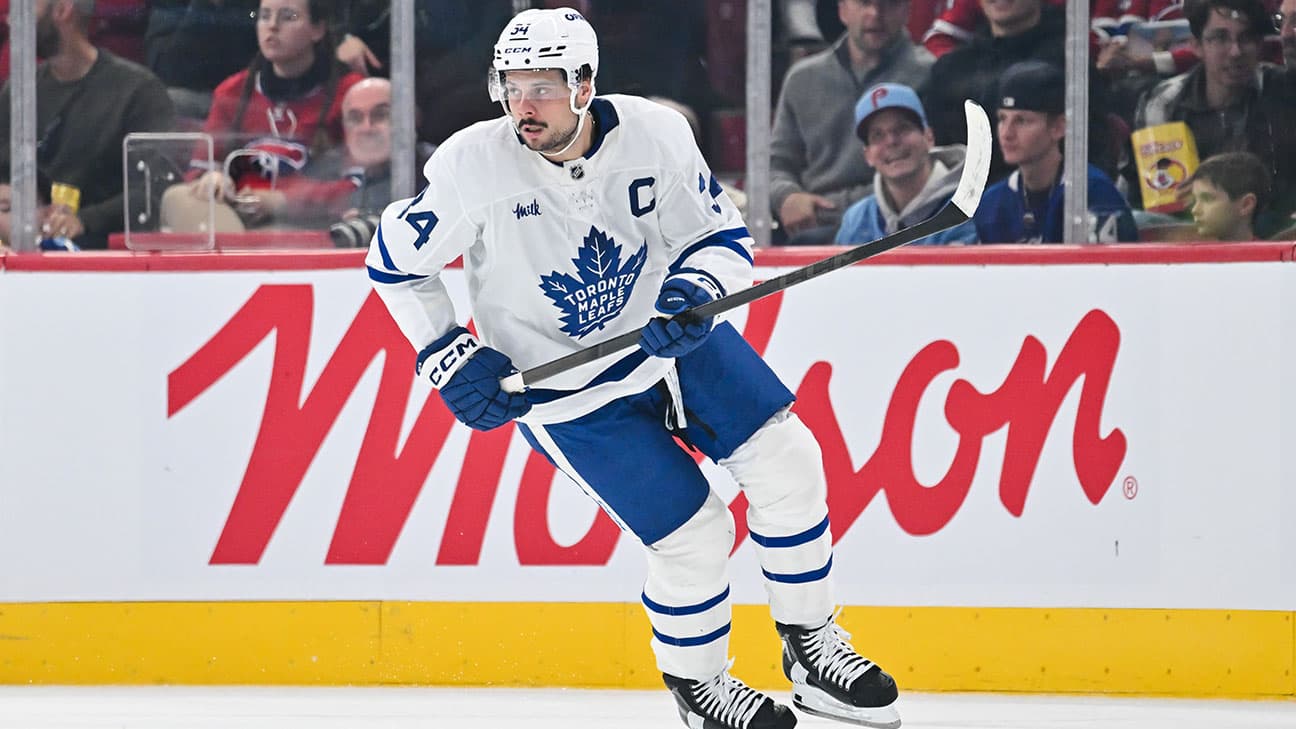
Photo: NHL.com
Opinion: Gavin McKenna Should Open the Season on the Maple Leafs — With Matthews
Table of Contents
Gavin McKenna Belongs on the Maple Leafs Roster Now
Let's not overthink this. Gavin McKenna should open the 2026-27 season on the Maple Leafs roster, and he should do it on a line with Auston Matthews. After a development camp where the No. 1 pick looked like the best player on the ice by a country mile, the burden of proof has flipped. The question is no longer whether an 18-year-old is ready to play in the NHL — it is whether Toronto can give the league a single good reason to send him back. It can't, and it shouldn't try.
This is an opinion piece, so here is the opinion stated plainly: sending McKenna back to junior for a "development year" would be a mistake of caution dressed up as patience. The player is ready. The team needs him. And the environment — a top six built around Matthews, William Nylander and John Tavares — is about as soft a landing spot as a generational forward will ever get.
The Case For Keeping Him
Start with the talent, because everything flows from it. The scouting consensus we laid out in our McKenna scouting report was that he is the most complete forward prospect since the Bedard and Celebrini drafts, and nothing this summer has undercut that. At development camp he showed the three things that survive the jump to the NHL: a first step that creates instant separation, hands that stay calm under pressure, and a release that beats goalies before they set. Those are not skills you send down to refine. They are skills you build a top six around.
Then there is fit. Multiple league projections already have McKenna slotted alongside Matthews and Tavares, and on a first power-play unit that could feature Matthews, Nylander, Tavares and Darren Raddysh. NHL.com's outlook ranked him as the second-highest rookie in the entire league. When the analytics community and the traditional scouts agree that an 18-year-old profiles as a top-line NHL contributor on day one, the organization's job is to get out of the way.
Why the Matthews Line Is the Right Landing Spot
The instinct with young players is to shelter them — third-line minutes, easy zone starts, a slow ramp. For most rookies that is correct. For McKenna it is backwards. Playing beside Matthews is, as one analyst put it, a luxury, and it is exactly the kind of luxury that accelerates a special player rather than exposing him.
Matthews draws the toughest checking attention in the league. Nylander bends defences with his puck control. A rookie winger between or beside them does not have to carry a line — he has to finish the chances two future Hall of Famers create, and McKenna's release is tailor-made for that role. Far from throwing him to the wolves, the top six is the safest, highest-leverage place Toronto could put him. It also happens to make the Maple Leafs' best players better, which is the entire point of drafting first overall.
The Counterargument, Taken Seriously
The case for patience is not stupid, and it deserves a fair hearing. The argument goes: he is 18, the NHL is a heavier and more physical league than anything he has faced, and a bad rookie year in a pressure market like Toronto can dent a young player's confidence. Send him back, let him dominate his old league, add strength, and bring him up in 2027-28 as a finished product with nothing left to prove.
There is also a colder, roster-based version of the argument. Toronto is over the salary cap and has to move money out. A rookie on an entry-level deal is cheap, which actually argues for keeping him — but the flip side is that a team fighting the cap and retooling its blue line might prefer not to lean on an 18-year-old in games that matter. Patience, in that telling, is just risk management.
Why the Counterargument Loses
It loses on the merits. The physicality concern is real but overstated — McKenna's separation speed is his shield, and players who can't be caught don't get hit. The confidence argument cuts the other way too: nothing builds a young star faster than success beside great players, and nothing stalls one like a year of going through the motions in a league he has already conquered.
The roster argument is the weakest of all. Toronto did not tear down its coaching staff, win a draft lottery and reshape its bottom six to then hide its best young asset in junior. John Chayka has spent the offseason talking about getting younger and faster. You do not get younger and faster by benching the youngest, fastest player you have. The entry-level cap hit is a feature, not a reason for caution — it lets Toronto spend elsewhere while a top-six talent plays for pennies.
The Recent History Backs It Up
Toronto does not have to guess how this goes, because the league just ran the experiment. The last two first-overall forwards, Connor Bedard and Macklin Celebrini, both stepped straight into the NHL as teenagers and produced immediately, and neither was surrounded by anything close to the supporting cast McKenna will have. Bedard carried a rebuilding Chicago roster; Celebrini debuted for a San Jose team in the early stages of its own teardown. Both handled top-line minutes and physical punishment without their development suffering — in fact, both looked more ready by midseason than they had in October.
That is the crucial difference for McKenna. He is not being asked to drag a bad team out of the basement. He is joining a roster with two established stars up front, a veteran centre in Tavares, and a coaching staff whose entire mandate is to compete now. If Bedard and Celebrini thrived in tougher circumstances, the idea that McKenna needs to be protected from a lineup featuring Matthews and Nylander does not hold up. The comparables all point the same direction: elite 18-year-old forwards belong in the NHL, and the ones who play there get better faster.
The one caveat worth respecting is that not every top pick is the same player, and a handful of highly drafted forwards have benefited from an extra year. But those cases almost always involved players with a specific hole in their game — strength, defensive detail, skating — that a return to junior could fix. McKenna's game does not have that obvious gap. He is not a project who needs a year to round out a weakness; he is a finished offensive weapon whose only real test is the level of competition. You do not raise the level of competition by sending a player back down.
What This Means for Jim Hiller
The decision ultimately sits with head coach Jim Hiller, and it will be one of the defining calls of his first season. Hiller has to weigh McKenna's obvious readiness against the pressure of a market that will scrutinize every shift, and he has to decide whether he trusts an 18-year-old in his most important minutes. If the September version of McKenna looks anything like the July one, that trust should come easily.
The right process is straightforward: give him a real look in camp and the preseason against NHL competition, put him with Matthews, and let the player make the decision for the staff. Everything about this offseason — the lottery win, the retool, the talk of a new era — points to McKenna opening the year in Toronto. The evidence says he is ready. The only thing left is for the Maple Leafs to believe it. Watch how the lineup takes shape on our players page and follow the retool on the draft page.
Frequently Asked Questions
Should Gavin McKenna make the Maple Leafs roster in 2026-27?
In our view, yes. After dominating development camp, McKenna has shown the separation speed, hands and release that translate to the NHL. League projections already slot him in the top six, and sending an 18-year-old this talented back to junior would be an overly cautious mistake.
What line would Gavin McKenna play on with the Maple Leafs?
Multiple projections place McKenna alongside Auston Matthews and John Tavares, and on a first power-play unit with Matthews, William Nylander, Tavares and Darren Raddysh. Playing beside elite finishers is considered an ideal, high-leverage landing spot for a rookie.
Is Gavin McKenna ready for the NHL at 18?
The evidence suggests he is. Scouts rate him the top prospect since the Bedard and Celebrini classes, and NHL.com listed him as the second-highest-ranked rookie in the league. His speed and skill are the traits that survive the jump to the professional game.
Can the Maple Leafs afford to keep Gavin McKenna on the roster?
Yes — and it actually helps. Toronto is over the salary cap, but McKenna is on a cheap entry-level contract. Keeping a top-six talent at that price lets Chayka spend elsewhere, though the team still needs a separate trade to become cap compliant.
Who decides whether Gavin McKenna makes the team?
Head coach Jim Hiller, hired in June 2026, makes the final call along with GM John Chayka. The decision comes at training camp in September and the preseason, where McKenna will be evaluated against NHL competition.
What is the argument for sending Gavin McKenna back to junior?
The case for patience cites his age, the NHL's physicality, and the pressure of the Toronto market denting a young player's confidence. The counterpoint is that success beside elite players accelerates development far more than another year dominating a lesser league.


